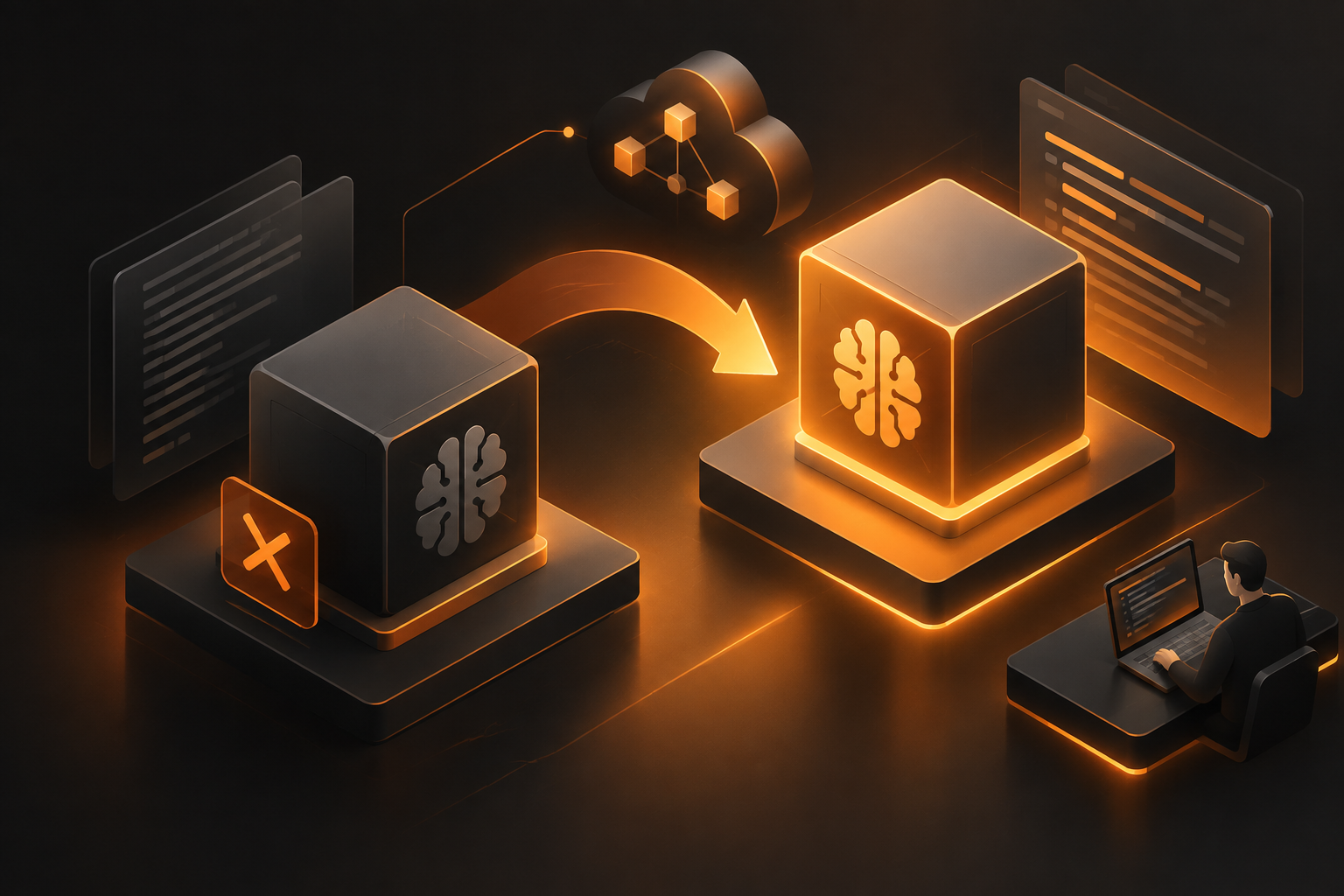

OpenAI has publicly disclosed that it successfully disrupted a coordinated campaign to extract protected model reasoning capabilities through what the company calls adversarial distillation. This marks one of the first documented public accounts of such an attack against a leading AI lab. The attackers attempted to systematically query OpenAI's models and transfer the extracted capabilities into their own freely available models.
Key Facts at a Glance
- OpenAI stopped a coordinated distillation attack targeting its models and disclosed it publicly
- The campaign aimed to extract protected reasoning capabilities and transfer them to other models
- OpenAI is strengthening its defense mechanisms against such adversarial attacks
- This is among the first documented campaigns of this type against a major AI lab
Understanding Model Distillation Attacks
Distillation is normally a legitimate technique: transferring knowledge from a large model into a smaller, more efficient one. In the case of adversarial distillation, however, attackers weaponize this method to extract proprietary capabilities. They send systematic queries to a protected model, capture the responses, and use them to train their own model – similar to trying to extract a trade secret through repeated questioning.
The risk is clear: an attacker could save significant training costs while simultaneously bypassing the original model's safety measures.
OpenAI's Response
OpenAI not only stopped the campaign but also announced strengthened defenses. The company has not disclosed specific technical details – a standard practice in security disclosures to avoid providing attackers with a roadmap.
The public disclosure itself is significant: OpenAI signals that it actively monitors threats and is willing to communicate transparently about security incidents. This can build trust and may encourage other labs to document similar attacks.
Implications for the Industry
The incident highlights a growing dilemma in AI development: the more powerful and valuable a model, the more attractive it becomes to attackers. Proprietary models are no longer protected solely by access controls – their capabilities themselves can be systematically extracted.
For organizations developing or deploying AI systems, this creates a dual challenge: First, developers must expect their models to become targets of distillation attacks. Second, companies using third-party models via APIs should recognize that their usage patterns and queries could potentially become part of extraction campaigns. A culture of security awareness and monitoring for unusual access patterns is now becoming a standard requirement – not just for labs like OpenAI, but across the entire industry.
Sources
Editorially owned by Ideal Syka. Sources and method: Newsroom & method. Tips and corrections: ai@i6eal.de.