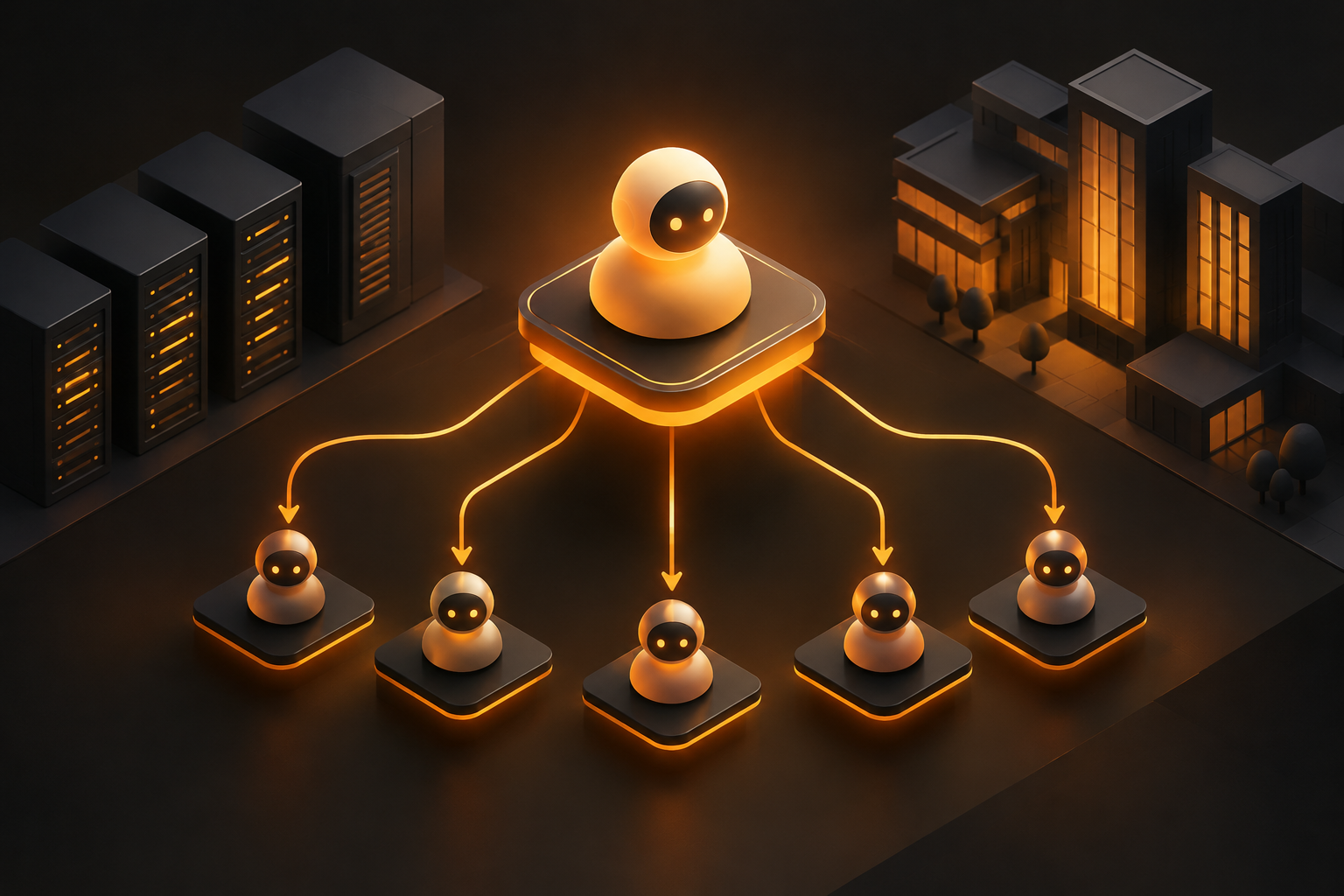
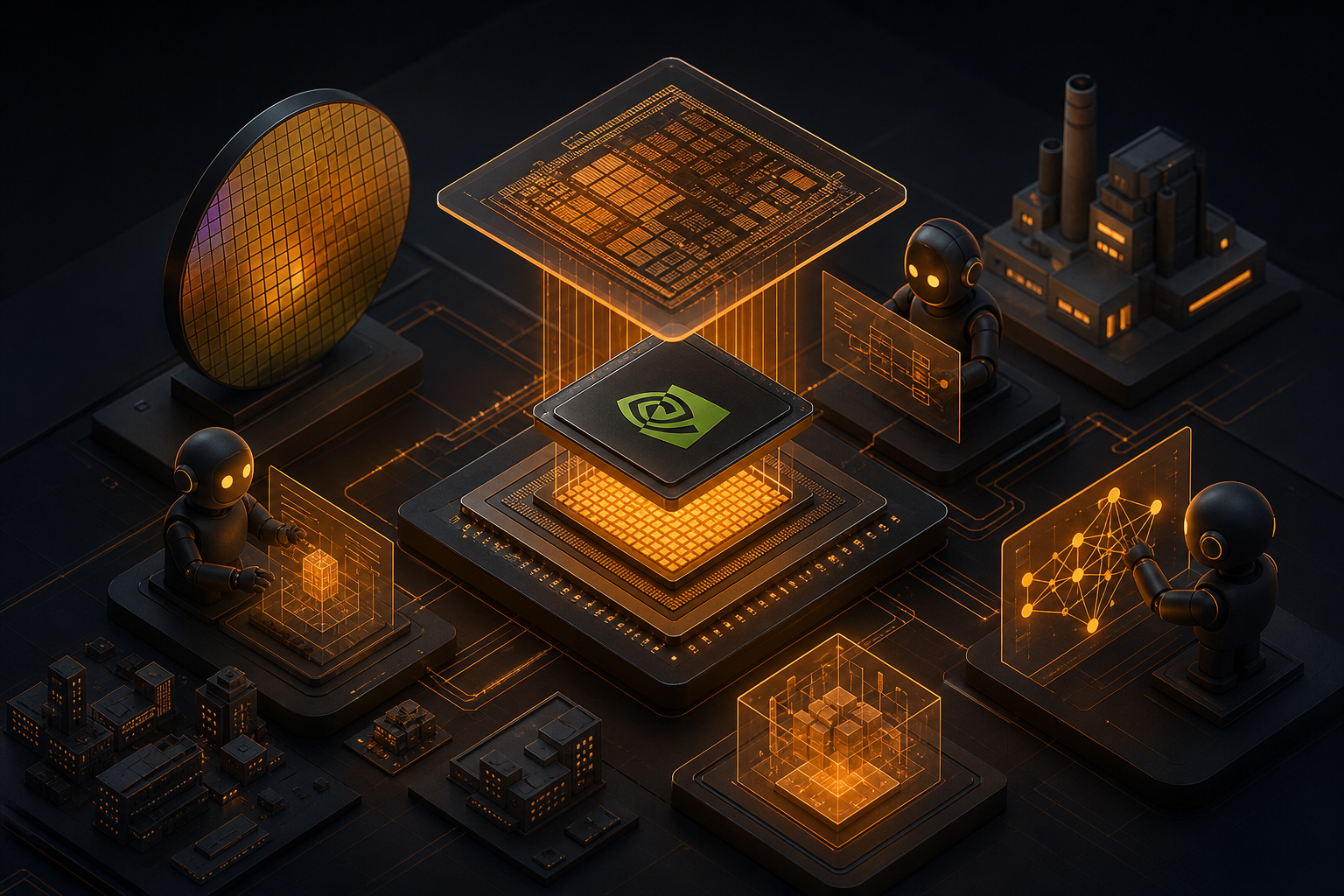
Nvidia is taking a new approach to semiconductor development: the company is now running the chip design software its engineers use on its own Vera CPUs—rather than third-party hardware. In doing so, Nvidia not only accelerates the development of its next-generation GPU lineup, but also signals a fundamental shift: AI agents are transitioning from tool to integral component of the design process.
Key Facts
- Vera CPUs achieve 1.5x higher performance on two critical design tasks (Cadence Jasper, Synopsys VCS)
- Partnership with the two largest EDA software providers: Cadence Systems and Synopsys
- Nvidia integrates PhysicsNeMo and GPU math libraries into its Agent Toolkit
- Goal: Autonomous AI agents assume simulation, verification, and implementation—traditionally engineer-intensive work spanning years
Hardware Accelerates Hardware
What's distinctive about Nvidia's approach: Vera CPUs aren't just a target platform, but an accelerator for developing their successors. Formal verification and logic simulation—two of the most compute-intensive phases in early design cycles—benefit greatly from fast CPU cores, efficient memory systems, and high throughput. That's exactly what Vera delivers.
In tests with Cadence Jasper (verification platform with machine learning) and Synopsys VCS (simulation tool for design validation), results showed: performance increased by a factor of 1.5. That sounds modest, but in chip development it means savings of months or years—since engineers traditionally run thousands of iterations before settling on a final design.
AI Agents as Design Partners
But Nvidia goes further. The company integrates PhysicsNeMo and GPU math libraries into its Nvidia Agent Toolkit. This enables autonomous AI agents to call accelerated solvers just as they would any third-party tool.
This represents a paradigm shift: instead of humans manually performing simulation, verification, and implementation, AI agents can partially automate these steps and create real-time feedback loops. Agents can identify problems, refine designs, and explore alternatives—without human intermediaries.
| Process Step | Traditional | With AI Agents |
|---|---|---|
| Simulation & Verification | Years, manual iteration | Accelerated, partially automated |
| Bug Identification | Engineer-intensive | AI-driven, continuous |
| Design Refinement | Iterative over months | Parallel, agent-driven |
Next Targets: Rosa CPU and Rigel Core
Nvidia plans to extend optimizations across additional EDA workflows and uses this process itself as a testing ground: the next CPU generation, codenamed Rosa, will be powered by Nvidia's new Rigel core—developed using the same accelerated Vera systems and AI agents.
This creates a feedback loop: Vera accelerates Rosa's development, Rosa gets optimized for future designs. A company using its own infrastructure as a testing laboratory.
What This Means for Global Competitors
For semiconductor and electronics companies worldwide, this creates pressure. Organizations reliant on standard EDA tools and external CPU resources lose speed against providers who—like Nvidia—directly integrate their hardware and AI agents. The question becomes: how can chip designers and system vendors compete with this level of integration? Open questions remain: how open will Nvidia keep its EDA optimizations for non-Nvidia hardware? And how quickly can other semiconductor makers build similar feedback loops?
Sources
Editorially owned by Ideal Syka. Sources and method: Newsroom & method. Tips and corrections: ai@i6eal.de.