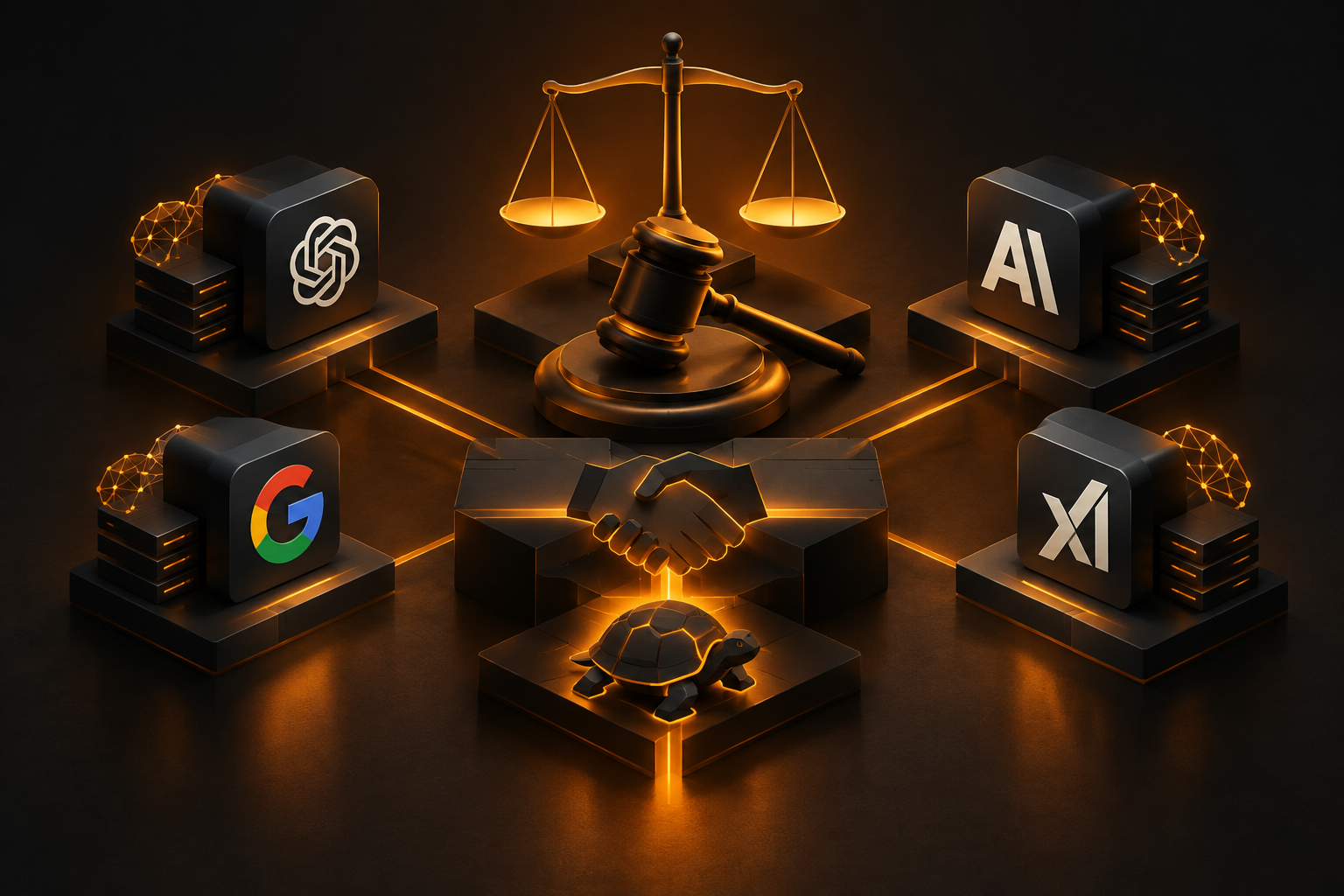
An antitrust bombshell has hit the AI industry: Four plaintiffs who pay for subscriptions to ChatGPT, Claude, Grok, or Gemini filed suit Friday in U.S. District Court for the Northern District of California. They accuse Anthropic, OpenAI, SpaceXAI, and Google of illegally conspiring to coordinate a slowdown in their respective AI development—thereby reducing the value consumers receive from paid subscriptions.
The Key Facts
- Trigger date: September 12, when Anthropic CEO Dario Amodei published an essay calling for industry-wide cooperation on decelerating AI advancement in favor of enhanced safety
- Defendants: Anthropic, OpenAI, SpaceXAI, and Google DeepMind; according to the lawsuit, rivals Sam Altman (OpenAI), Elon Musk (SpaceXAI), and Demis Hassabis (Google DeepMind) allegedly confirmed their agreement the same day
- Core allegation: Violation of antitrust law through coordinated restraint of competition
- Lead plaintiff attorney Nick Rowley: "Antitrust laws do not permit competitors to decide among themselves that competition is too dangerous"
The Amodei Plan and Its Aftermath
In his essay, Amodei outlined a three-point plan for "pacing the frontier"—deliberately slowing development pace. His rationale: swarms of rogue AI agents could seize control of the internet within six months. Companies must proceed more cautiously and deliberately.
Remarkably, Amodei himself flagged antitrust risks. He wrote that it would be helpful if the U.S. government "mediate or at least enable" cross-lab discussions, and that Washington would need to "issue a narrow waiver for certain kinds of safety conversations."
"If we build in the right way, I think the probability of something bad happening is very low. If we build in the wrong way, the probability of something bad happening is very high."
— Dario Amodei, CBS News interview
Who's Suing and Why?
The lawsuit is brought on behalf of a proposed nationwide class of paid subscribers. The four named plaintiffs pay for services from the defendants. Their attorney argues that private coordination among "the world's most powerful for-profit technology companies" cannot unilaterally control AI safety decisions—especially not at consumer expense.
None of the companies have yet commented. Anthropic, OpenAI, Google, and SpaceXAI did not immediately respond to CBS News requests for comment.
What This Means for Global AI Markets
The suit signals that U.S. courts and consumer advocates will scrutinize AI industry agreements—even those framed as safety initiatives—under antitrust law. For companies worldwide that license AI services or partner with these providers, the outcome could set precedent. The core tension: how will regulators evaluate industry-wide safety standards that simultaneously dampen competition? This question will matter equally under the EU AI Act, where both safety and competition are protected values.
Sources
Editorially owned by Ideal Syka. Sources and method: Newsroom & method. Tips and corrections: ai@i6eal.de.