Microsoft and the University of Illinois have developed a system that solves a fundamental problem in AI-powered education: How do you train tutor AI systems efficiently when real student feedback is expensive and slow?
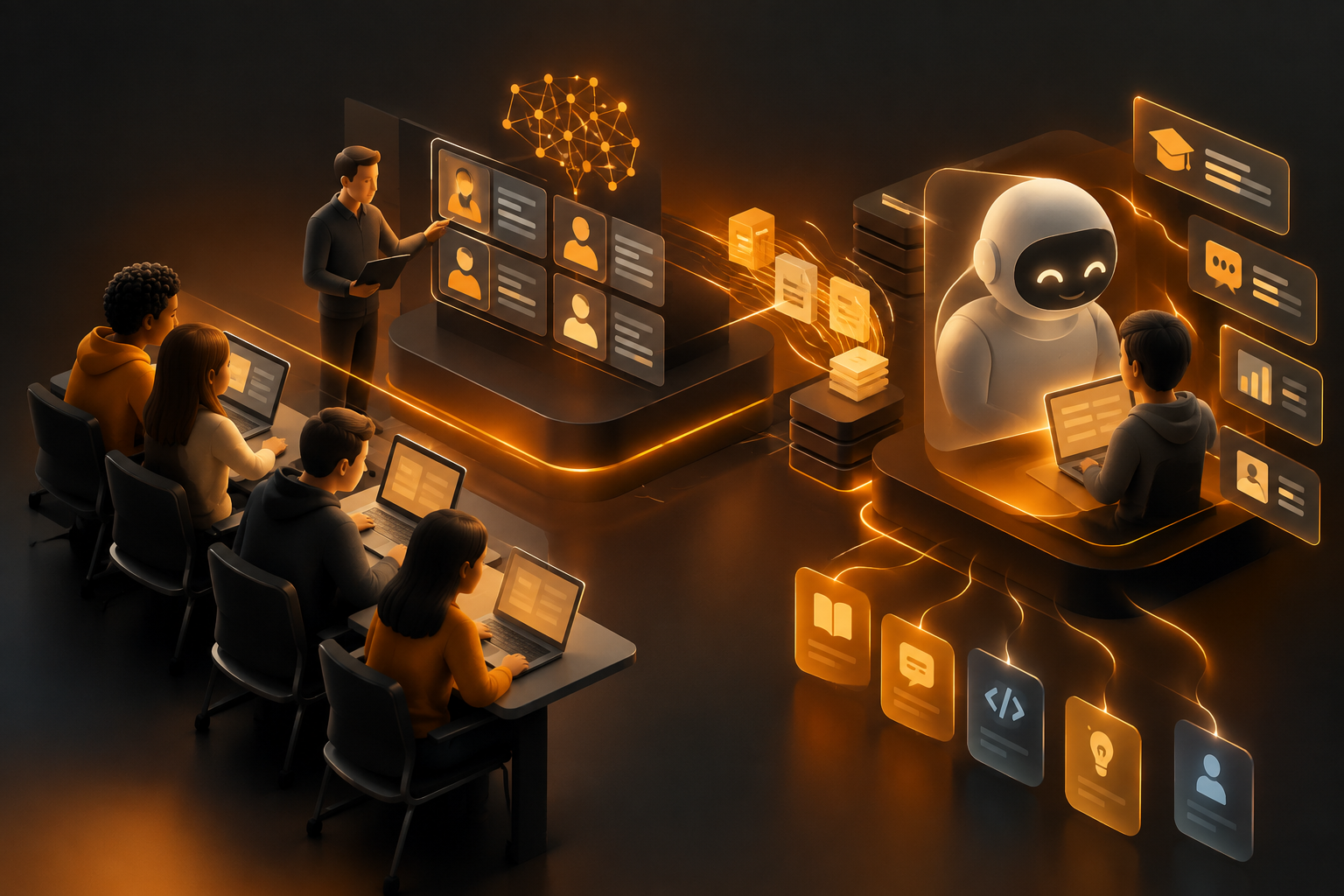
The answer is StudentSim – a model that creates realistic digital replicas of individual students from minimal data. These virtual students then provide feedback at machine speed, while real learners continue their studies.
Quick facts
- StudentSim significantly outperforms the larger language model GPT-5.4 in tests: In chess, the system predicts a player's next move correctly roughly twice as often
- Tested in three subjects: Chess, English as a foreign language, and mathematics across 60 students
- A chess tutor trained with StudentSim received the highest ratings from experts among all tested systems
- Base language model: Alibaba's Qwen3-4B-Instruct – not OpenAI or Anthropic
The problem: Real students are a bottleneck
Personalized AI tutors only work when they adapt to the strengths and weaknesses of individual learners. But discovering which explanation works for which student requires real feedback – and that's expensive and time-consuming.
"Training a tutor AI against a large, diverse student group is prohibitively expensive and time-consuming"
write the researchers in their paper. This means improvements to tutor systems lag behind the rapid progress of AI models themselves.
Two capabilities that no one previously mastered together
Previous approaches force a choice: Either models learn from real human data and reliably capture how a student behaves – but can't process tutor explanations. Or they're language models that follow instructions to roleplay a student and respond to hints effortlessly, yet miss the actual competency of the student they're mimicking.
StudentSim combines both capabilities: The system measures two concrete goals – how well the replica captures a student's own answers and typical mistakes, and how readily it corrects its answer after receiving tutor guidance.
The trick: Two training steps against data scarcity
The biggest challenge: Real data is sparse. In the English writing dataset, a learner writes a median of just three essays – more than two-thirds produce five or fewer.
That's why StudentSim trains in two stages:
| Stage | Task | Data source |
|---|---|---|
| 1 | Build foundation model from pooled data of all students in a subject | All students combined |
| 2 | Adapt to an individual student | Few records of that student |
In stage one, the system learns common mistakes and the path from tutor hint to correction. In stage two, this foundation model is personalized using the sparse records of a single student.
Tested in chess, language, and mathematics
The researchers evaluated their system across 60 students in three completely different domains – using data from public collections of real learners.
In all three domains, StudentSim outperforms the larger language model GPT-5.4, which was instructed to roleplay a student. In chess, StudentSim predicts a player's next move roughly twice as often correctly and responds to correction hints significantly better.
What this means for German enterprises
The system demonstrates that personalized AI education doesn't necessarily require massive datasets or millions of real student interactions. For EdTech startups and school operators in Germany, StudentSim could be a model: Instead of waiting endlessly for real training data, tutor AIs can be improved faster and more cheaply using synthetic students. The question is only when and how openly Microsoft makes this technology available.
Sources
Editorially owned by Ideal Syka. Sources and method: Newsroom & method. Tips and corrections: ai@i6eal.de.