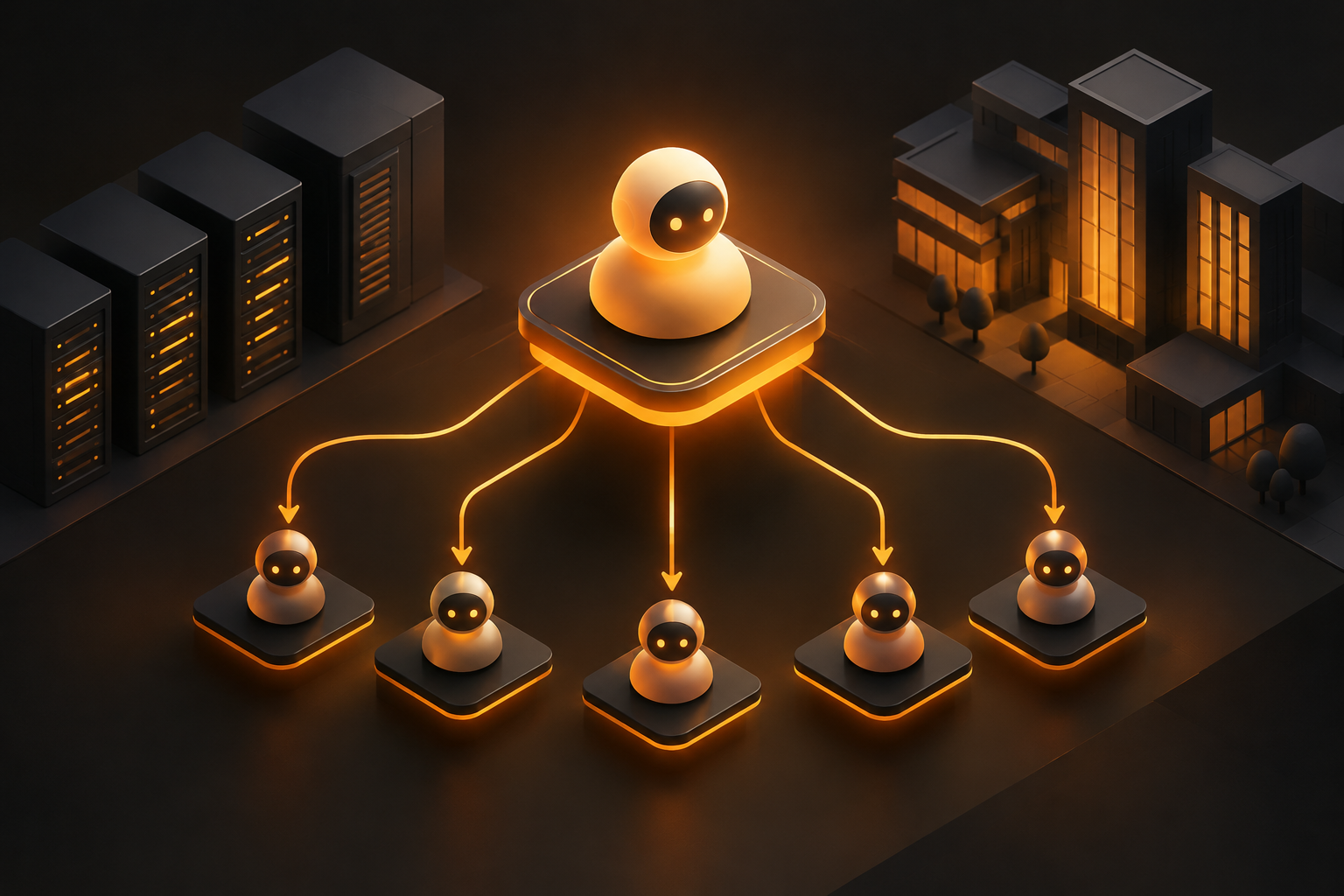
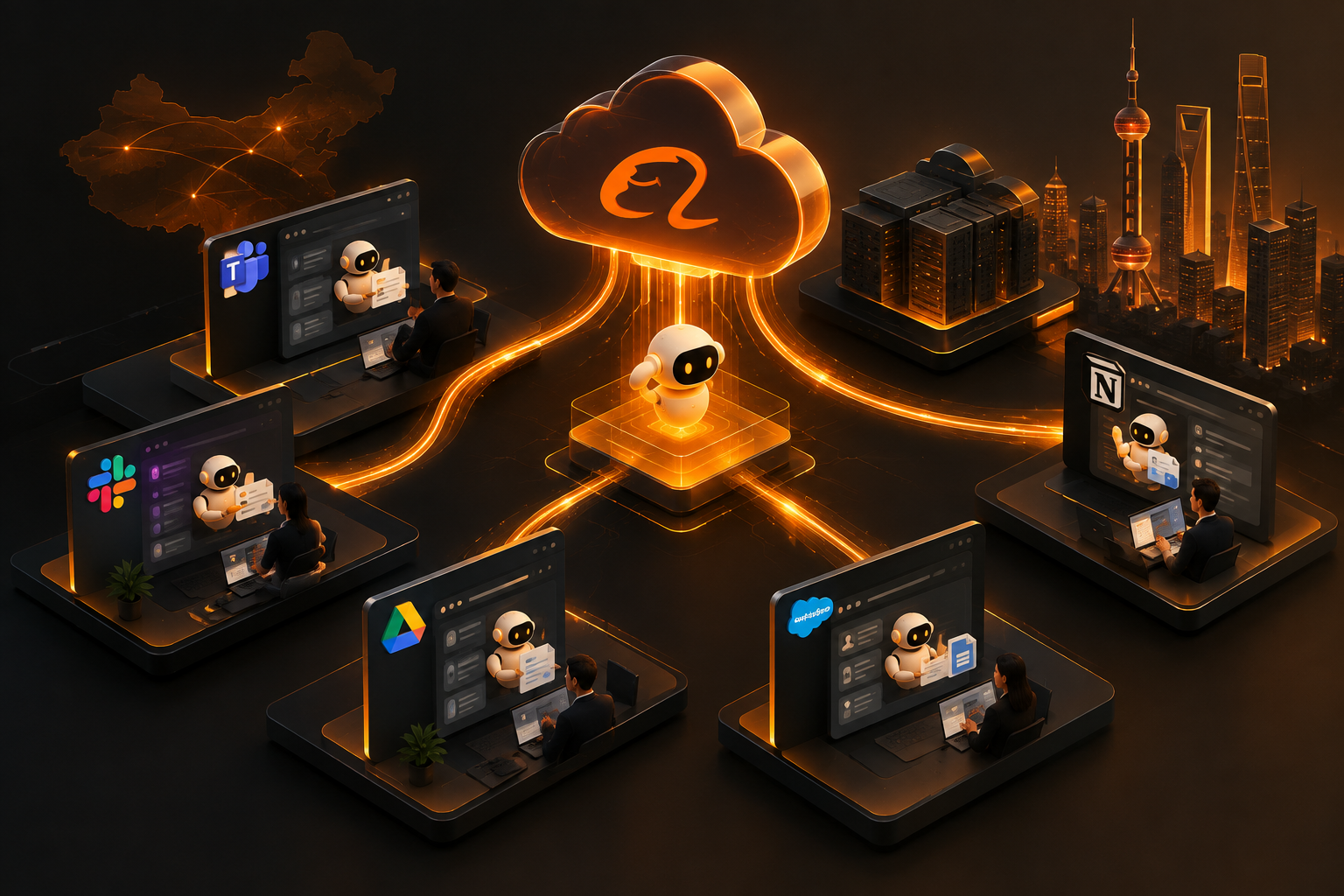
Alibaba Cloud unveiled a new version of its QoderWake tool on Tuesday, enabling AI-powered "digital employees" to operate not only within Alibaba's own DingTalk, but also in Feishu (ByteDance) and WeCom (Tencent). This is noteworthy because it demonstrates how Chinese tech giants are monetizing their expensive AI models through enterprise solutions – and are willing to embrace rival platforms in the process.
Key Facts
- QoderWake allows users to create fully functional AI agents with a single-line description of the required role
- Digital workers integrate seamlessly across all three major Chinese workplace platforms and can autonomously access documents, calendars, and group chats
- Since April: nearly 100,000 digital employees deployed, executing approximately 2 million tasks over the past three months in real-world enterprise scenarios
- Ten pre-built roles (product manager, data analyst, UI designer, frontend/backend developer) are already fine-tuned and ready to deploy
Breaking the Walled Garden Model
This approach defies the traditional playbook of Chinese tech conglomerates. Rather than hermetically sealing off their ecosystems, Alibaba Cloud deliberately opens its AI agents to competitor platforms. The rationale is straightforward: enterprises use multiple tools simultaneously. Locking AI agents into a single ecosystem risks losing market share to more flexible rivals.
These digital workers operate beyond simple chatbot functionality – they autonomously absorb context from shared documents, calendars, and group chats, executing complex enterprise workflows. This represents a significant leap beyond conventional automation.
The Numbers
| Metric | Value |
|---|---|
| Deployments since April | ~100,000 digital employees |
| Tasks executed (3 months) | ~2 million |
| Pre-built roles | 10 |
| Supported platforms | 3 (DingTalk, Feishu, WeCom) |
These figures suggest the concept already has traction in China. Two million tasks across three months translates to roughly 20 tasks per digital worker on average – evidence that these agents are embedded in real workflows rather than sitting idle.
What This Means for Enterprises Globally
For German and European companies, the immediate relevance is limited, as QoderWake is tailored to Chinese platforms and Alibaba Cloud lacks comparable market presence here. However, a critical trend emerges: enterprise AI is increasingly being conceived as cross-platform. Developers building AI agents will face pressure to ensure compatibility with Microsoft Teams, Slack, and other established workplace tools – not just proprietary ecosystems. For German software vendors, this signals that the era of isolated solutions is waning. Conversely, early movers who build AI agents with openness and interoperability in mind may capture market share faster than competitors clinging to lock-in strategies.
Sources
Editorially owned by Ideal Syka. Sources and method: Newsroom & method. Tips and corrections: ai@i6eal.de.