
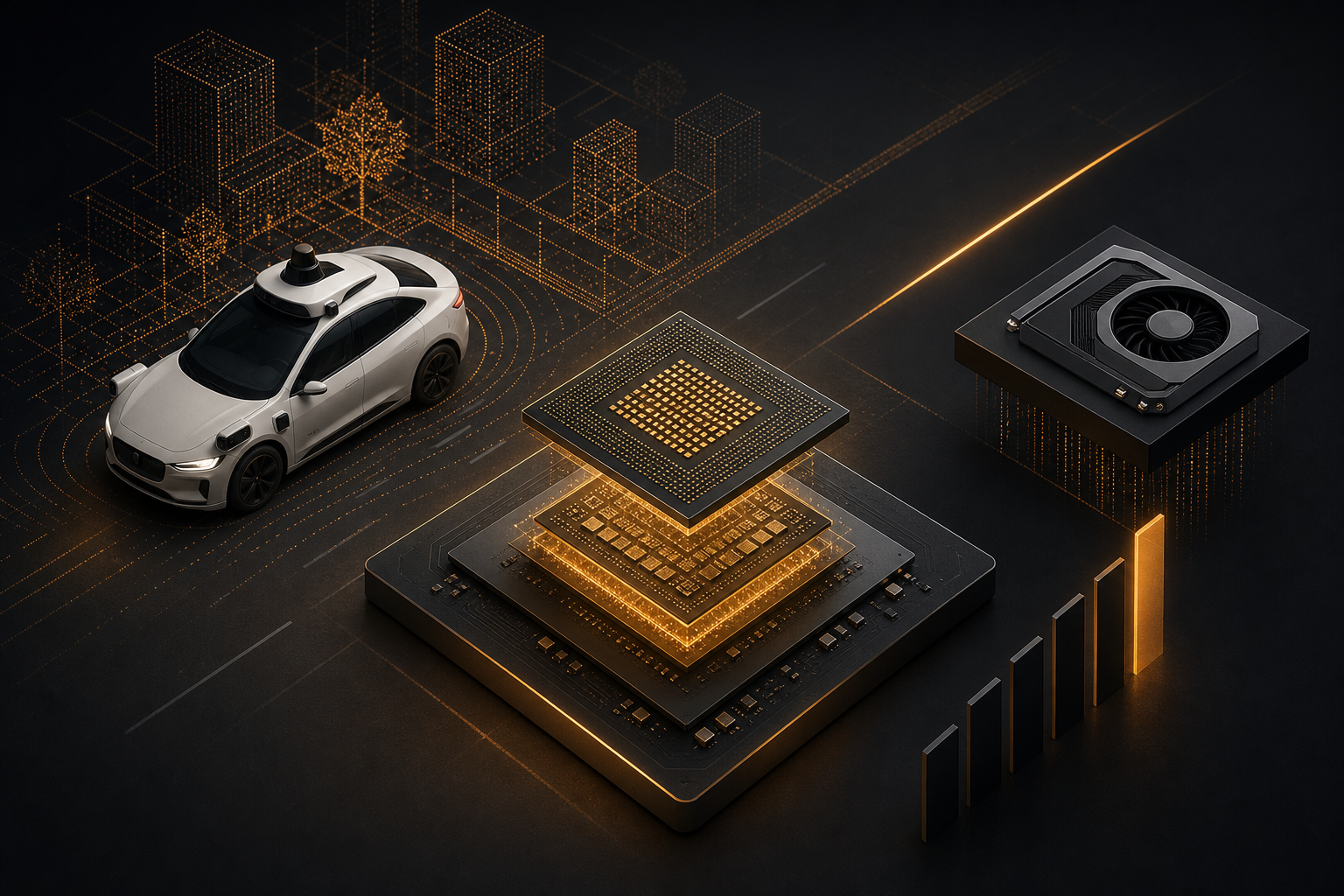
Waymo is reducing its reliance on Nvidia. Alphabet's robotaxi division has developed its own AI chip, which is already being deployed in the latest generation of vehicles – according to Bloomberg. The move demonstrates how established tech companies are taking control of their hardware supply chains rather than depending on external chip designers.
The essentials
- Waymo has developed its own chip for autonomous vehicles and is already deploying it in production
- The processor delivers over 1,000 TOPS (trillion operations per second) – competitive with Nvidia's current autonomous driving systems
- The chip is manufactured by TSMC using a 5-nanometer process
- It will be installed in the new robotaxi that Waymo is developing with Chinese automaker Zeekr
Hardware independence as strategy
Previously, Waymo relied on chips from Nvidia and AMD. With its own processor, the company significantly reduces this dependency. This is a classic vertical integration move: controlling your own supply chains saves costs and creates flexibility. For Waymo, this concretely means faster processing of sensor data and more efficient operation of the AI models that help robotaxis understand and respond to their environment.
According to Waymo, the chip's performance is on par with Nvidia's current solutions – an important signal that the chip is production-ready without compromising computing power.
Cost and manufacturing
The move is primarily designed to do one thing: reduce costs. In mass production of robotaxis, every saved dollar matters. Waymo's decision to have the chip manufactured by TSMC using the 5-nanometer process is unsurprising – TSMC is the world's leading contract manufacturer and produces for Apple, Nvidia, and other top-tier companies.
The partnership with Zeekr, a Chinese automaker, also shows that Waymo is pursuing a more global robotaxi strategy. The jointly developed vehicle will be equipped with Waymo's proprietary chip – a tight technical and economic integration.
What this means
This move signals a broader trend: major mobility and tech companies are building their own chips rather than remaining dependent on chipmakers. This increases pressure on Nvidia to defend its market position – not through monopoly, but through continuous innovation.
For German automotive companies, this could be a wake-up call. Anyone developing autonomous vehicles must ask themselves: do I build my own hardware, or do I rely on external partners? Waymo has chosen the first path. This requires investment in chip design and close collaboration with manufacturing partners like TSMC – but it also creates independence and competitive advantage. German manufacturers competing in this space will need to make similar decisions.
Sources
Editorially owned by Ideal Syka. Sources and method: Newsroom & method. Tips and corrections: ai@i6eal.de.