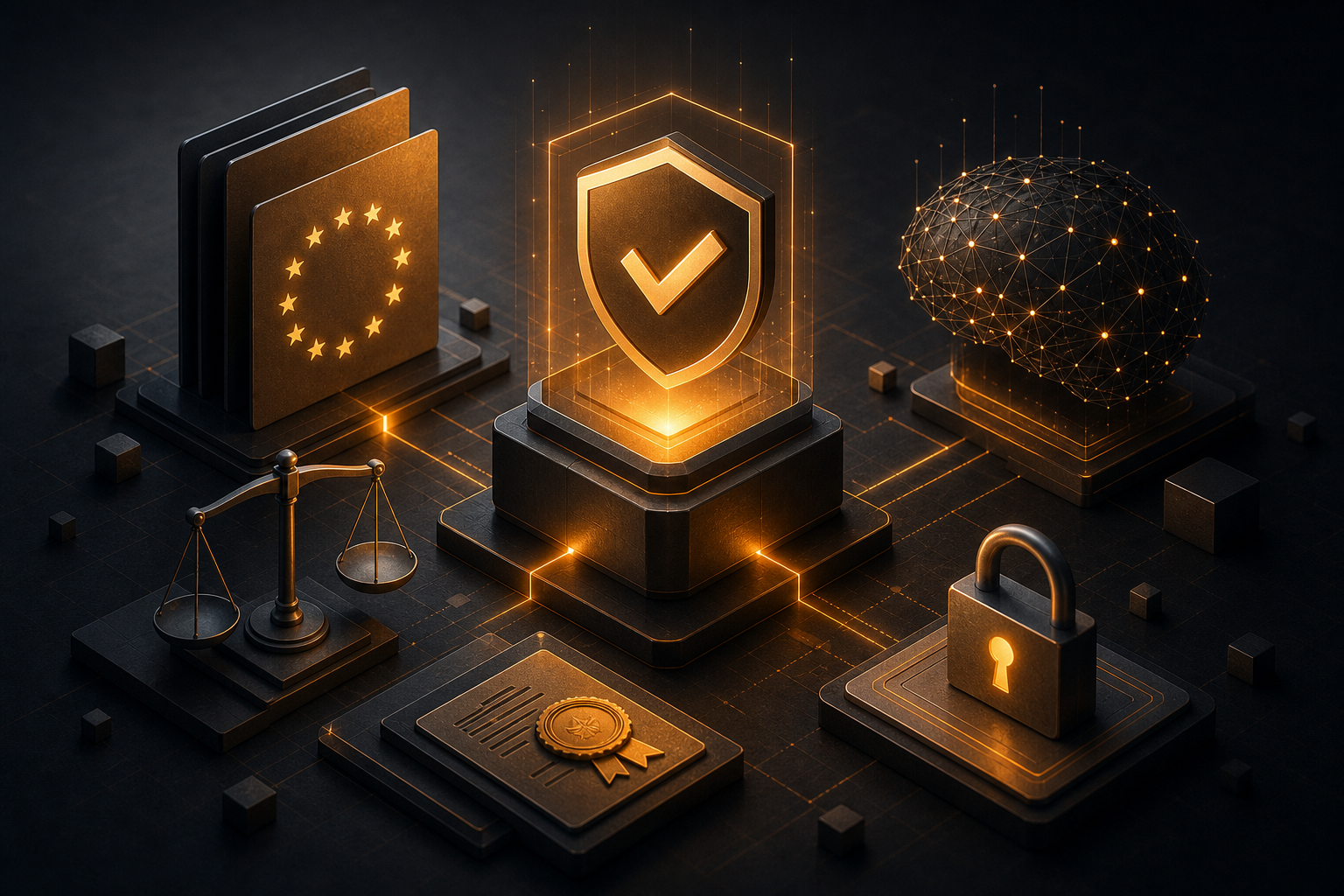
The TÜV Association is working on a standardized certification for AI systems. As the association announced in Berlin, TÜV organizations are currently testing a KI certification program with pilot partners. The goal is clear: companies and users should be able to see at a glance how trustworthy an AI application is – especially when sensitive data is involved.
Key facts
- Three-tier system: TÜV is developing a tiered certification program that differs in scope, methodology, and depth of testing
- Timeline: Phased rollout planned for end of the year
- Pilot phase underway: TÜV organizations are currently testing the program with selected partners
- AI Act-oriented: The first tier targets systems outside the high-risk category of the EU AI Act
Three certification tiers with different requirements
The program follows a tiered approach. The first certification addresses systems that do not fall under the high-risk category of the AI Act – essentially the majority of AI applications in use today. The focus here is on fundamental trust criteria.
The second tier is open to all AI systems and includes a more comprehensive "AI-specific risk assessment" as well as verification that manufacturers are actually implementing their requirements. This is relevant for companies using AI in more critical contexts.
The third certification goes furthest: selected properties of an AI system are verified through independent testing – a procedure designed especially for high-risk applications.
What this means for practice
The TÜV certificate is intended to answer a central question: Is it safe to give this AI sensitive data? And: Are the answers actually correct? This uncertainty currently holds back many companies from AI adoption. A standardized certificate could provide clarity here – similar to the well-known TÜV seal for machine safety or data protection.
The alignment with the EU AI Act is no coincidence: the legislation already defines high-risk categories and requirements. TÜV is essentially building its certification on top of this, making it immediately relevant for companies that need to comply with the AI Act anyway.
What this means for you
For German mid-market and larger companies, the TÜV certificate could quickly become a de facto standard – similar to ISO certifications today. If you use or develop AI systems, you should monitor this development. The certification could help not only internally for compliance documentation, but also serve as an external trust signal to customers and partners. What remains open: how strict will the audit criteria be? And will the certificate be recognized across Europe or only in Germany? These questions will become clearer during the pilot phase.
Sources
Editorially owned by Ideal Syka. Sources and method: Newsroom & method. Tips and corrections: ai@i6eal.de.