
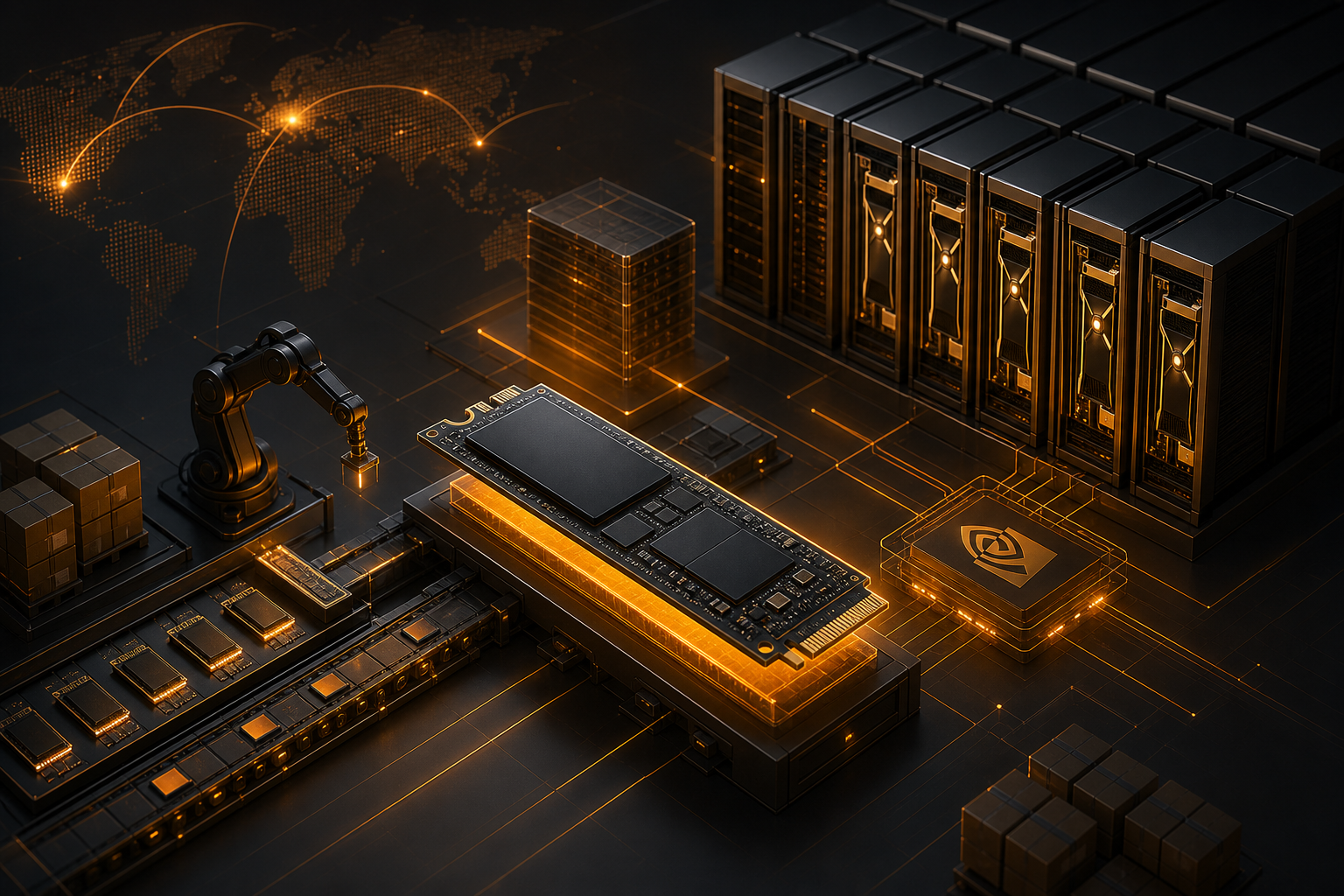
Samsung has started mass production of PCIe 6.0 SSDs specifically designed for Nvidia AI servers. The new storage generation addresses the growing demands of data centers processing massive datasets for large language models and other AI workloads. This move signals a concrete escalation in hardware infrastructure – and reveals that the supply chain for AI systems remains under pressure.
The essentials
- Samsung launches mass production of PCIe 6.0 SSDs tailored for Nvidia AI servers
- The new storage generation delivers higher bandwidth and throughput compared to previous generations
- Target market: data centers and cloud providers training and operating AI models
- Part of a broader trend: hardware makers are actively optimizing product lines for AI workloads
Why PCIe 6.0 matters now
PCIe 6.0 is designed to deliver higher bandwidth compared to PCIe 5.0. While this sounds technical, it has practical implications: processing large language models creates bottlenecks between GPU, CPU, and storage. Faster SSDs reduce these bottlenecks and enable higher throughput per compute cluster. Samsung positions itself as a direct hardware partner in Nvidia's data center ecosystem – a strategic move in a market dominated by a handful of players.
Supply chain implications for data centers
The announcement demonstrates that the storage industry is trying to keep pace with AI infrastructure demand. Previously, GPUs were often the constraint; now storage is moving into focus. For major cloud providers like AWS, Google Cloud, or Microsoft Azure, this means they can scale data centers faster when the entire hardware pipeline (GPU, CPU, storage) upgrades in parallel. Smaller operators may face longer lead times if Samsung prioritizes capacity for the largest players.
What this means for companies in Germany
German mid-market firms and industrial enterprises planning on-premises or hybrid AI deployments should monitor this trend. New hardware generations like PCIe 6.0 enable faster systems – but require corresponding investments in overall infrastructure. Organizations investing in AI infrastructure now should look beyond GPU capacity and plan storage and memory architecture carefully. At the same time, competition for AI hardware is intensifying, and supply chains remain tight. Early planning is essential.
Sources
Editorially owned by Ideal Syka. Sources and method: Newsroom & method. Tips and corrections: ai@i6eal.de.