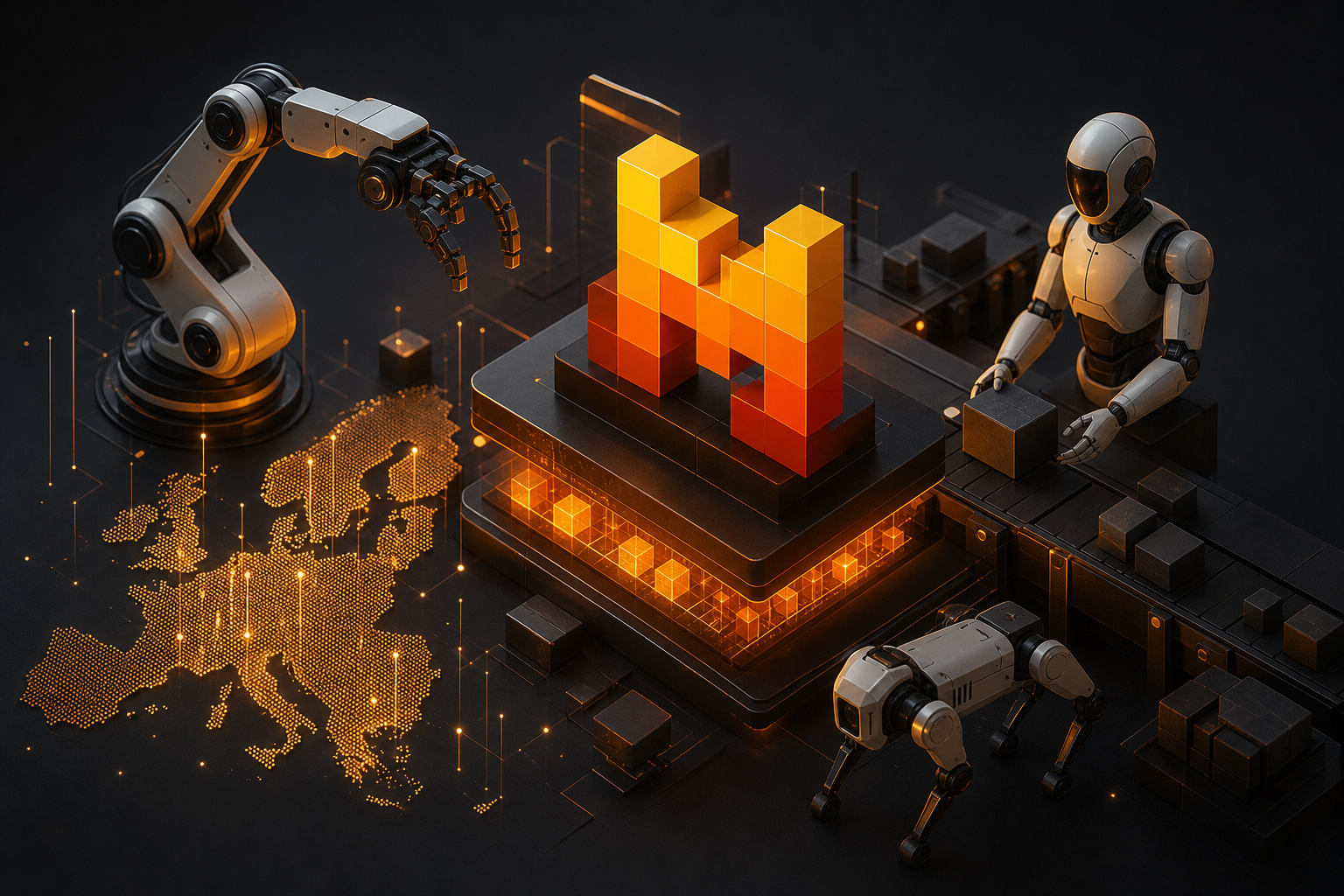
Mistral AI has developed and released a robotics model designed to support autonomous navigation and physical automation in robots. Bloomberg confirms the release as part of the company's broader Physical AI initiative. The model is called Robostral Navigate and focuses on single-camera navigation – controlling robots through a single camera without additional sensors.
The essentials
- Mistral AI introduces its first robotics model to bridge the gap between language models and physical automation
- Robostral Navigate uses single-camera technology for autonomous robot navigation
- The release is confirmed by Bloomberg and signals a strategic pivot for the French lab
- Physical AI becomes a new focus area for European KI developers alongside LLMs
From chat to robotics
Until now, Mistral and its competitors focused primarily on Large Language Models – language models for text and dialogue. With the robotics model, Mistral enters new territory: controlling physical systems. This is no accident. While OpenAI, Google and other US providers are already investing in robotics, European labs lacked a clear offering. Mistral is now filling this gap with a model specifically trained for the challenges of autonomous systems.
The focus on single-camera navigation is practically relevant: many robots in industry and logistics operate with simple camera setups. A model that works with these constraints reduces costs and complexity.
What Physical AI means for the market
Physical AI describes AI systems that don't just think but also act – through robots, drones or other machines. This is a market with real potential: automation in warehouses, manufacturing, agriculture and logistics. Mistral is positioning itself not as a pure chat provider, but as an infrastructure partner for companies looking to automate their processes.
Mistral's release follows a trend: European AI labs are expanding into new domains beyond language models. To remain relevant in the AI economy, you must expand into new areas.
What this means for German companies
For German mid-market and industrial companies, the robotics model could become interesting – especially for businesses advancing automation but wanting to avoid dependence on US providers. A European model potentially offers better data protection guarantees and shorter paths to support and customization. However, it remains unclear how mature the model is and what performance it achieves in production environments. The coming weeks will show whether Mistral has delivered a genuine offering or a proof-of-concept.
Sources
Editorially owned by Ideal Syka. Sources and method: Newsroom & method. Tips and corrections: ai@i6eal.de.