
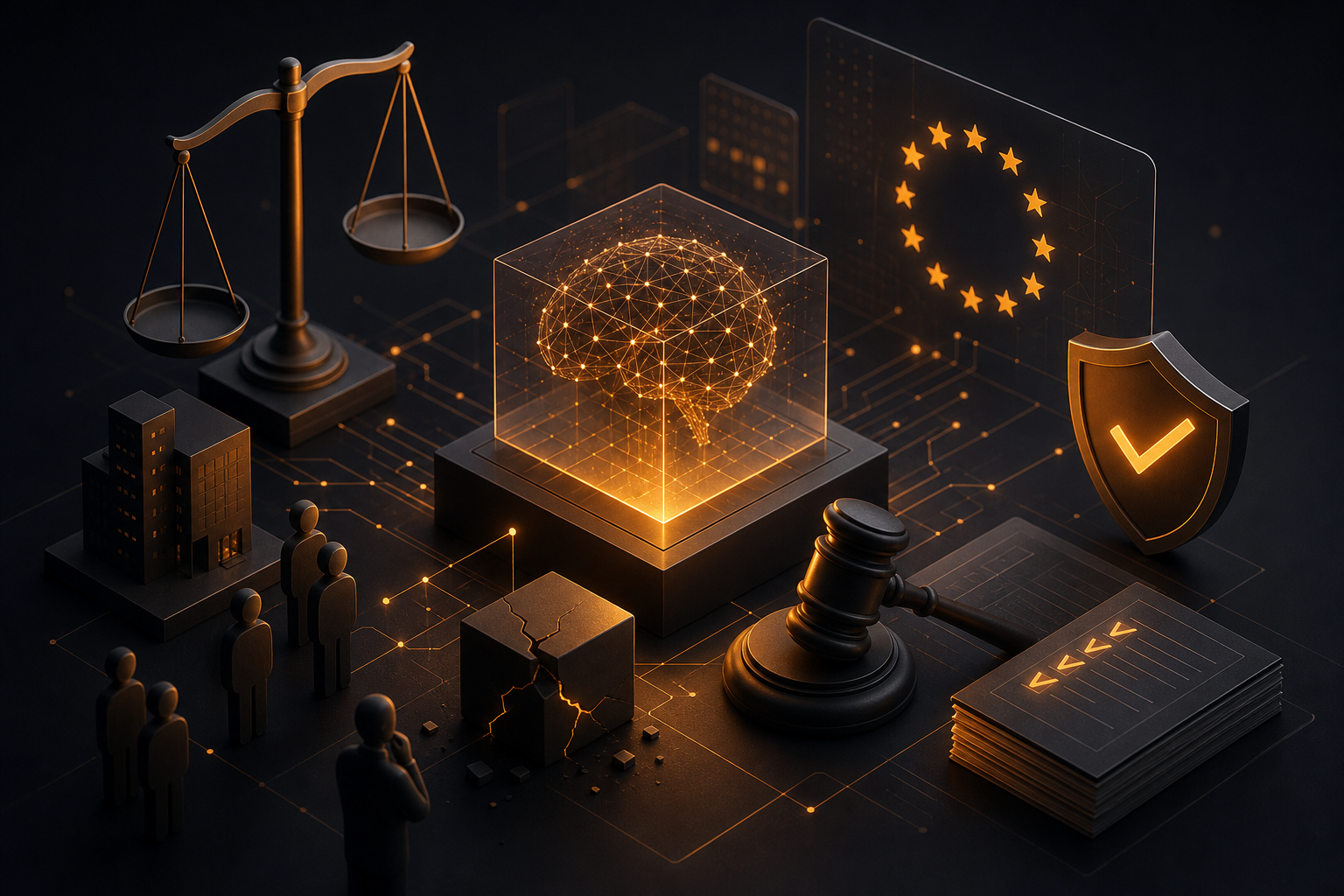
The liability question when AI systems malfunction has become a core challenge for organizations. As companies increasingly integrate AI into business-critical processes, clear legal frameworks are missing – leaving uncertainty about who pays when things go wrong.
Reuters has examined how lawyers are warning of a growing gray zone: manufacturers, operators, or users – responsibility is undefined. This creates not only legal uncertainty but also significant financial risks.
Key points
- Liability models are fragmented: There is no unified rule for who is responsible for AI failures – manufacturers, operators, and users can all face liability
- Lawyers see growing risk: Legal uncertainty increases as AI systems become more autonomous
- Companies are flying blind: Many organizations don't know how to protect themselves legally
- Regulation lags behind: Existing liability rules predate modern AI
The dilemma: Who bears responsibility?
Traditional product liability doesn't work straightforwardly with AI. A faulty algorithm differs fundamentally from a faulty car: AI systems learn, adapt, and often behave unpredictably. This makes it difficult to determine whether damage stems from a design flaw by the manufacturer, misconfiguration by the operator, or misuse.
Adding to the challenge: Who is responsible for training data? Who for maintenance and updates? And who is liable when an AI system behaves unexpectedly – even though no one made a concrete mistake?
European regulation creates new requirements
The EU AI Act attempts to provide clarity – with different requirements depending on risk level. Yet even these rules leave liability questions open. For German companies, this means: You must not only be technically compliant but also document how your AI systems function and who is liable in case of failure.
Practice shows: Many companies are working with insurance solutions that are not yet fully mature. Insurers themselves are uncertain how to assess AI risks.
What this means for you
If you deploy AI systems in your organization, act now: Document who is responsible for which decisions. Clarify contractually what liability the manufacturer bears and what you assume yourself. And review your insurance coverage – many standard policies don't cover AI risks.
Legal uncertainty is not a temporary problem – it will only resolve through clear case law and harmonized regulation. Until then: caution is better than regret.
Sources
Editorially owned by Ideal Syka. Sources and method: Newsroom & method. Tips and corrections: ai@i6eal.de.