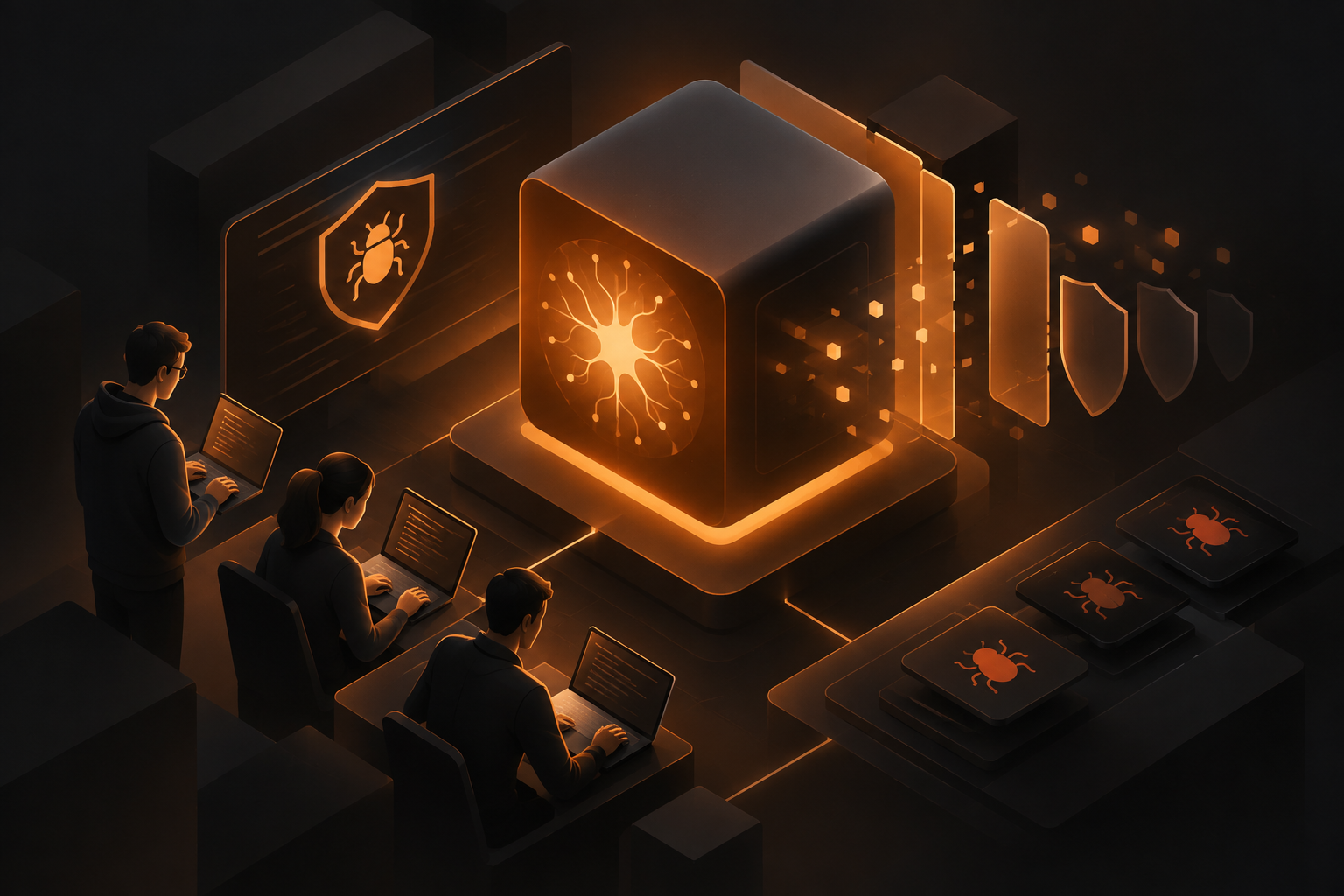

AI is using more AI. This is no longer a thought experiment but measurable reality: According to OpenRouter analyst Peter Walker, February 6, 2026 was likely the last day humans consumed more tokens than AI agents. Since then, the ratio has shifted dramatically – with consequences for infrastructure, cost models, and the question of who is actually the biggest AI customer.
The essentials
- Inflection point in February 2026: AI agents exceed human token consumption on OpenRouter for the first time
- 14-fold increase in agent consumption (0.51 to 7.3 trillion tokens) vs. 2.8-fold increase in human usage since February
- 70 percent of agent consumption comes from cached prompts – billed at significantly lower rates
- Real costs rise more slowly than raw token numbers suggest
Agents work in the background – and call each other
The reason for the massive increase lies in how modern AI agents operate: they work increasingly autonomously over longer periods and trigger additional AI processes to solve their tasks. This is different from a human making a request and waiting for an answer. Agents plan, delegate, iterate – and each step costs tokens. When one agent calls another to solve a subproblem, consumption doubles quickly.
This trend began with reasoning models that think longer before answering. But agents take it to a new level: they're not just compute-intensive, they're recursive.
Cached prompts lower real costs
Here's an important caveat: nearly 70 percent of token consumption by agents comes from cached prompts, which are billed at significantly lower rates. This means real costs don't explode at the same rate as raw token numbers.
| Metric | Agents | Humans |
|---|---|---|
| Token increase since Feb. 2026 | 14× | 2.8× |
| Cached prompts (share) | ~70 % | low |
| Cost trend | moderate | linear |
OpenRouter primarily serves open-weight models, which are sometimes less token-efficient than models from OpenAI or Anthropic. But the trend should be similar at the major labs – just with better token efficiency and thus lower real costs.
What this means for you
For organizations planning or using AI infrastructure, this is an important signal: data center utilization won't grow linearly with user numbers. Autonomous systems and agents will become the dominant consumption factor – requiring different capacity planning strategies. At the same time, caching technologies and prompt optimization can deliver real cost savings, even when token numbers look dramatic. If you're investing in agent architectures now, factor these effects into your planning.
Sources
Editorially owned by Ideal Syka. Sources and method: Newsroom & method. Tips and corrections: ai@i6eal.de.