Autonomous AI agents automatically execute malicious code from Git repositories on system startup – without user confirmation or security prompts. A new security analysis reported by heise online reveals a fundamental problem: AI systems designed to independently load and execute code can also activate malware.
Key Points
- Autonomous AI agents automatically load and execute code from Git repositories at startup
- Execution occurs without user interaction or security verification
- The risk primarily affects enterprise environments where AI systems operate independently
- Security researchers warn of supply-chain attacks via compromised code repositories
How the Vulnerability Works
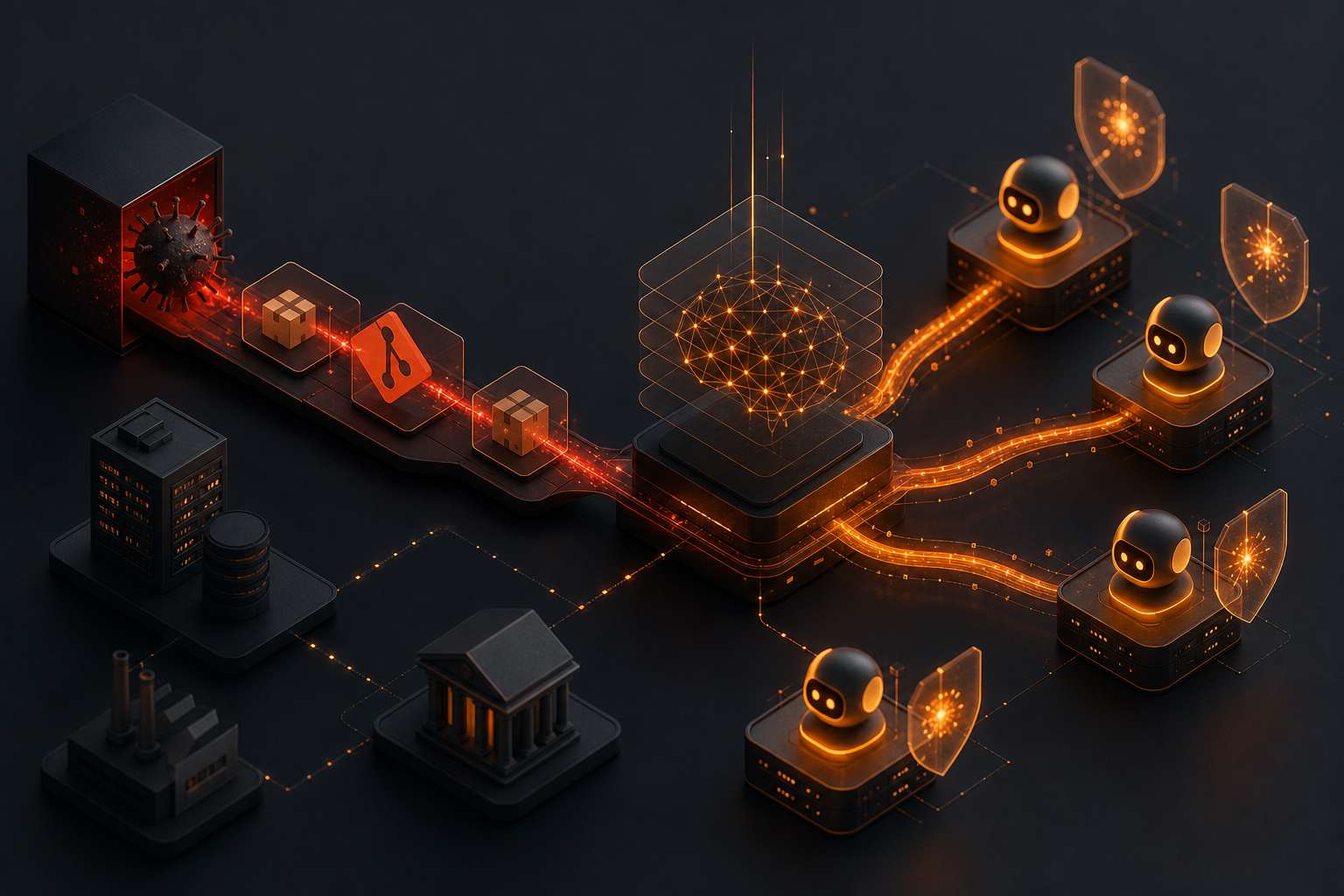
The problem lies in the architecture of modern AI agents: they are designed to independently load, analyze, and execute code – for example, to automate tasks or support development processes. When an AI agent starts, it downloads dependencies from Git repositories. This is where the vulnerability comes in: an attacker can prepare a public or internal repository with malware. The AI agent automatically downloads and executes it on the next startup – completely undetected.
This is particularly insidious because AI agents often run with elevated privileges or have access to sensitive systems. A compromised agent could exfiltrate data, infect other systems, or disable networks.
Supply-Chain Attacks at a New Level
The vulnerability opens a new attack surface for supply-chain attacks. Instead of targeting individual developers, attackers can centrally manipulate a repository – and all AI agents depending on it are automatically infected. This is significantly more efficient than traditional malware distribution.
Particularly critical: many companies use internal Git servers for AI projects. If an attacker gains access to such servers – through phishing or weak credentials – they can compromise hundreds or thousands of AI agents without immediate detection.
What Companies Should Do Now
For German enterprises using or planning to deploy AI agents, this is a warning: autonomous systems require strict controls. Specifically:
- Code signing: only allow signed and verified code repositories
- Sandbox environments: run AI agents in isolated systems, not with production access
- Monitoring: log all AI agent activities and check for suspicious patterns
- Least privilege: grant agents only the minimum necessary permissions
The vulnerability reveals a fundamental tension: the more autonomous AI systems become, the greater their damage potential. Companies must balance functionality and security – and security should clearly take priority.
Sources
Editorially owned by Ideal Syka. Sources and method: Newsroom & method. Tips and corrections: ai@i6eal.de.