
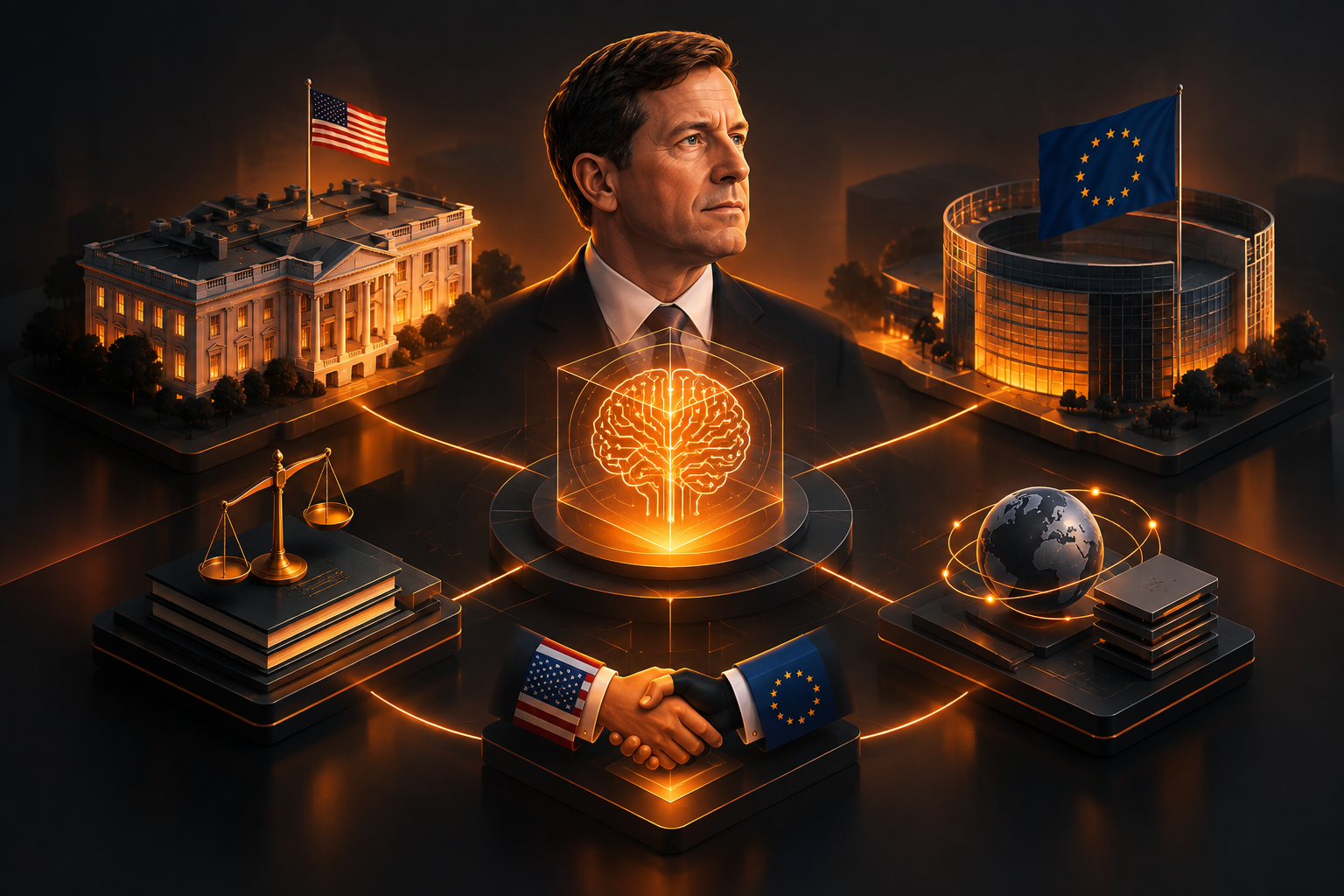
Jay Clayton has been appointed White House AI Czar, becoming the Trump administration's chief advisor on artificial intelligence. The appointment marks a personnel reshuffle in U.S. AI governance and offers early signals about the regulatory direction Washington will pursue under Trump.
Key Facts
- Jay Clayton, former chair of the U.S. Securities and Exchange Commission (SEC), takes on the role of White House AI Czar
- The appointment occurs under the Trump administration and signals a reorientation of U.S. AI policy
- Clayton brings experience in financial regulation and corporate oversight
- The position is central to shaping AI standards and international negotiations
Who Is Jay Clayton?
Clayton served as Securities and Exchange Commission (SEC) chair from 2017 to 2020 and is regarded as an experienced regulator with a focus on financial market oversight. He comes from a major law firm and has dealt with digital assets, blockchain, and technological innovation in the financial sector during his previous role. His appointment as AI Czar suggests the Trump administration wants a regulatory pragmatist at the helm of AI policy – not necessarily an AI technologist, but someone who understands oversight structures.
Signals for AI Regulation
Clayton's selection could point to several directions: First, a focus on safety and compliance rather than unfettered technological advancement. Second, an interest in sector-specific solutions – similar to how the SEC regulates individual markets, Clayton might address AI risks by industry (finance, healthcare, critical infrastructure) rather than through universal legislation. Third, a signal that the U.S. takes international coordination with Europe, particularly regarding the EU AI Act, seriously – Clayton has experience with multilateral negotiations from his SEC tenure.
Implications for European Companies
Clayton's appointment matters for German and European AI companies because it signals the U.S. is not betting on total deregulation but on intelligent, sectoral oversight. This could actually benefit European firms already operating under the EU AI Act: if the U.S. establishes similar compliance standards, the cost of deploying global AI systems falls. At the same time, Clayton's pragmatism could mean the U.S. is less willing to adopt European regulatory standards wholesale – instead, two distinct ecosystems may solidify.
It remains unclear how Clayton will navigate the tension between AI innovation and safety, and whether he will use the position to favor U.S. companies like OpenAI, Anthropic, or xAI or to build genuine international standards.
Sources
Editorially owned by Ideal Syka. Sources and method: Newsroom & method. Tips and corrections: ai@i6eal.de.