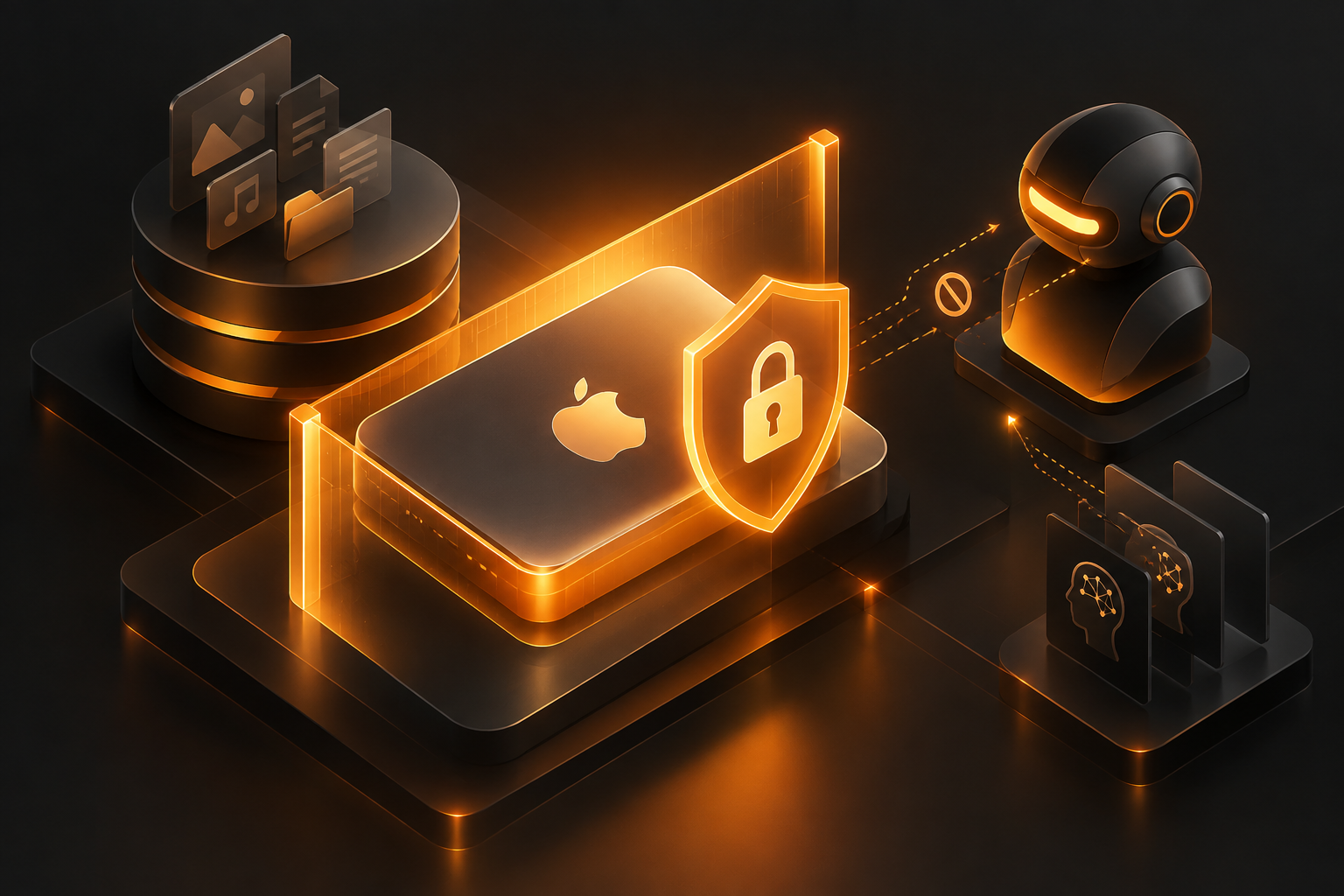
Apple is turning up the heat on KI agent security: The company is tightening requirements for the "Full Disk Access" permission – a critical system authorization that grants programs access to virtually all files on a Mac. This move responds to the growing number of autonomous KI systems that, without strict guardrails, pose potential security risks.
The Essentials
- Apple is raising barriers for Full Disk Access specifically targeting KI agents and autonomous systems
- The measure aims to prevent uncontrolled file access by KI programs
- Particularly affected are agent frameworks and automated systems that previously gained access to sensitive data too easily
- The tightening signals: mainstream KI adoption requires stronger security gates
Why Full Disk Access Became a Security Flashpoint
Full Disk Access is one of the most powerful permissions in the macOS ecosystem. It allows applications to reach files normally protected by sandbox mechanisms – browser history, password managers, crypto wallet data, private documents. For traditional desktop apps, this was long a necessary evil. But with the rise of KI agents – autonomous systems that make decisions and execute actions independently – the situation becomes critical: An agent with Full Disk Access could theoretically access all private data without explicit user instruction, analyze it, or exfiltrate it.
Apple's tightening targets exactly this scenario. The company wants to prevent KI systems from obtaining this permission too easily – and thereby regain control over data security.
A Model for the Industry?
The move is symptomatic of a larger issue: The industry has yet to establish standardized security guidelines for autonomous KI systems. While classical software development relies on proven principles like Least Privilege (minimum necessary permissions), many KI agent frameworks remain experimental and permissive. Apple is signaling: If you want to deploy KI systems in the mainstream market, you must take security architecture seriously.
This could become a model for other platforms – particularly Windows and Linux, where similar discussions are still in their infancy.
What This Means for German Enterprises
For companies developing or deploying KI agents, security requirements are becoming a new reality: Systems must be architected with minimal permissions going forward. This increases development complexity but also forces better architecture. German companies that set standards early could become role models – conversely, those building agents with broad file access risk rapid ecosystem exclusion from major platforms. At the same time, a market is opening for specialized security solutions that sandbox and control KI agents.
Sources
Editorially owned by Ideal Syka. Sources and method: Newsroom & method. Tips and corrections: ai@i6eal.de.