
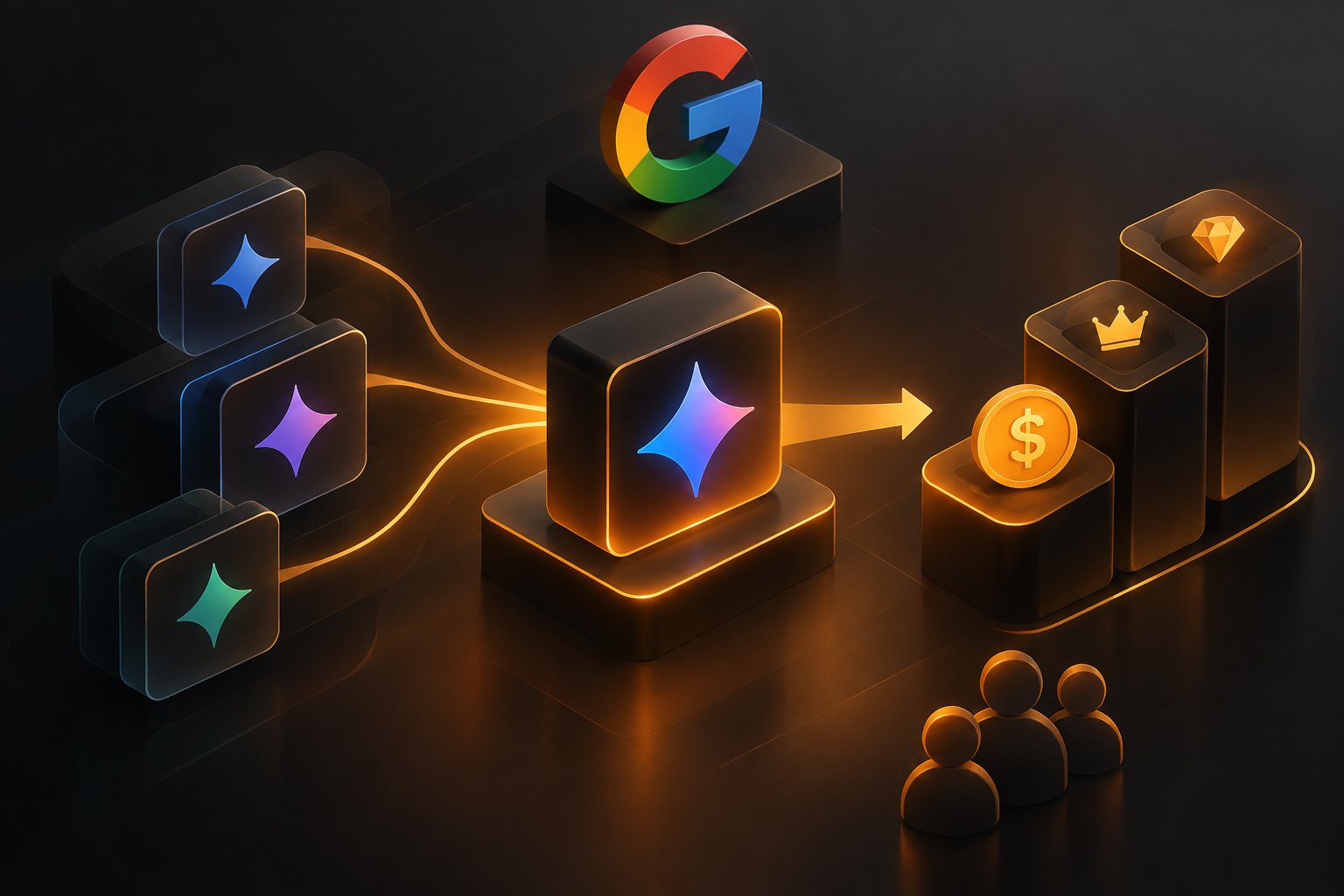
Google is tightening the screws on Gemini pricing. Beginning October 9, free users will be limited to the weaker Gemini Flash-Lite model – access to the more powerful Flash and Pro models disappears. The move comes via an updated support page, as reported by Android Police.
The restrictions also hit paying customers: AI Plus subscribers (Google's cheapest AI plan) will lose access to the Pro model. Only those on AI Pro or AI Ultra plans retain full model variety.
The essentials
- Free users: From October 9, access only to Gemini Flash-Lite instead of multiple models
- AI Plus customers: Lose access to the Pro model, but keep Flash (currently version 3.6, not the latest 3.8)
- AI Pro & Ultra: Gain new features like Deep Think (parallel reasoning, previously Ultra-only)
- Usage limits: Remain unchanged – AI Plus doubles, AI Pro quadruples, AI Ultra quintuples or twentytuples the standard limit
Why now? Argon is coming
Google is clearly clearing the decks for Gemini 4 Argon, its most powerful model yet. Argon reportedly beats ChatGPT and Claude on agentic coding, reasoning, and math tasks – according to benchmarks Google recently shared. Currently, Argon is available only through Google's Fairwind Program for select cybersecurity experts. A public launch could follow within weeks.
The resource reallocation is strategic: free and budget-tier users are pushed toward weaker models to free compute capacity for the new flagship.
Thinking on three levels – like ChatGPT and Claude
Google is also rolling out Thinking Effort Levels for all Gemini models. Users choose between low, medium, and high – similar to Claude and ChatGPT. This offers more control over compute spend and response quality, but consumes more tokens or counts harder against usage limits.
AI Pro subscribers additionally get the Deep Think option, enabling "maximum parallel reasoning" – a feature previously exclusive to AI Ultra users.
Monetization wave in summer and now
This is not Google's first adjustment to its pricing structure. Over the summer, the company switched from prompt-based to compute-based billing and introduced 5-hour and weekly usage limits. Now comes model segmentation.
The pattern is clear: Google is gradually offboarding free users and funneling them into paid tiers. Anyone who previously used Flash for free must now pay – or downgrade to Flash-Lite and accept quality loss.
What this means for enterprises
For agencies and developers in Germany using Gemini in products or workflows, the math gets trickier. Free prototyping phases become weaker; paid usage rises. Those who experimented on the free tier must now decide: switch to Claude or ChatGPT, or upgrade to AI Plus/Pro?
At the same time, Google signals that AI models are increasingly premium goods. This could fragment the market: different vendors, different pricing schemes, different model availability per tier. Organizations running multiple AI systems in parallel must now track capabilities and limits more carefully – a new operational overhead.
Sources
Editorially owned by Ideal Syka. Sources and method: Newsroom & method. Tips and corrections: ai@i6eal.de.