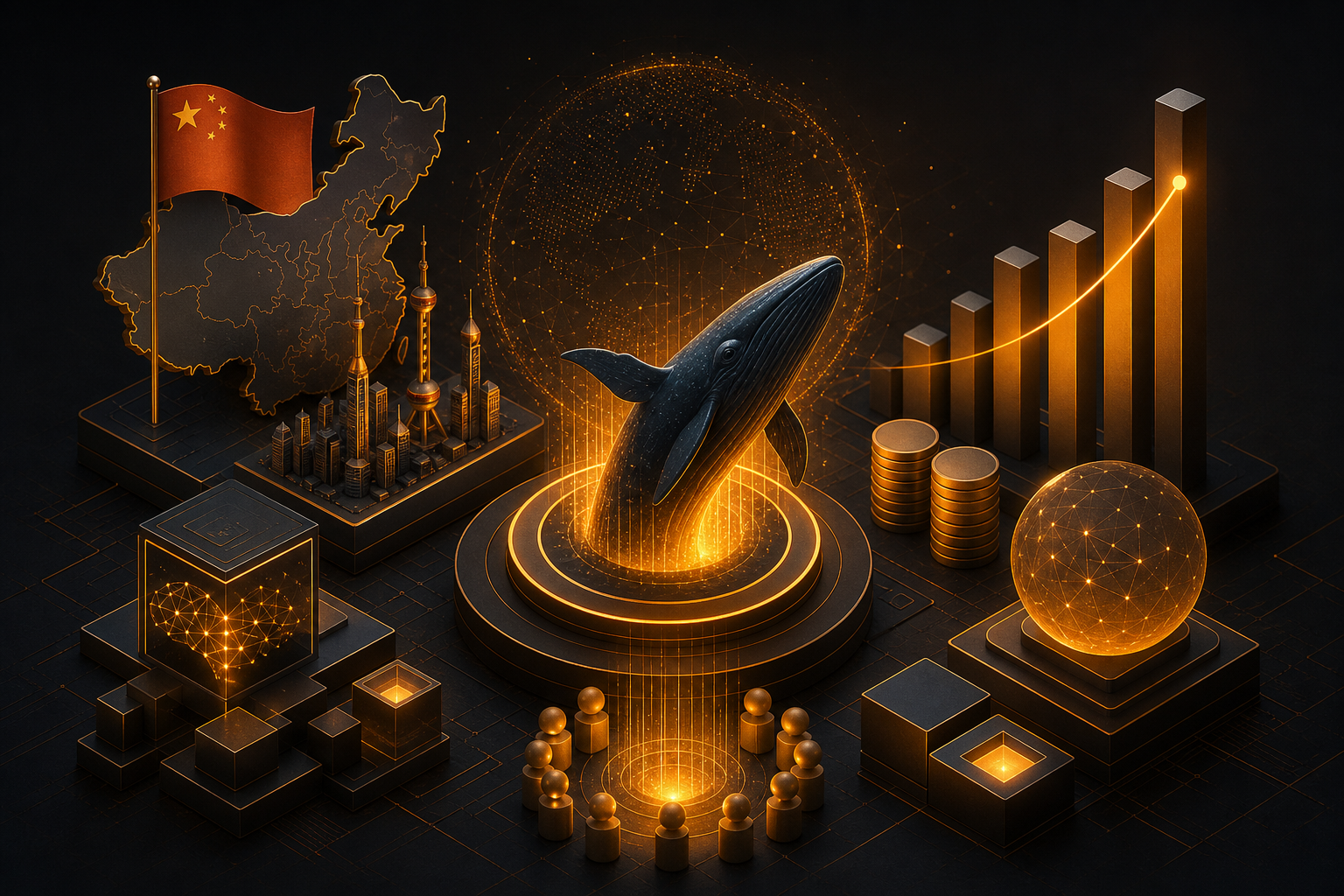
DeepSeek has according to media reports just closed a fundraising round exceeding $7 billion – a record for the Chinese AI startup. The new valuation stands above $50 billion according to media reports. With this move, DeepSeek enters according to reports the league of the world's most valuable private AI companies and signals that the competition for AI dominance is no longer confined to the West.
Quick Facts
- DeepSeek closes fundraising round of over $7 billion
- New valuation of the Chinese startup exceeds $50 billion
- The company already competes with Anthropic and OpenAI on AI models, according to analysis
- Indicates massive capital availability for AI development in China
A New Player in the AI Race
DeepSeek positions itself not as a pure infrastructure company but as a direct competitor to established US providers. According to analysis by Awani International, the startup is now developing AI models that rival those of Anthropic and OpenAI – and at significantly lower costs. This is the decisive feature: DeepSeek demonstrates that high-performance AI systems do not necessarily require the same investments as those in the West.
What This Means for the Global AI Market
The fundraising round underscores a trend that is becoming clear: AI competition is becoming increasingly multipolar. While OpenAI, Anthropic, and other Western companies invest billions in hardware and research, China is mobilizing massive capital for its own developments. DeepSeek's success shows that it is possible to build competitive systems with different approaches – such as more efficient model architectures or optimized training methods.
This has implications for pricing, innovation speed, and the geopolitical dimension of AI. When multiple providers worldwide offer high-quality models, the price for AI services falls – benefiting companies but also increasing pressure on established providers.
What This Means for German Companies
German firms should follow this development closely. DeepSeek's success shows that AI competition is no longer a duopoly between OpenAI and Google. This opens opportunities: more providers mean more choices, lower prices, and potentially better negotiating positions. At the same time, pressure grows to build own AI expertise – not just as a user but also as a developer. For German mid-market companies, this could mean AI solutions become affordable faster, but also that dependence on single providers decreases and new partnerships emerge.
Sources
Editorially owned by Ideal Syka. Sources and method: Newsroom & method. Tips and corrections: ai@i6eal.de.