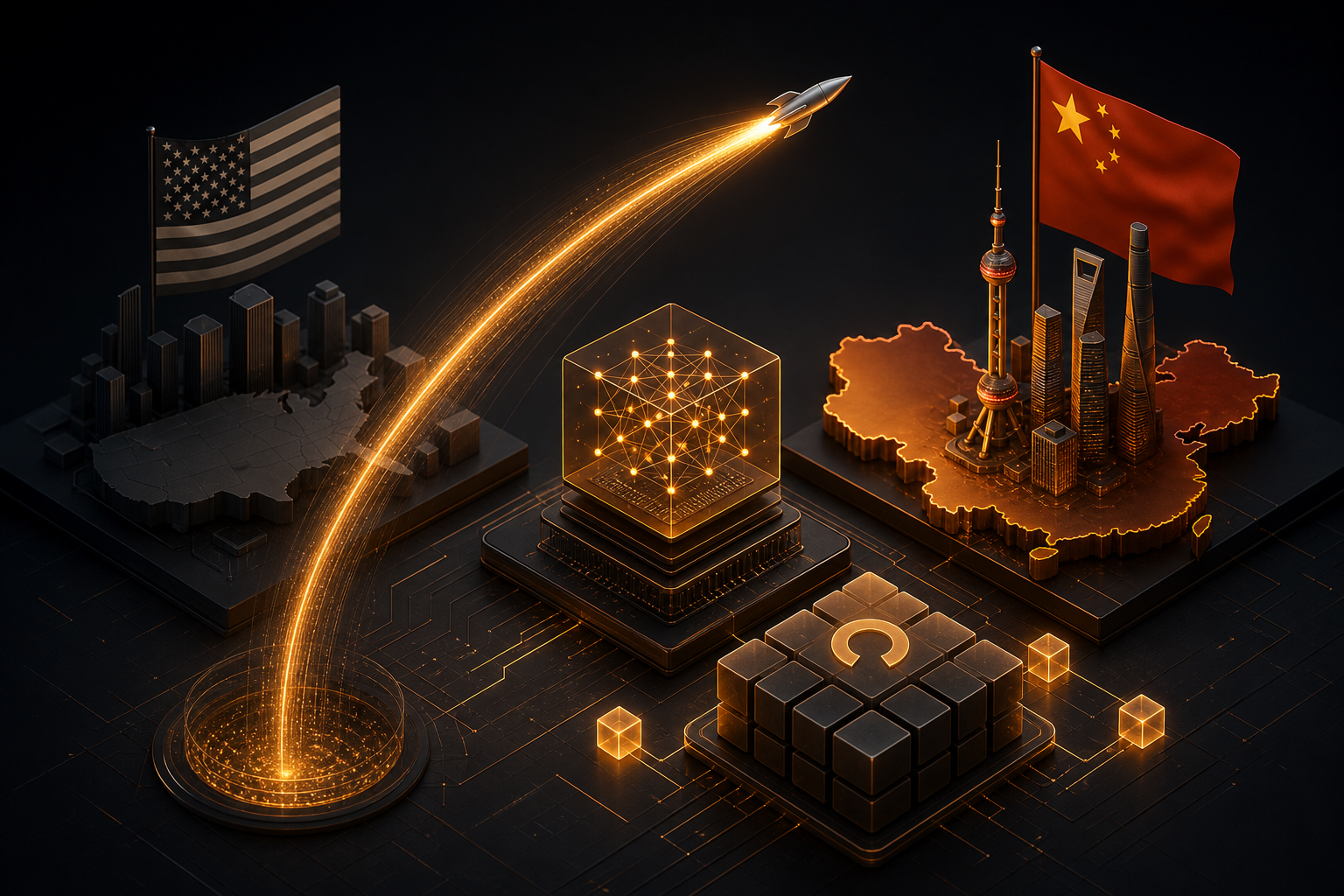
China has reached a strategic inflection point in artificial intelligence: while the US once held a lead of up to five years, the gap has now narrowed to mere months. This is exemplified by Kimi K3, the new model from Chinese startup Moonshot AI, which according to DW.com rivals Anthropic's Claude on key benchmarks – sometimes even outperforming it.
Key Facts
- Moonshot AI unveiled Kimi K3: an AI model that matches or exceeds Claude in tests – with significantly less computing power and cost
- Chinese firms like DeepSeek and Alibaba (Qwen) prioritize open-source models over expensive closed-source systems
- US President Donald Trump threatens to block Chinese AI models; Treasury Secretary Scott Bessent warns of sanctions over alleged IP theft
- China's lag compressed from up to five years to mere months
Strategy: "Good Enough" Over Frontier Research
China's approach differs fundamentally from the West. While Anthropic and OpenAI invest hundreds of billions in frontier models, China pursues a pragmatic course: facing US export restrictions on high-end chips, the industry focuses on dozens of open-source models with "sufficient" technology. These are already widely deployed across Chinese businesses, government services, and consumer devices.
The effect is striking. As technology analyst Alvin W. Graylin told DW.com:
"Kimi K3 commoditizes frontier models. For 98% of customers, the 1-to-2% difference in knowledge isn't worth paying 10 to 20 times more."
This commoditization of high-end AI could fundamentally shift market dynamics – much like Microsoft once dominated the desktop market.
The "Distilling" Accusation and Beijing's Pushback
Washington is nervous. OpenAI and Anthropic accuse Chinese labs of using their models to train their own systems – a process called distilling. According to the White House, this occurs in China at "industrial scale." The US government threatens sanctions and model bans.
Beijing rejects the allegations, calling them "technological bullying" to contain China's rise. Researcher Giulia Neaher from the Stimson Center in Washington downplays distilling's role: Kimi K3's success stems instead from talent, infrastructure, and invested resources.
Why Open Source Is China's Advantage
The strategic difference lies in licensing. The US locks its top models behind closed-source walls to maximize profits through subscriptions, licensing, and token fees. China, by contrast, opens its models: developers can download them, run them on their own servers, and fine-tune them for specific needs.
This approach lets Chinese labs enlist the global AI community for improvement – a multiplier effect that centrally controlled systems lack.
What This Means for German Companies
The shift in the AI landscape poses a dilemma for European and German firms. On one hand, they benefit from cheaper, open alternatives to US monopolies. On the other hand, Chinese dominance could create new geopolitical dependencies. Companies should watch whether the West unites on technological countermeasures – or whether fragmentation into US, Chinese, and European AI ecosystems becomes the new normal. The KI-IQ benchmark will track this evolution.
Sources
Editorially owned by Ideal Syka. Sources and method: Newsroom & method. Tips and corrections: ai@i6eal.de.