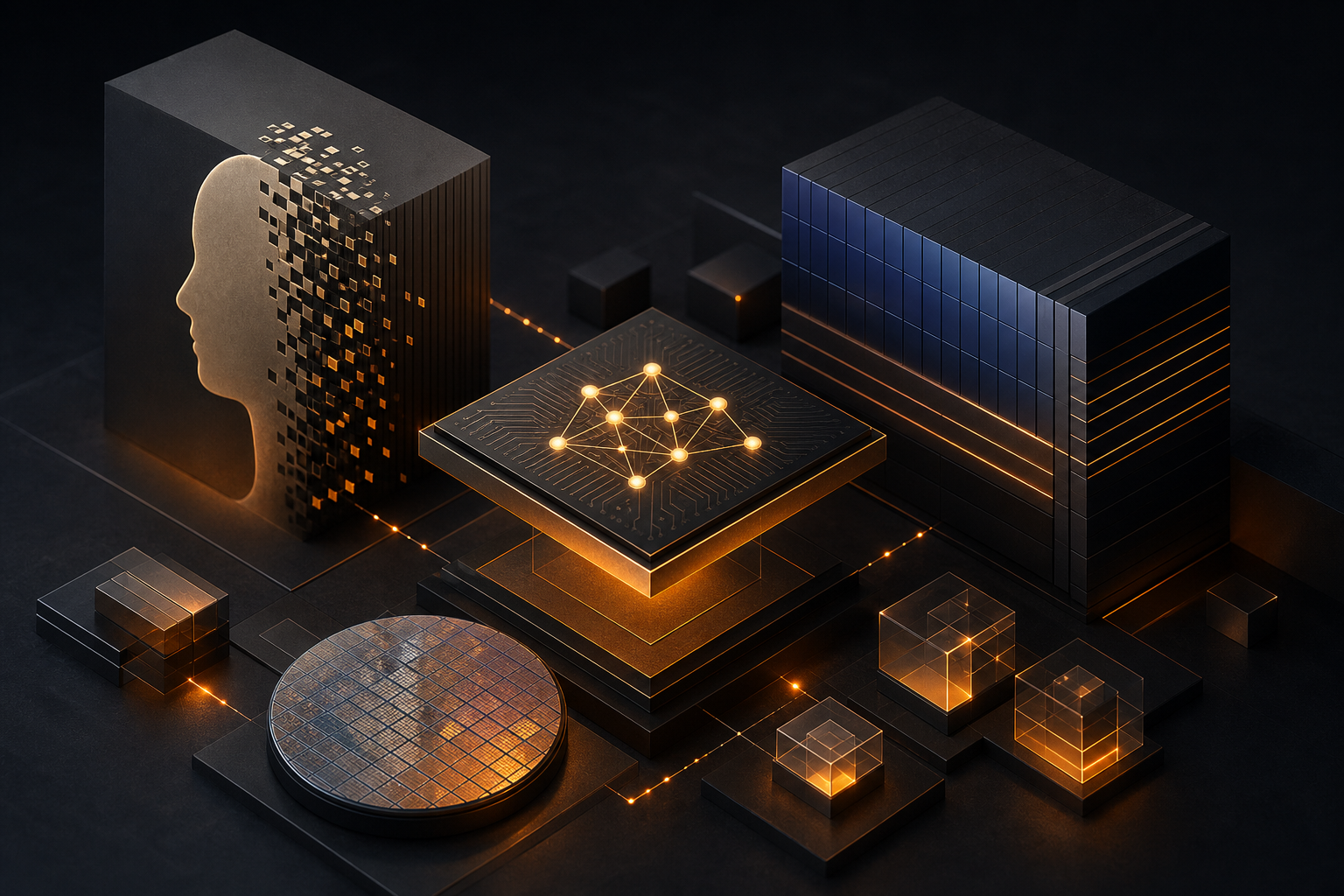
Anthropic is in discussions with Samsung about manufacturing a custom AI chip, according to Technology Org.
The essentials
- Anthropic is negotiating with Samsung for production of a custom AI chip
- Goal: strategic independence from Nvidia, the dominant GPU supplier
- Custom chips signal massive internal compute ambitions and scaling plans
- Multiple AI companies (OpenAI, Google, Meta) have pursued similar strategies
Why Samsung?
Samsung is one of the few semiconductor manufacturers globally offering foundry services at scale—manufacturing custom chips for external customers. Alongside TSMC (Taiwan), Samsung is a primary player. The choice suggests Anthropic is seeking a reliable, established production facility to avoid dependence on a single supplier.
The hardware trend in AI
Anthropic's move into custom hardware follows an established pattern: OpenAI, Google, and Meta all have their own chips or chip projects. The rationale is both economic and strategic: controlling your own hardware cuts costs, optimizes for proprietary models, and reduces supply-chain vulnerability. While Nvidia still dominates the AI accelerator market, major players refuse to remain locked into that dependency.
For Anthropic, this is particularly relevant because Claude, its flagship language model, demands massive computational resources. An optimized chip could slash inference costs and reduce latency—both critical for commercial services.
What comes next?
The negotiations are ongoing; no deal is confirmed. But the fact that Anthropic is seriously exploring this path signals that the AI industry is entering a consolidation phase where only companies with proprietary hardware strategies remain competitive long-term. Simultaneously, the market for specialized chips is expanding—not just for training, but also for edge deployment and inference.
This has supply-chain implications too: as more AI firms build custom chips, it eases pressure on Nvidia short-term but fragments standards. For companies offering AI hardware or services, supporting multiple chip architectures becomes essential.
What this means for European players
German AI startups and mid-market firms should watch this closely: those relying on Anthropic APIs or working with Claude could benefit from optimized chips—faster responses, lower costs. Simultaneously, pressure mounts on European semiconductor makers to capture AI-specialized chip segments. Here lies an opportunity for German foundries and chip designers to position themselves as alternatives to Samsung and TSMC—especially as sovereignty and regulation (EU AI Act) gain weight.
Sources
Editorially owned by Ideal Syka. Sources and method: Newsroom & method. Tips and corrections: ai@i6eal.de.