
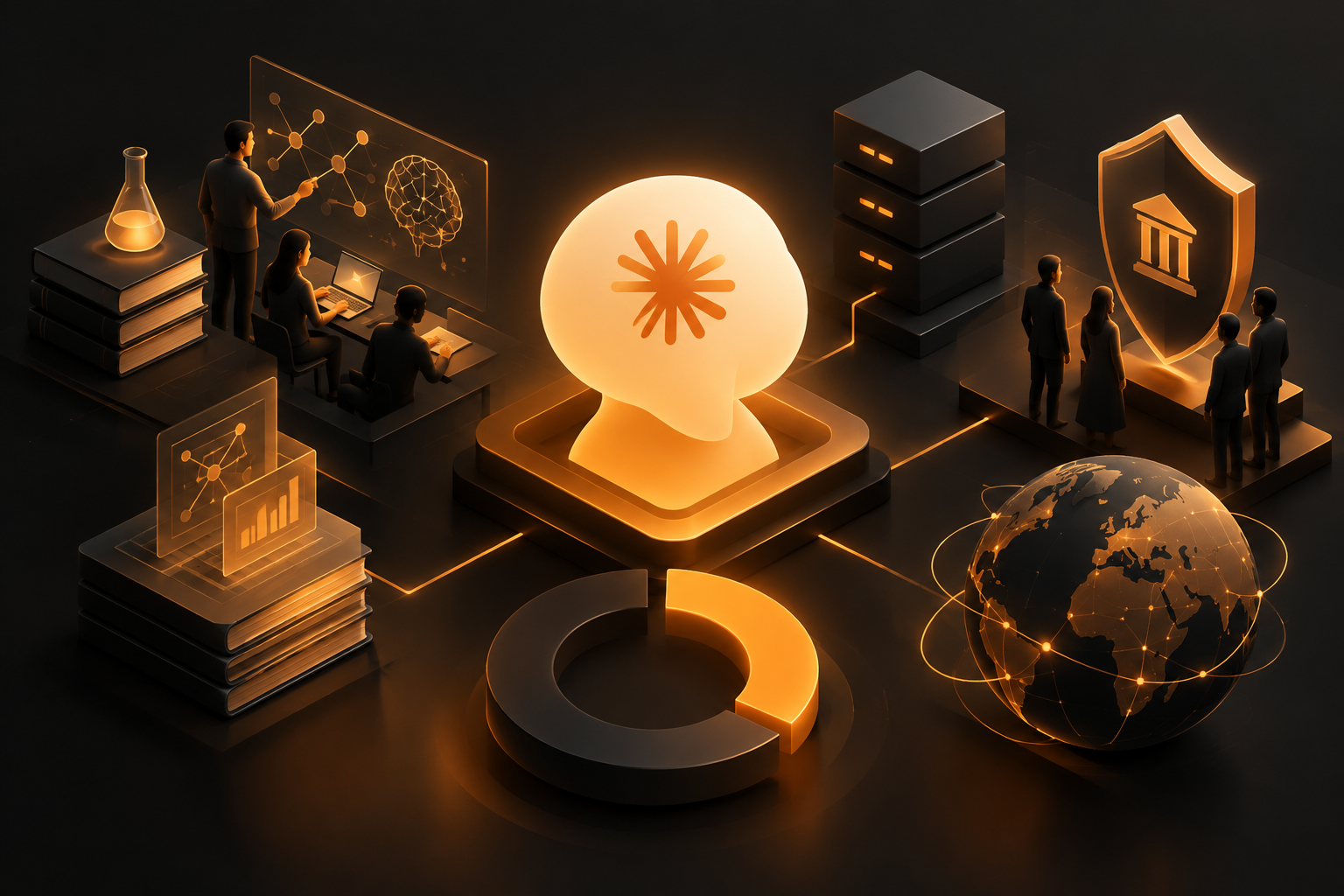
Anthropic has announced that its chatbot Claude now drives 26% of the company's AI research and development work. This means Claude plays a substantial role in Anthropic's R&D efforts – a step demonstrating how deeply language models are already being integrated into research processes.
Key Facts
- Claude leads 26% of R&D work at Anthropic – far beyond a support function
- The company deploys the chatbot directly in research operations, not just for routine assistance
- The announcement comes from Anthropic itself and has been reported by The Washington Post, Bloomberg, and Engadget
How Claude Is Used in Research
Anthropics approach differs from traditional AI development workflows: rather than using Claude merely as a tool to accelerate routine tasks, the company integrates the chatbot directly into core research. The company has previously emphasized using its own models for improvement. What's novel is making the scale public: one-quarter of total R&D capacity now flows through Claude.
Governance and Controllability Questions
The announcement raises questions that extend beyond efficiency gains. When an AI model is deeply embedded in research processes, new dependency structures emerge: How is it ensured that Claude introduces no biases into the research? How transparent is this process for external audits?
Anthropics focus on Constitutional AI – an approach where models are trained according to explicit principles – aims to minimize such risks. Yet the practical implementation at 26% of research remains an industry test case.
What This Means for German Enterprises
For German research and tech companies, Anthropics move signals that AI models are becoming active agents in their own development, not merely tools. This opens efficiency potential but also demands new governance structures. Organizations integrating AI into R&D processes should ask: How do transparency and traceability remain intact when AI systems make decisions themselves? And how does this align with regulatory requirements like the EU AI Act, which mandates transparency and human oversight?
Anthropics openness about this practice could set a precedent for other providers – or serve as a warning that the industry is advancing faster than governance frameworks can accommodate.
Sources
Editorially owned by Ideal Syka. Sources and method: Newsroom & method. Tips and corrections: ai@i6eal.de.