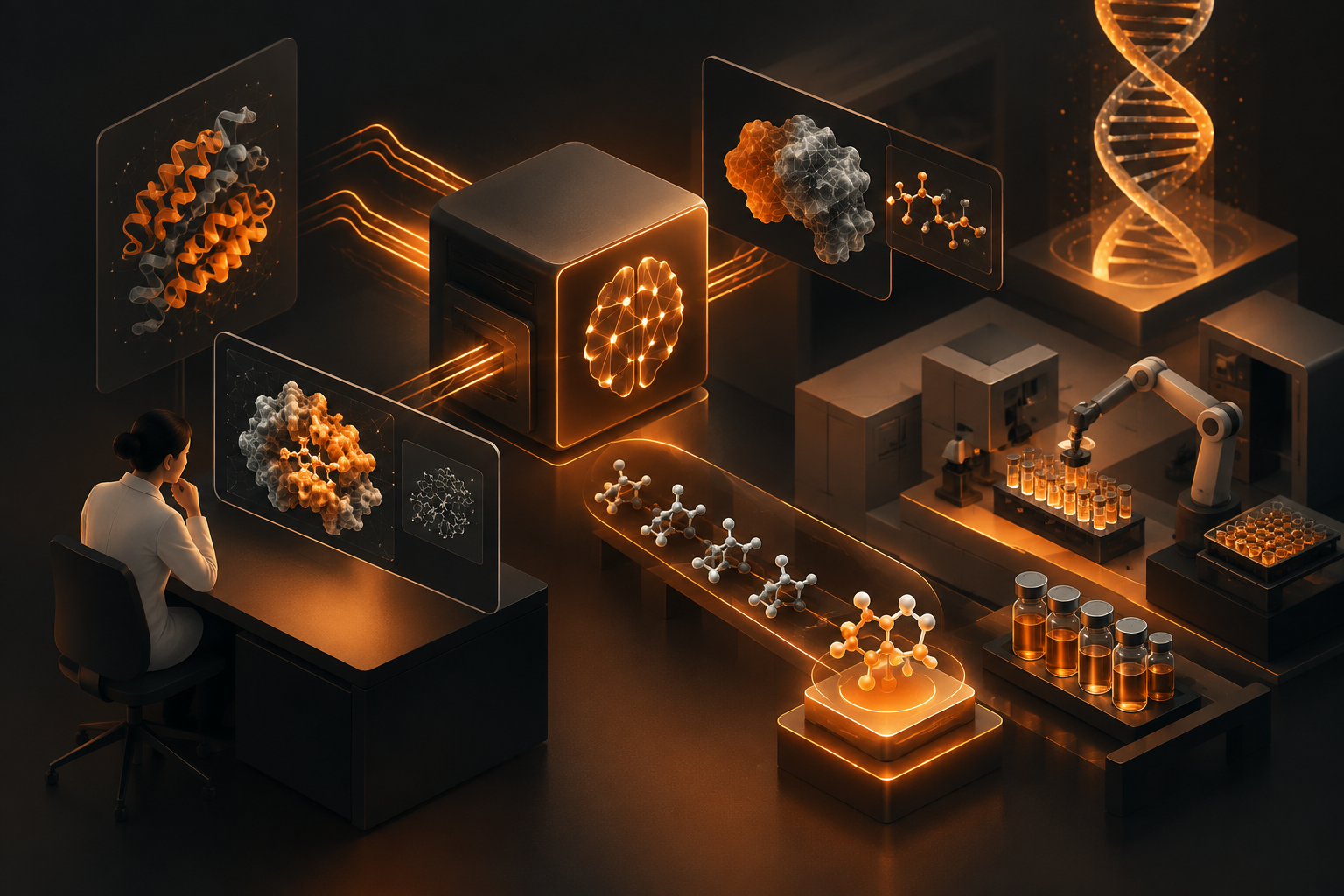
Anthropic is currently building its own biology lab to support AI-powered drug development programs, Reuters reports exclusively. The move demonstrates that the company behind Claude is extending its ambitions far beyond language models – directly into biotechnology and pharmaceutical research.
The essentials
- Anthropic is establishing its own biology lab to support AI programs in drug discovery
- The lab works on biomolecular modeling with Claude – a core competency for pharmaceutical research
- The buildup is happening quietly, without major public announcement
- The expansion signals Anthropic's strategy to bring AI capabilities into regulated, highly complex industries
From Language to Molecules
Anthropic's move into biology is no accident. According to Reuters, language models like Claude have proven effective at analyzing and predicting protein structures and molecular interactions – tasks traditionally handled by biochemists and computational biology teams. An in-house lab allows Anthropic to not only demonstrate these capabilities but also validate and refine them in practice.
Anthropic's documentation describes Claude's application as "Uplifting Biomolecular Modeling" – accelerating and improving biomolecule modeling through AI. This suggests the company is not merely experimenting but already testing concrete workflows with its models.
Why the Quiet Approach?
The fact that Anthropic is building the lab quietly is notable. In pharmaceuticals, regulatory hurdles, patent issues, and clinical requirements are enormous. A gradual, non-public buildup could give Anthropic time to validate its systems before announcing major partnerships or products. It also allows the company to avoid premature expectations or regulatory scrutiny.
What This Means for German Industry
The expansion of one of the world's leading AI labs into pharmaceutical research is a signal: AI is becoming operationally viable in regulated, highly complex industries. German pharma and biotech companies should take this as a wake-up call. Anthropic is not just building a lab – it is building competence and credibility in a sector where German companies have traditionally been strong. Those not actively experimenting with modern AI models now risk falling behind. At the same time, critical questions emerge: How transparent will Anthropic be about its methods? What data does the lab use? And how does this align with the EU AI Act and its requirements for high-risk AI systems in medicine?
Sources
Editorially owned by Ideal Syka. Sources and method: Newsroom & method. Tips and corrections: ai@i6eal.de.