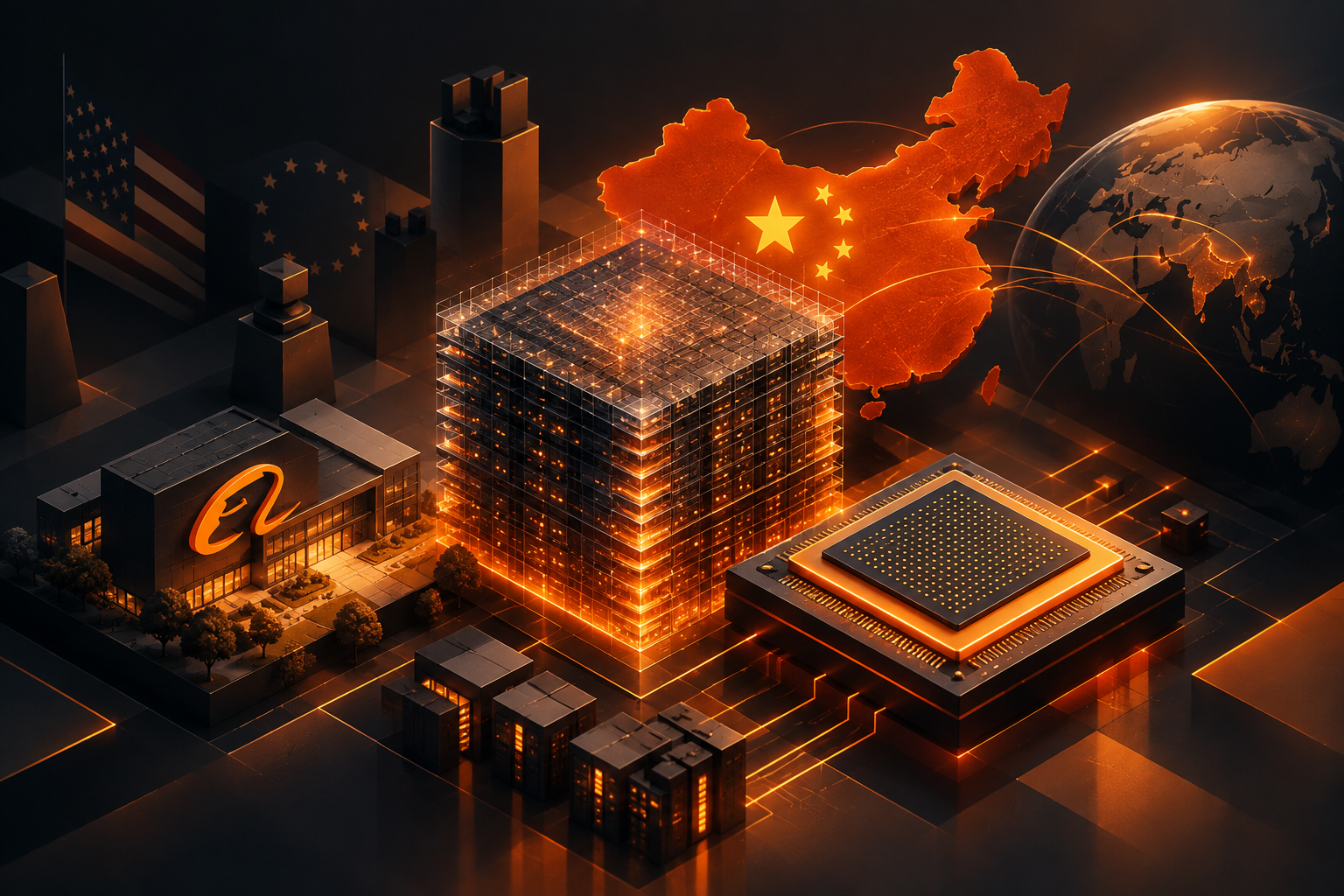
Alibaba is working on a KI model with 5 to 10 trillion parameters and has unveiled a new chip. This shows: China's largest cloud provider wants to compete not only in models but also in hardware itself – while the US tightens export controls on KI chips.
The essentials
- Alibaba plans KI model with 5–10 trillion parameters (for context: current frontier models like GPT-4 range from hundreds of billions to a few trillion)
- Company has developed a new chip to reduce dependence on US semiconductors
- Strategy counters US export controls that limit China's access to advanced chips
- Signal for global KI hardware market: competition for chip independence intensifies
Bigger, faster, independent
The planned parameter count fits into the global trend toward ever-larger models. But size alone doesn't guarantee performance – training quality, data, and architecture matter too. Still, Alibaba's announcement makes clear: the company sees itself in the league of the world's largest KI developers and wants to compete there.
The chip component is particularly noteworthy. While Nvidia has dominated the market for specialized KI hardware, China's tech giants (Alibaba, Baidu, Huawei) are developing their own solutions. This is not only technically ambitious but also a direct attempt to circumvent US sanctions.
Who needs whom?
The US has repeatedly tightened export controls on advanced semiconductors to China – most recently under the Biden administration. The goal: slow China's KI development. Alibaba's chip strategy is the logical response: if you can't buy, you must build.
What remains open is how quickly and how powerful Alibaba's chips will actually become. Chip design is complex; China's manufacturing capacity is also subject to Western restrictions. But the direction is clear: decentralization of KI hardware production.
What this means for German companies
German KI developers and cloud providers should watch this closely. If China successfully develops competitive KI chips and models, it could fragment the global market: Western ecosystems (Nvidia, OpenAI, Microsoft) on one side, Chinese alternatives on the other. This has implications for supply chains, standards, and which KI systems European companies can or may use. At the same time, stronger Chinese competition could put pressure on Western prices and innovation speed – which could benefit German companies as customers.
Sources
Editorially owned by Ideal Syka. Sources and method: Newsroom & method. Tips and corrections: ai@i6eal.de.