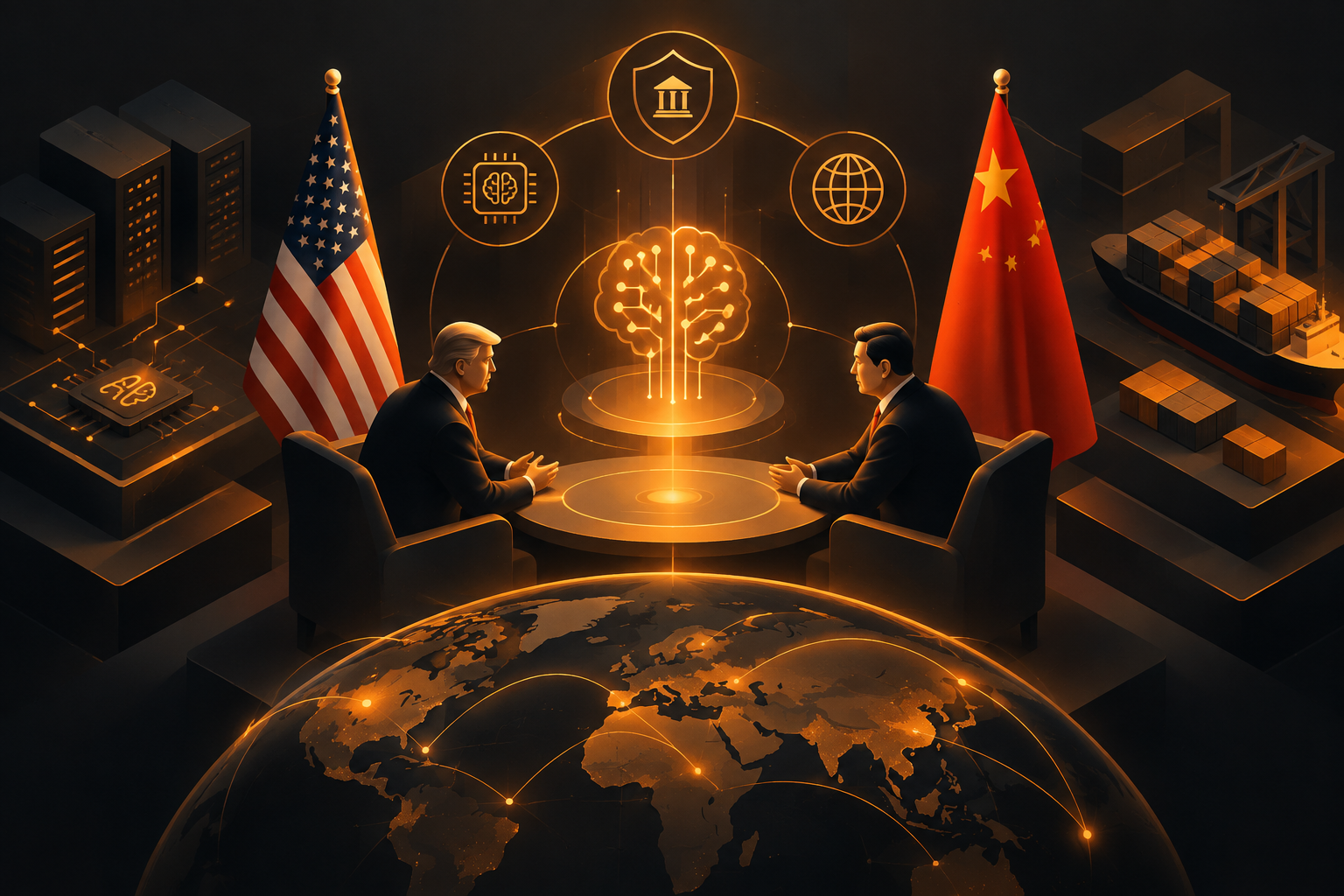
The United States and China have agreed to establish a dialogue mechanism for artificial intelligence. Delegations from both countries held "successful" and "constructive" talks in New York on Sunday, according to France 24 and ABC News. The agreement comes just before Chinese President Xi Jinping's planned visit to Washington later this week – a meeting that will also address trade issues.
The essentials
- US and Chinese delegations conducted "successful" and "constructive" talks in New York
- Focus: establishing an AI dialogue mechanism and easing trade tensions
- Context: AI security concerns are rising; a trade truce expires in November
- Parallel: France and Canada deepen cooperation on critical minerals and energy
First structure for AI safety
The establishment of a dialogue mechanism represents a turning point in the previously confrontational AI policy between the two countries. Rather than merely warning or blocking each other, the US and China are now creating a formal communication channel – similar to mechanisms in other security areas. The signal is clear: both sides recognize that uncontrolled AI development threatens their own interests.
The shared security concerns are genuine. Deepfakes, autonomous weapons systems, large-scale disinformation – these risks affect both sides. This explains why the superpowers are willing to compete and coordinate simultaneously on AI.
Trade and technology intertwined
The AI talks are closely linked to trade negotiations. The current trade truce between the US and China expires in November. Both countries are preparing for renegotiations – and using Xi's Washington visit to establish positions.
This reflects modern geopolitics: technology and trade cannot be separated. Control over AI means control over economic opportunity. An AI dialogue mechanism is also preparation for tougher negotiations elsewhere.
What this means for German companies
German AI developers and tech firms should monitor this development closely. If the US and China agree on shared AI security standards, these could become de facto global norms – potentially pressuring European regulations or forcing adaptation. At the same time, a more stable AI framework between the superpowers could create opportunities for European companies that have navigated between competing powers. Europe is charting its own course – but global coordination will become increasingly important, not less.
Sources
Editorially owned by Ideal Syka. Sources and method: Newsroom & method. Tips and corrections: ai@i6eal.de.