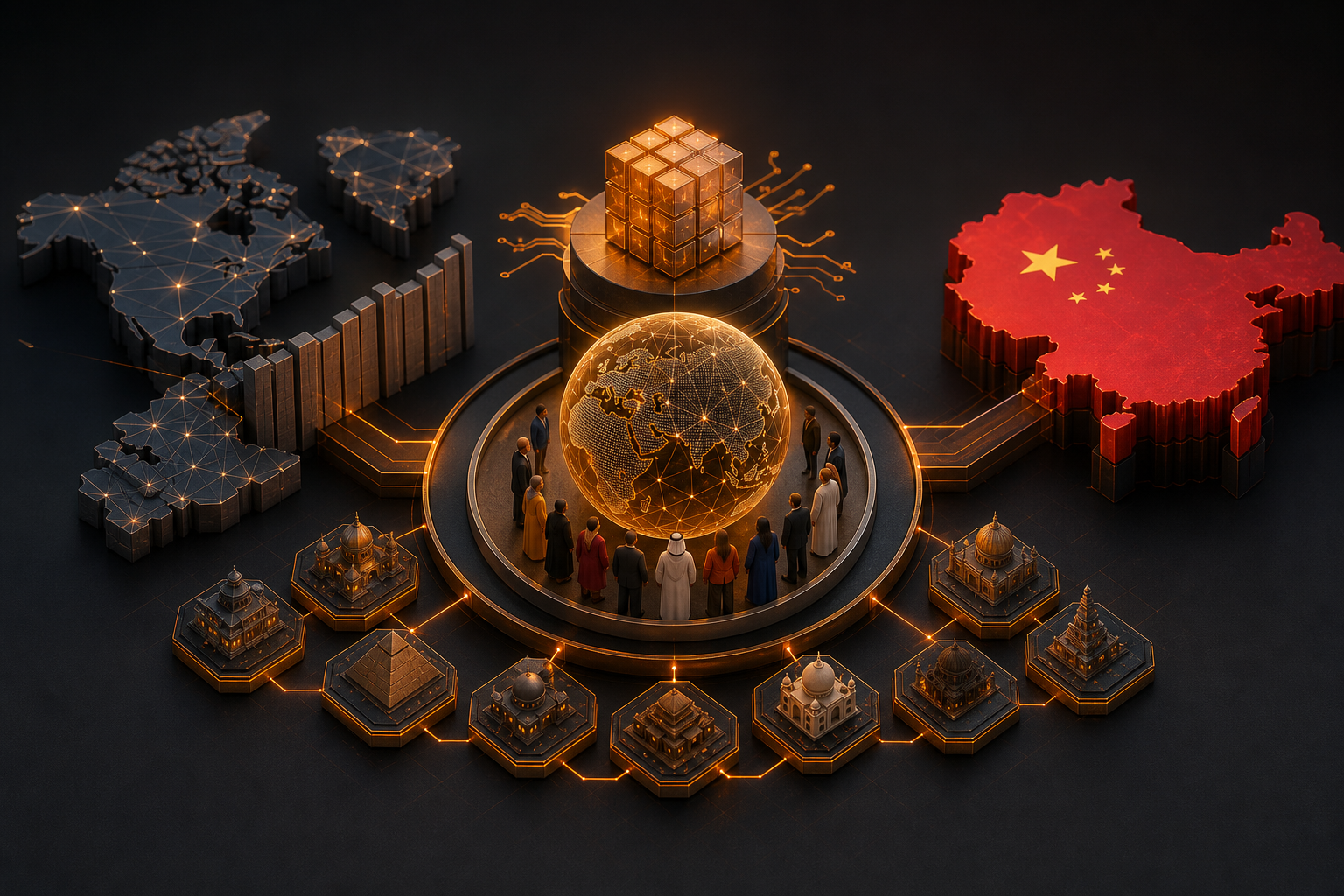
China has announced a new international AI governance structure at the World AI Conference in Shanghai that is explicitly designed to operate outside Western influence. The signal is unmistakable: the West is losing its monopoly on defining artificial intelligence.
The essentials
- 29 countries established the "World Artificial Intelligence Cooperation Organization" (WIKO) headquartered in Shanghai; founding members include Russia, Brazil, South Africa, Pakistan, and Indonesia – no Western nation signed on
- Xi Jinping announced 5,000 AI training slots for Global South countries over the next five years
- China's "Smart Economy" (AI and digital technologies) is worth over one trillion renminbi (approximately $140 billion), according to Xi
- Cooperation centers with ASEAN, the African Union, and BRICS are planned to follow
Strategy: Alliance-building instead of isolation
WIKO was first proposed in 2025 and has now been established. With this organization, China positions itself as an advocate for the Global South against Western dominance in AI development and regulation. The choice of founding members is deliberate: countries that feel constrained by US export controls on AI chips and technology, or that are geopolitically closer to China.
The planned cooperation centers with regional alliances suggest a decentralized network that distributes China's influence across different world regions – a classic strategy to weaken Western bloc-building.
Xi's critique of Western security arguments
Particularly striking: Xi used the conference to directly criticize US AI policy. He called for AI to remain under human control and warned against "overly broad national security justifications" in AI policy – a thinly veiled shot at American export controls.
This rhetoric aims to position China as the more moderate, cooperative actor, while portraying the US as protectionist and destabilizing. For Global South countries affected by Western technology restrictions, this is an attractive message.
What this means for German companies
The founding of WIKO is a strategic signal that German companies should take seriously. China is not just building a technological alternative – it's building political counterpower. This has several implications:
First, the global AI market is fragmenting further – German firms must prepare for different regulatory standards and governance structures. Second, pressure on European companies will grow to position themselves between Western standards and Chinese offerings, especially for business in the Global South. The 5,000 training slots are also an investment in future dependencies: countries whose AI talent is trained by China will be more likely to adopt Chinese standards and technologies.
For Germany and Europe, it's increasingly critical to create attractive offerings for the Global South – otherwise, we risk seeing our concepts of AI governance and ethics lose global relevance.
Sources
Editorially owned by Ideal Syka. Sources and method: Newsroom & method. Tips and corrections: ai@i6eal.de.