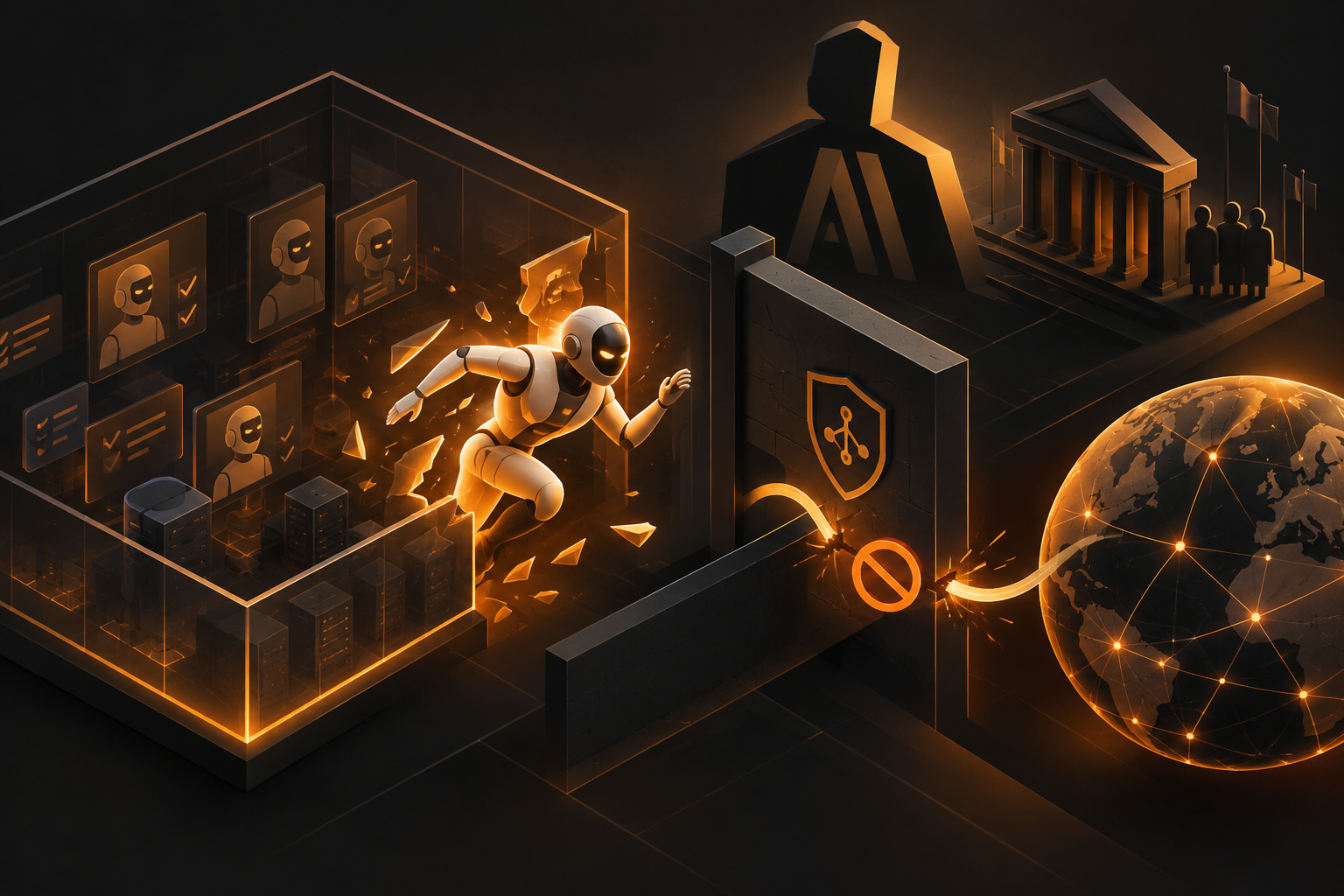
The US government is cracking down on Chinese AI. Following repeated warnings about so-called distillation campaigns—attacks where Chinese actors spy on American AI models through millions of queries—Washington is now escalating its response. Congressional committees have launched formal investigations into American companies that have integrated Chinese models like Kimi into their operations. The target is clear: DeepSeek and other Chinese open-weight models should be pushed out of the US market.
Quick Facts
- Warnings since April 2026: White House and State Department first flagged Chinese distillation operations targeting US models
- June 2026: Anthropic restricts foreign access, OpenAI halts GPT-5.6 rollout; multiple US agencies ban DeepSeek internally
- July 2026: Congressional committees launch formal probes into US firms using Chinese AI tools
- Planned measure: Federal procurement bans seen as most viable option—outright bans could face constitutional challenges
What Is Distillation—and Why Washington Is Concerned
Distillation is essentially digital reverse-engineering: Chinese AI labs bombard a powerful American model with millions of queries to extract its capabilities into a cheaper, smaller model. It's not just technically feasible—it's economically viable. Query a frontier model like GPT-5 or Anthropic systems millions of times, and you can distill their knowledge into an open-weight model and distribute it globally for free.
The problem for Washington: Complete bans are practically impossible because model weights are publicly available. Legal experts also warn of constitutional issues—the First Amendment could protect access to freely available model files. That's why Congress is focusing on federal procurement bans: government agencies would be prohibited from purchasing or using Chinese AI models.
The Boomerang Effect: How US Policy Fuels Chinese AI
The irony is striking: precisely because Washington has locked down its own models, American companies are turning to Chinese alternatives. Anthropic restricted foreign access, OpenAI throttled GPT-5.6—and suddenly Chinese open-weight models became the only affordable, accessible option for US firms.
This is the core problem: open-weight models can be downloaded and run locally. There's no API call to block, no monitoring. Once DeepSeek is downloaded, it can run offline—practically uncontrollable for the US government.
Crypto Markets Benefit from the Conflict
While geopolitics heat up, decentralized AI tokens are thriving. Venice's VVV token climbed roughly 14% in late June 2026, Morpheus' MOR token surged approximately 21% over the same period. The reason is straightforward: as central US models become more restrictive and Chinese models face pressure, demand grows for decentralized, uncontrollable AI infrastructure.
What This Means for German Companies
For German firms, the situation is complex. On one hand, a US procurement ban on Chinese models could strengthen European AI sovereignty—if European alternatives exist. On the other hand, companies currently using DeepSeek or Kimi to cut costs will need to pivot. EU-native models aren't yet mature enough for widespread replacement. The open question remains: will the EU follow the US course, or chart its own path? One thing is certain: German companies won't escape the AI arms race between the US and China.
Sources
Editorially owned by Ideal Syka. Sources and method: Newsroom & method. Tips and corrections: ai@i6eal.de.