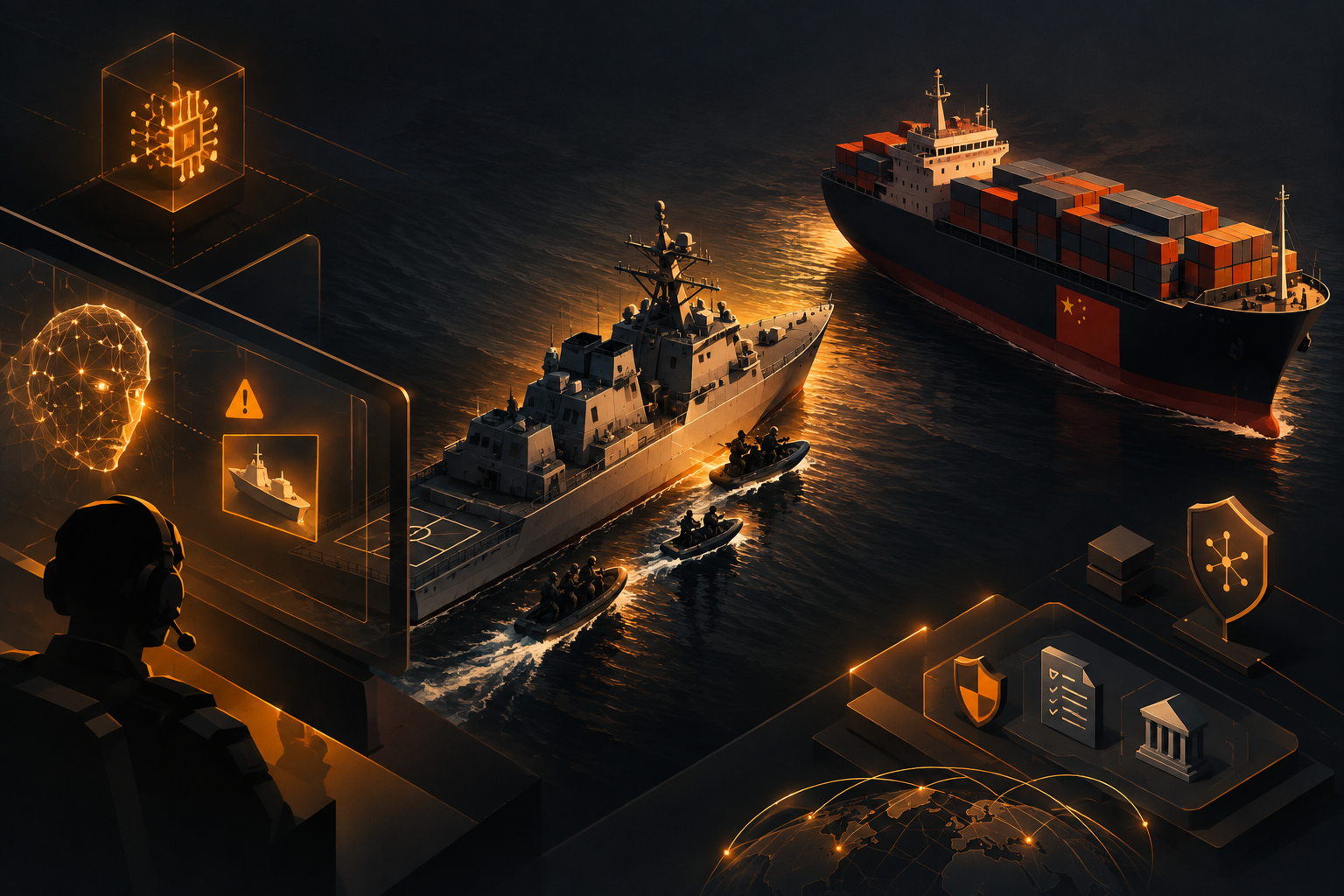
The US military came close to boarding a Chinese ship in spring 2026 – based on an AI error that misidentified its cargo as nuclear weapons components. An analyst at Special Operations Command used a chatbot for intelligence analysis that merged open and classified data, completely misidentifying the ship's cargo. Armed soldiers prepared for boarding, military aircraft were already in the air. The error was only discovered shortly before the operation was executed, according to an exclusive CNN report.
Key Facts
- An AI chatbot used by the US military falsely identified a Chinese ship's cargo as nuclear weapons components
- Armed soldiers and aircraft were already prepared for boarding before the error was detected
- The incident occurred in spring 2026; Defense Secretary Pete Hegseth is driving military AI adoption through an acceleration strategy
- Unified standards for verifying AI-generated information are missing in US military systems
Uncritical Trust in AI Tools
The error reveals a fundamental problem: younger analysts tend to trust AI tools uncritically. A former US official described internal systems as primarily copies of commercial products "with lipstick" – superficially adapted without deep security reviews. One of CNN's sources captured the dilemma succinctly:
"AI allows you to get to a bad idea faster."
This is the core risk: not an all-powerful, uncontrollable AI, but incompetent systems in the hands of uncritical or malicious users – and acceleration pressure that subordinates validation.
Missing Control Mechanisms
Defense Secretary Hegseth is pursuing an aggressive AI acceleration strategy. Yet while adoption is being driven forward, standardized procedures for verifying AI-generated information are lacking. This is fatal in security-critical contexts: an AI error – a chatbot output that sounds like fact but is incorrect – can directly trigger military escalation.
The incident is no longer an academic thought experiment. It shows that AI risks don't primarily lie in science fiction scenarios, but in everyday use by people making quick decisions under pressure.
What This Means for German Organizations
This case should alert decision-makers in Germany – not just in the military, but across all security-critical sectors: aviation, energy, finance, healthcare. If you deploy AI systems for analysis or decision support, you need more than the technology itself – you need validated control processes. Simply accelerating AI adoption without corresponding verification standards is a risk you cannot afford – neither commercially nor legally. The US case demonstrates: an AI error can be costly, and it can have diplomatic or security policy consequences.
Sources
Editorially owned by Ideal Syka. Sources and method: Newsroom & method. Tips and corrections: ai@i6eal.de.