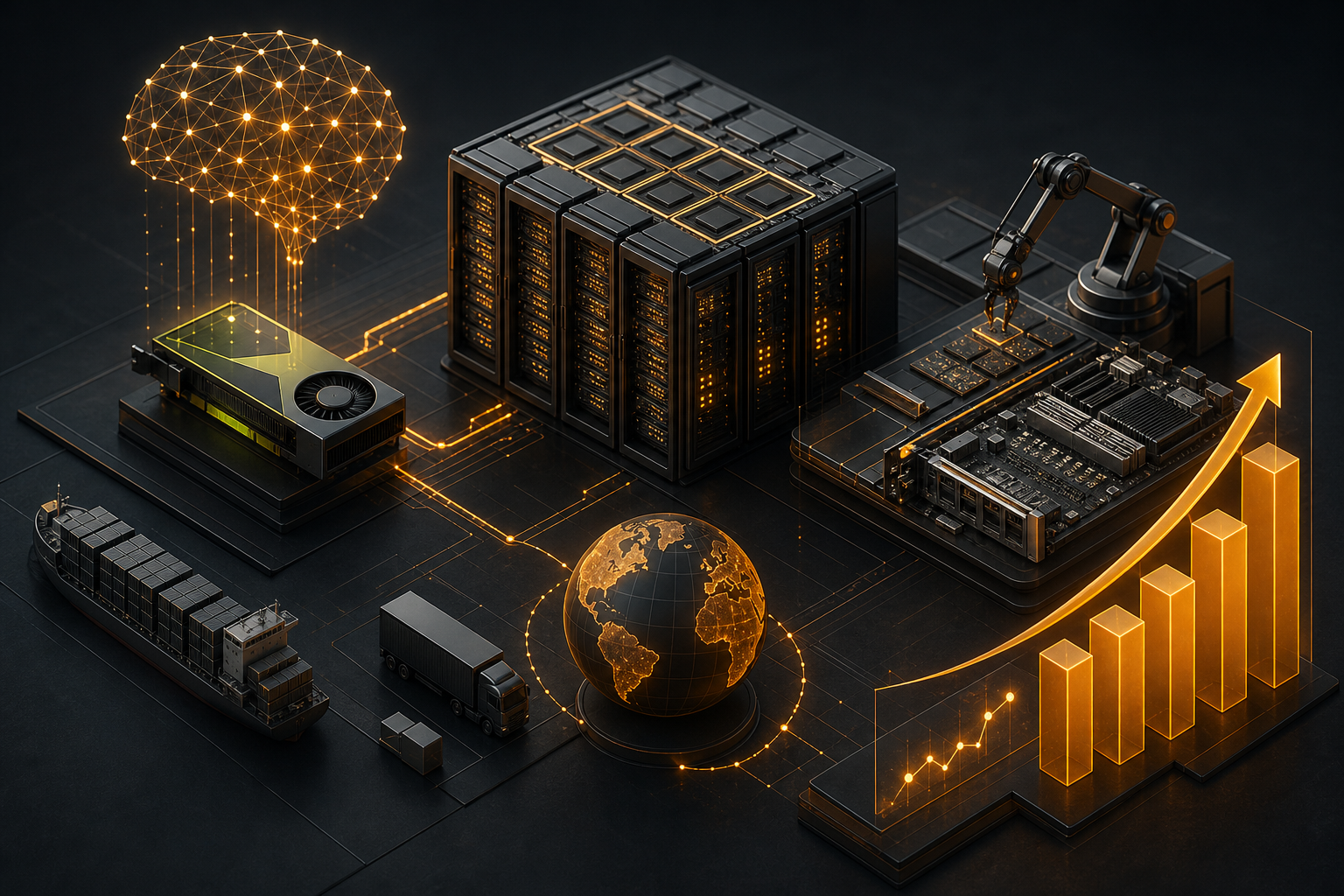
Hon Hai, a Nvidia partner, has achieved 52 percent revenue growth – driven primarily by demand for AI servers. According to Bloomberg, these numbers signal a clear message: the infrastructure wave for artificial intelligence is not confined to chip makers alone, but ripples through the entire value chain.
Key Facts
- Hon Hai posts 52% revenue growth, primarily fueled by AI server demand
- The Taiwan-based electronics firm is a critical partner to Nvidia and other chip designers
- Growth indicates: AI infrastructure investments extend well beyond pure chip sales
- Supply chain effect: demand dynamics reach Tier-2 and Tier-3 suppliers
Hardware Value Chain in High Gear
Hon Hai is far more than a simple component supplier – it is an electronics manufacturing service (EMS) provider. According to the Bloomberg report, the company is a partner in supplying AI servers. A 52-percent revenue surge in this segment is strong evidence that demand for AI computing power is not merely visible in quarterly earnings reports from chip makers – it also manifests in factory utilization rates, material costs, and delivery volumes.
This matters because it reveals the substance behind the AI hype: this is not about announcements, but about actual large-scale hardware production.
Supply Chain Ripple Effects: Who Else Benefits?
When Hon Hai's revenue grows by 52 percent, it also means increased demand from component suppliers – memory chips, network processors, enclosures, power supplies. German and European suppliers positioned in the right niches – industrial electronics, cooling systems, specialized components – could benefit from this demand wave.
Yet a familiar pattern emerges: the largest profits accrue to chip designers (Nvidia) and system integrators (such as Hon Hai). For specialized suppliers, the critical question remains: can they maintain margins, or will pressure from above (Nvidia pricing power) and below (component competition) intensify?
What This Means for German Industry
Hon Hai's figures serve as a reality check for German mid-market companies and hidden champions in electronics and mechanical engineering. Any firm supplying components, systems, or services for AI infrastructure – from cooling systems to specialized circuit boards to test equipment – should take this demand dynamic seriously. At the same time, the concentration among players like Hon Hai warns of dependency risk: suppliers relying on one or two major integrators face volatile business exposure. Diversification and technological differentiation will prove decisive.
Sources
Editorially owned by Ideal Syka. Sources and method: Newsroom & method. Tips and corrections: ai@i6eal.de.