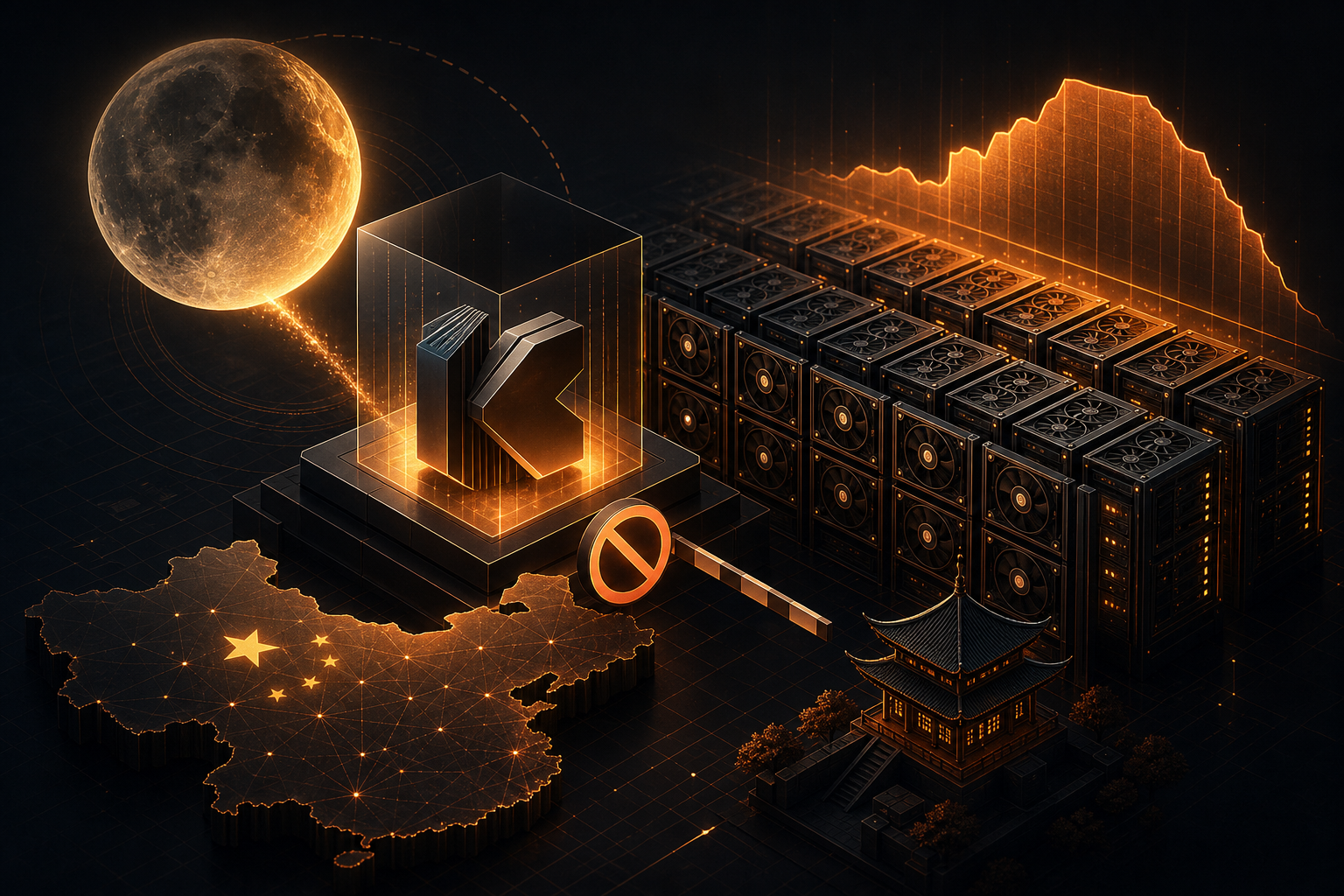
Chinese AI startup Moonshot has temporarily halted new subscriptions for its recently launched Kimi K3 model. The reason: demand for the model exhausted the company's GPU capacity in just 48 hours. Existing subscribers remain unaffected; new slots will gradually become available again.
The essentials
- Moonshot pauses new Kimi K3 sales following extreme demand surge
- GPU capacity reached its limits in 48 hours
- Company splits subscription model into two tiers: Kimi Membership (web/app/work) and Kimi Code Membership (programming)
- Rival model Qwen 3.8 from Alibaba already available with discounted preview
Infrastructure bottleneck despite open-source approach
The situation is striking: Moonshot had hoped that an open-source strategy would reduce computational demands. Instead, it reveals that even optimized models hit a hard ceiling when physical GPU infrastructure becomes the limiting factor. The company announced it will manage demand through subscription model segmentation – a Kimi Membership for general use and a separate Kimi Code Membership for programming workflows.
"Demand has pushed close to the limits of our current capacity,"
Moonshot stated on X (formerly Twitter).
Competition for users and resources intensifies
The pause comes as competition between Chinese and Western AI providers heats up. Rival startup Alibaba is already promoting its Qwen 3.8 model, which will be available as an open-weight model for the first time in a while. A discounted preview version is already on sale.
The episode highlights a fundamental challenge in the AI industry: demand grows exponentially while GPU capacity remains expensive and scarce. Even successful startups quickly hit physical limits – regardless of how efficient their models are.
Implications for German enterprises
For German AI providers and users, this is a cautionary tale: even if a model performs well technically, capacity constraints can severely hamper market entry or scaling. Companies building AI services in Germany must think beyond model quality to realistic infrastructure planning and partnerships with data centers. At the same time, Moonshot's situation shows that Chinese startups scale at remarkable speed – and quickly discover their own limits.
Sources
Editorially owned by Ideal Syka. Sources and method: Newsroom & method. Tips and corrections: ai@i6eal.de.