
What was reported
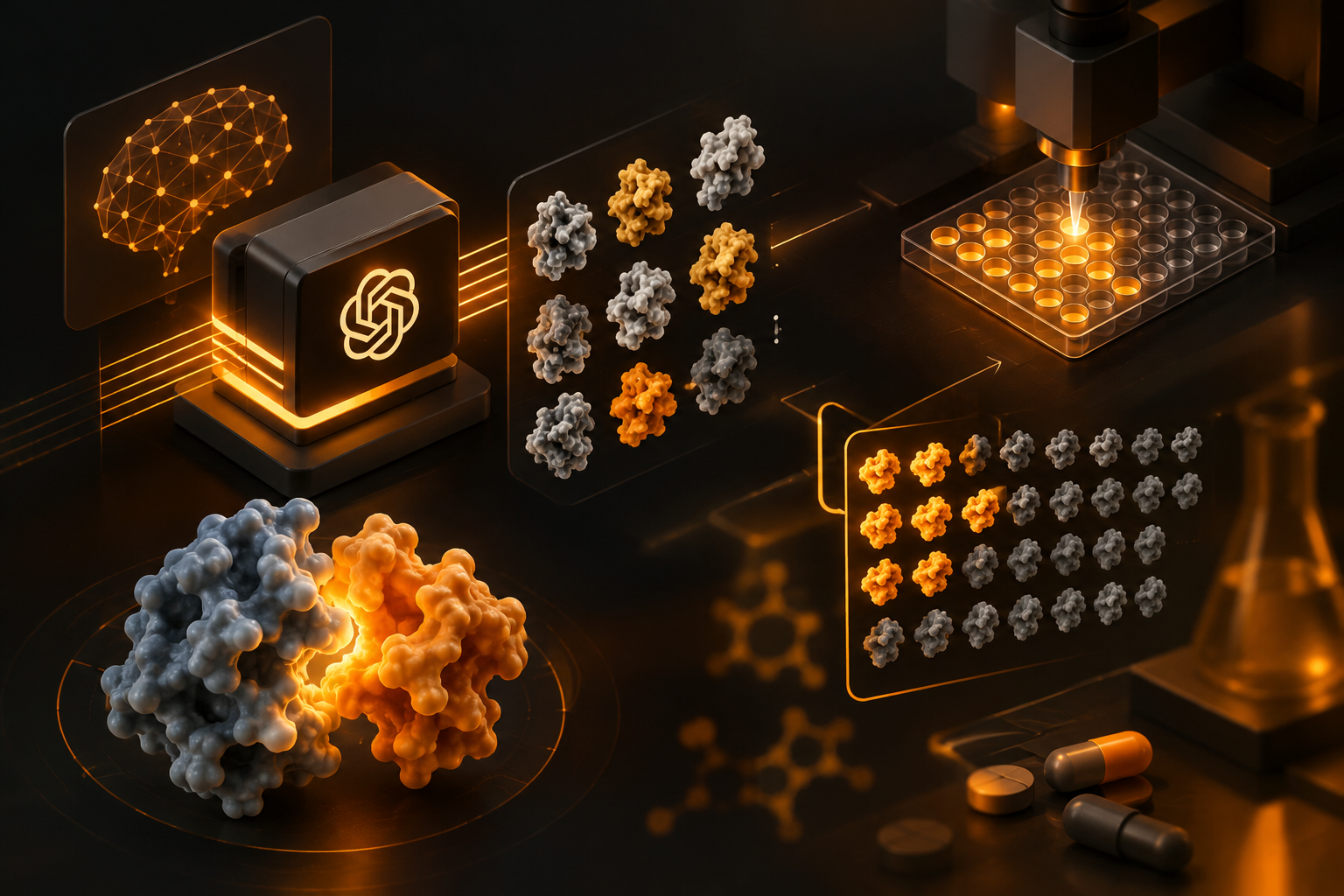
According to OpenAI, GPT-6 models can independently design new protein structures and amino acid sequences. The preprint “GPT-6 as a Universal Foundation Model for Protein Biology” states this works through reasoning and general programming tools, without specialised biological models.
Lab results
In lab experiments with partner Onava, 35 of 322 tested minibinders (10.9 percent) showed binding to five target structures, including cancer and immune proteins. There was at least one hit per target. The most hits were for IL-17A (18), followed by VEGF-A (8), PD-L1 (5), IL-7R (3) and TrkA (1).
Weaknesses
In purely computational tests, OpenAI's systems outperformed established specialised tools on some tasks, but fell clearly behind on full 3D structure prediction. GPT-6.2 reached a TM-score of 0.26, versus 0.93 for ESMFold2.
Context
For companies in drug discovery, synthetic biology and materials science, this could raise the efficiency of specialists. Since laboratory validation and safety assessments remain bottlenecks, a full replacement of wet labs is not expected in the short term based on the available information. It remains open whether the models develop a genuine understanding of biological mechanisms or reproduce patterns from training data.
Sources
Editorially owned by Ideal Syka. Sources and method: Newsroom & method. Tips and corrections: ai@i6eal.de.