
Google introduced Gemini 4 Neon on November 18 and is rolling it out across Google AI Studio, Gemini for business, Google Gravity and the Gemini app. According to TechTarget, the model is designed to consolidate work enterprises do in spreadsheets, PDFs, charts, audio and video across applications, and is built for long-running agent workflows. TechTarget reports it is the sixth model Google has introduced since September.
OpenAI released GPT-6.2 Astra and GPT-6.2 Sol on the same day. According to the source, Astra is the frontier model for the hardest projects and Sol is for everyday work. OpenAI says both models deliver better results on demanding tasks with fewer tokens, and according to OpenAI, Sol is more efficient than its predecessor GPT-6.1 Sol. These claims come from the vendor.
Background
Alibaba unveiled Qwen4-Max on November 17, which according to the source is strong in coding and agentic reasoning and also well suited to professional work and creative production. Omdia analyst Lian Jye Su describes the agentic AI market in China as very large; access to ChatGPT, Claude and Gemini there is limited.
According to TechTarget, competition is shifting from individual tasks such as coding toward models that power everyday enterprise work. Analyst Bradley Shimmin (Futurum Group) describes intense competition for the enterprise user experience itself.
Assessment
For German companies, it could matter whether models for routine tasks and for complex agents become differentiated in price and efficiency. The sources give no prices. Shimmin also cautions that the models are sharpened versions rather than full upgrades. Anyone planning purchasing decisions should therefore test with their own workflows instead of relying on vendor statements.
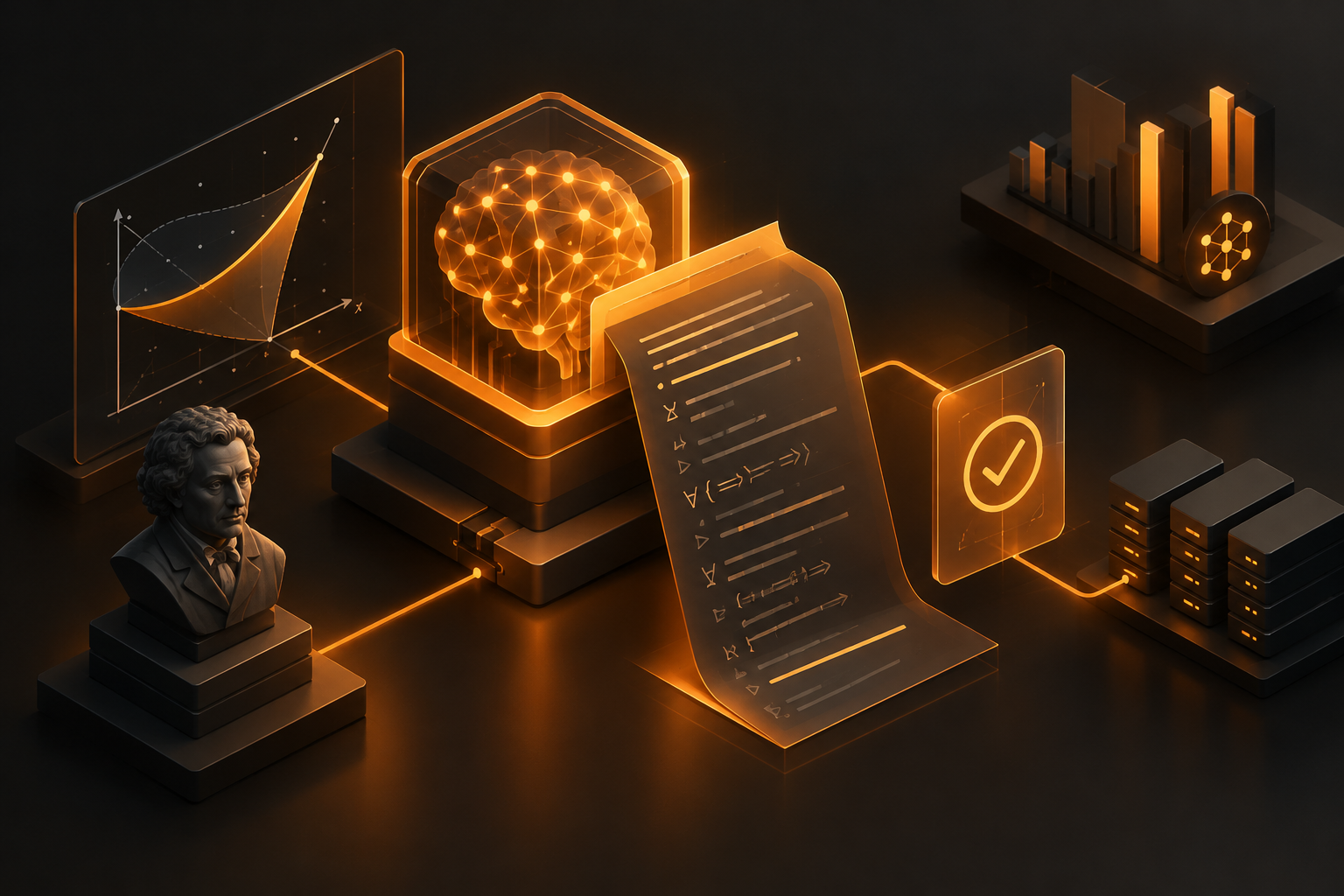
The Decoder also reports on benchmark status: according to Vals AI, GPT-6.2 Astra produced a machine-verifiable Lean proof of the Smoktunowicz gap theorem, described as the first known such proof, and solved 49 tasks on the Autoform-Hard subset, ahead of GPT-6.2 Sol and Claude Fable 5.2 with 48 each. These results concern mathematical reasoning rather than everyday business work, but they indicate where the top models currently stand.
Sources
Editorially owned by Ideal Syka. Sources and method: Newsroom & method. Tips and corrections: ai@i6eal.de.