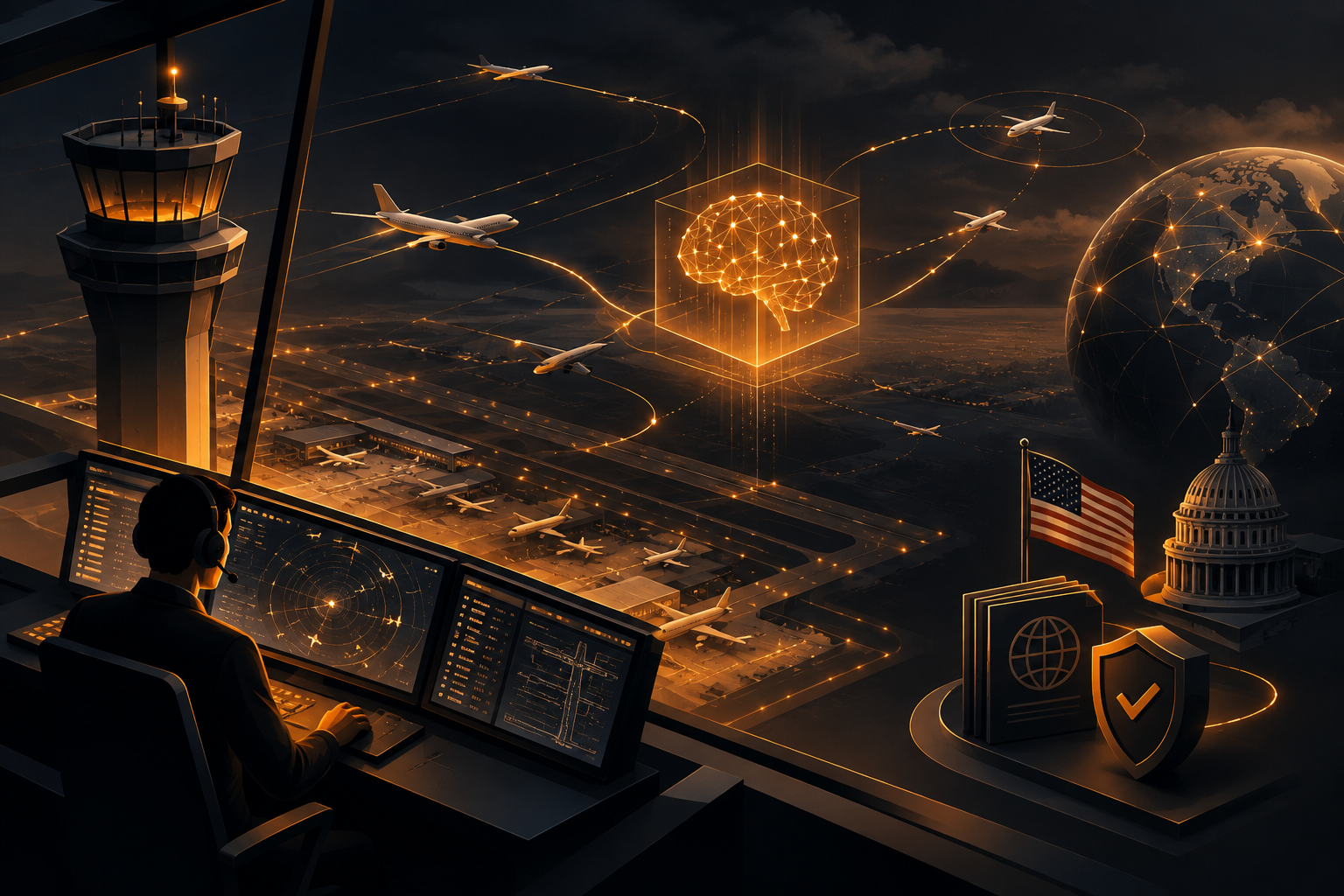
The US Federal Aviation Administration (FAA) has deployed an AI system to support air traffic control. This marks a turning point: for the first time, a national aviation authority is entrusting artificial intelligence with operational tasks in critical infrastructure.
Airline representatives view the deployment positively. They see strong potential for improvements in air traffic if the system performs as intended. This suggests concrete expectations – whether in route optimization, capacity planning, or real-time traffic management remains unclear from available information.
Key facts
- FAA has operationally deployed an AI system for air traffic control
- Airlines expect significant improvements in flight operations
- First major deployment of AI in US critical aviation infrastructure
- Regulatory precedent with international signaling effect
What the system is designed to do
The exact functions of the AI system are not fully detailed in the announcement. However, it's clear that the FAA is taking a calculated risk while simultaneously sending a signal: AI in aviation is no longer theoretical but operational reality. This contrasts sharply with the European approach, where regulatory caution and certification processes have so far slowed such deployments.
European aviation under pressure
For German and European airlines and aviation technology companies, this FAA move could create pressure. If US carriers gain efficiency advantages through AI-assisted air traffic control, European operators will demand similar solutions – and European regulators (EASA, national authorities) will need to respond faster.
At the same time, the approach raises questions: How is the AI monitored? What safety standards apply? How is liability handled if the system malfunctions? These questions are partly addressed by the EU's AI Act, but concrete implementation requirements for safety-critical systems like air traffic control are still missing.
What this means for you
If you work in German aviation, at airlines, or in air traffic management, take this step seriously. The FAA is effectively setting global standards. It's likely that German companies will want to experiment with similar AI systems within the next 12–24 months – and the debate over their approval in Europe will intensify. Now is the time to engage with the technical, legal, and operational requirements before pressure mounts.
Sources
Editorially owned by Ideal Syka. Sources and method: Newsroom & method. Tips and corrections: ai@i6eal.de.