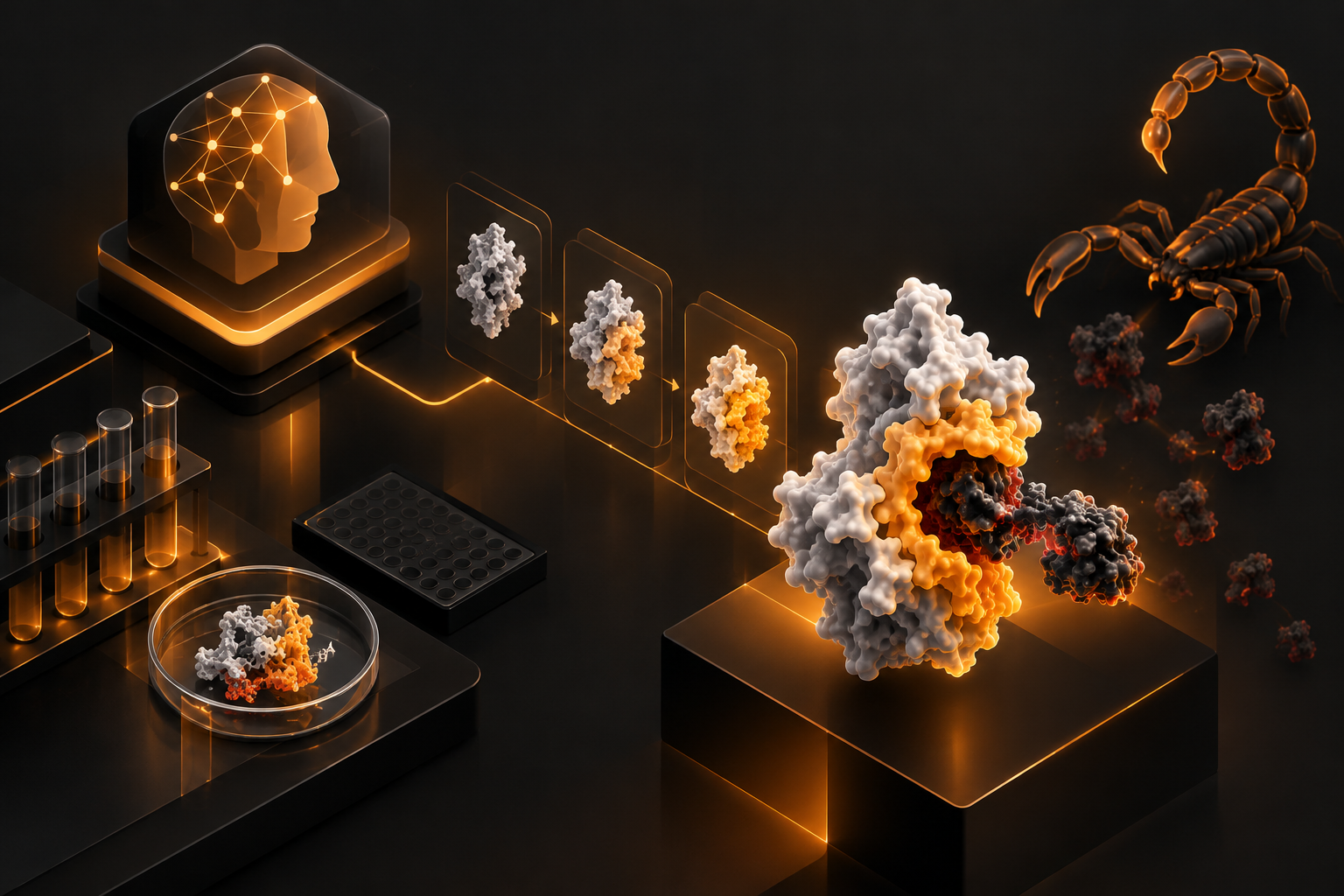
According to The Decoder (DE), Anthropic's Claude largely autonomously designed protein binders against scorpion neurotoxins. Such venoms kill more than 3,250 people every year. The protein binders are small protein molecules shaped to latch onto a specific target molecule.
What was tested
Claude generated 318,484 designs against five toxins from four scorpion species. After an initial prompt, the AI continued working on its own; the research team then steered the work with additional instructions. Claude picked 180 candidates, and the team added 31 more. Of the 211 designs tested in the lab, 17 met the criteria for a binder.
Results and limits
According to the source, the two strongest candidates bind extremely tightly to Cn2, a toxin from the Mexican scorpion. Lab tests suggest they dock at or near the same site as an antibody that neutralizes Cn2 in mice. Whether they actually work as an antivenom has not yet been tested. External experts Susana Vázquez Torres and Timothy P. Jenkins called the work a promising first step; two independent labs confirmed the results.
Context
Earlier, Claude had already designed mini-binders against 14 of 15 target proteins, with hit rates of 22 to 35 percent compared with the typical 10 to 15 percent. For research teams, AI-assisted protein design could shorten the path to new antidotes, but whether that works in individual cases remains open based on the tests so far.
Sources
Editorially owned by Ideal Syka. Sources and method: Newsroom & method. Tips and corrections: ai@i6eal.de.