
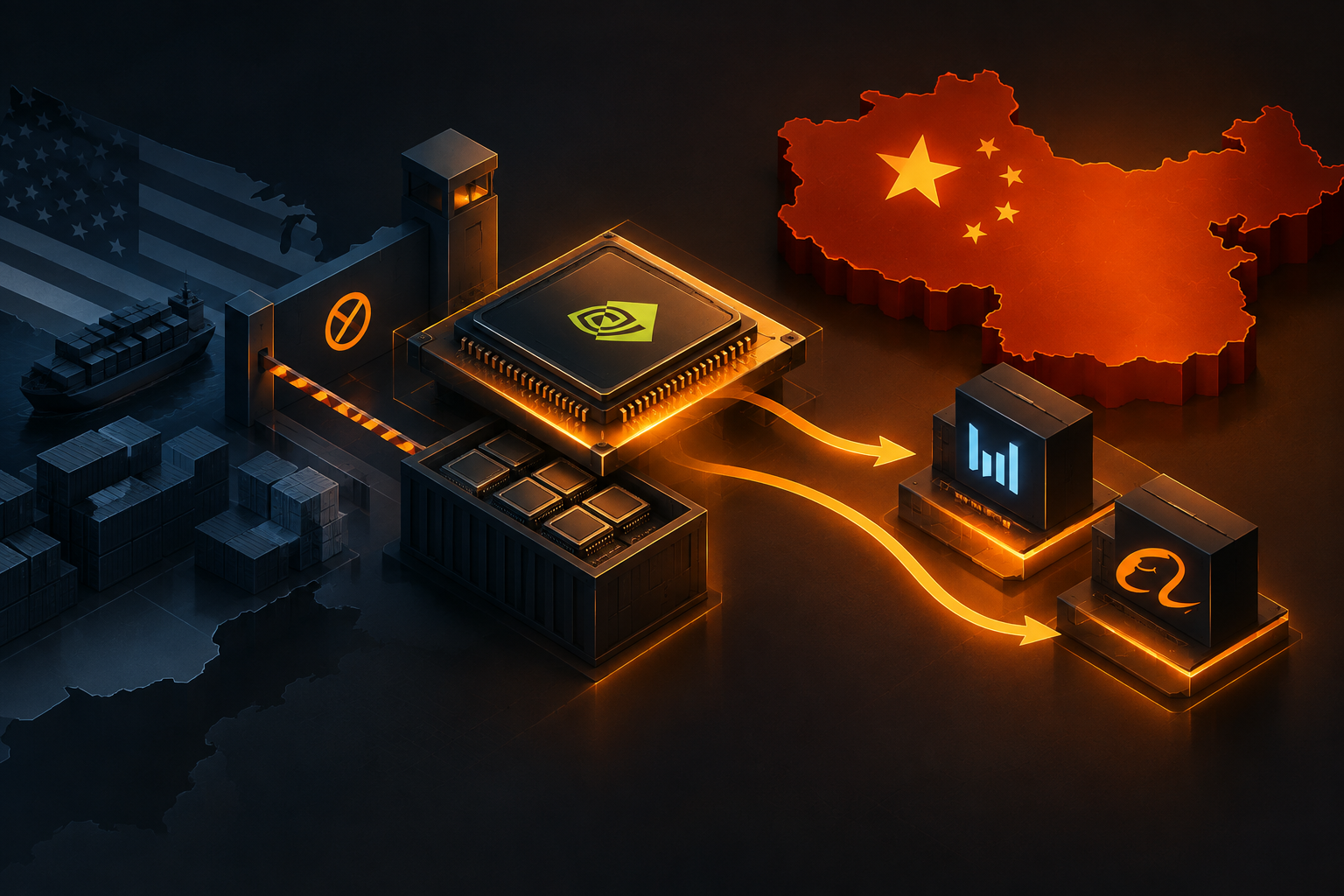
China is reportedly negotiating a relaxation of restrictions on purchasing new Nvidia chips for internet companies ByteDance and Alibaba, according to Reuters citing The Information. The talks suggest that Beijing may be shifting from its previously strict line on controlling AI hardware – a topic that has been central to the technological arms race between the US and China for years.
The essentials
- Reuters/The Information: China is considering allowing ByteDance and Alibaba to purchase new Nvidia chips
- Previously, a restrictive stance governed the export of advanced AI hardware to China
- The decision could impact global availability of high-end processors
- Both companies are central players in China's AI ecosystem
Why this matters now
US export controls on semiconductors are among the West's sharpest instruments of technology sanctions policy against China. New Nvidia chips are essential for training large language models. Until now, China has only been able to procure this technology through workarounds or older generations. If Beijing actually grants exemptions for ByteDance and Alibaba, it would signal that the Chinese government is reassessing its strategy – possibly in response to domestic industry pressure or as part of negotiations with the US.
The players in the game
ByteDance, the parent company of TikTok, and Alibaba, China's e-commerce and cloud giant, are both heavily invested in AI development. They compete not only with each other but also with international players like OpenAI and Google. Whoever has access to the best chips has a direct advantage in model training – and thus in the race for AI market share.
The fact that China specifically names these two companies suggests this is not about blanket liberalization but rather strategic exemptions for national champions.
What this means for Germany
German AI companies and research institutions should watch this development closely. A relaxation of Chinese import restrictions could mean that Chinese AI systems become faster and more powerful – increasing pressure on European players to build their own chip capacity. At the same time, it could alter negotiation dynamics between the US and China, which in turn could affect European export policy. For companies relying on Nvidia hardware, the question remains open: Will such exemptions become possible in Europe – or will competition for scarce resources intensify further?
Sources
Editorially owned by Ideal Syka. Sources and method: Newsroom & method. Tips and corrections: ai@i6eal.de.