
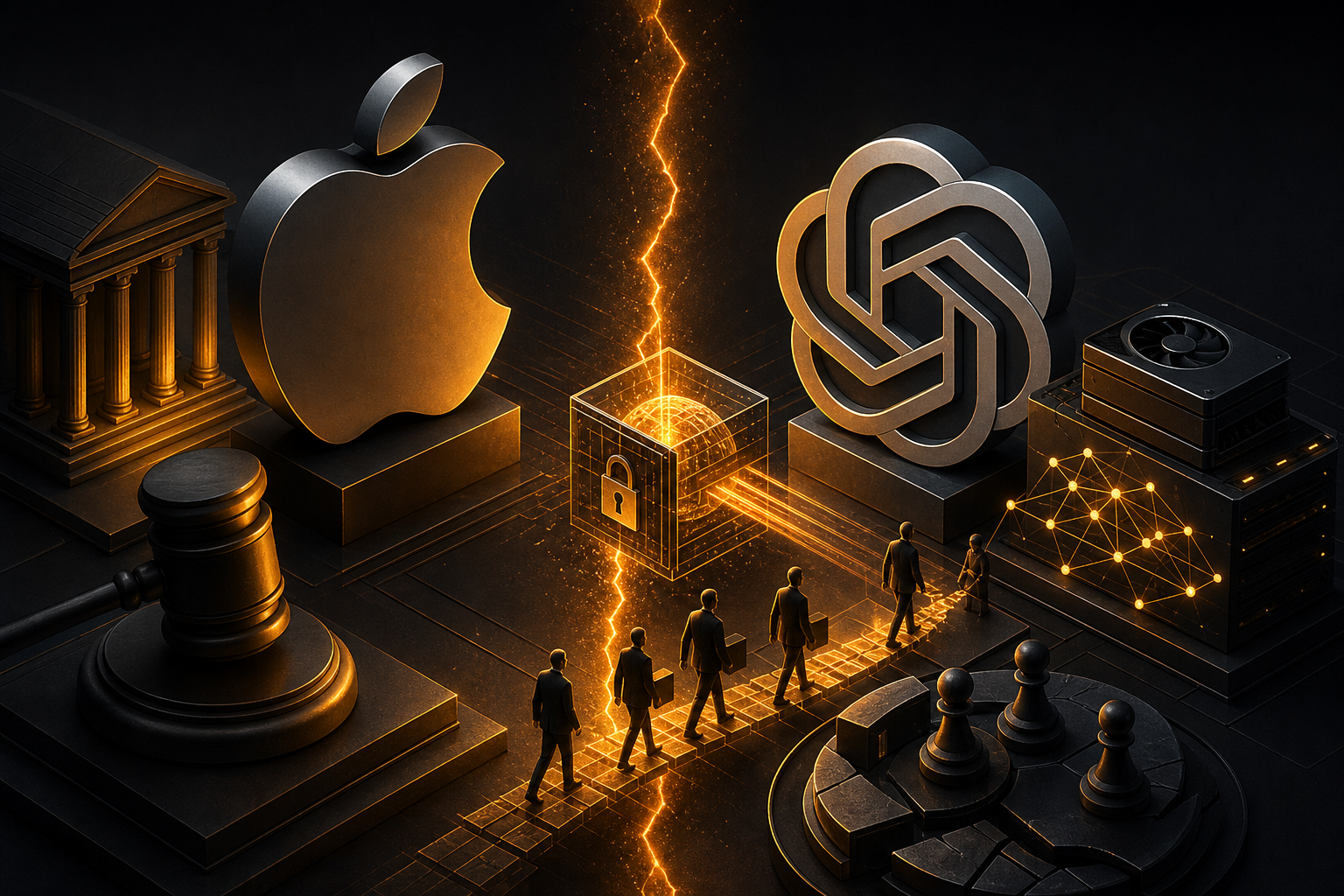
Apple has filed suit against OpenAI, alleging a "coordinated campaign" to steal trade secrets related to unreleased products. According to the complaint, more than 400 former Apple employees now work at OpenAI – including Tang Tan, Apple's former Vice President of Product Design who led development of the iPhone, Apple Watch, and AirPods.
Key Facts
- Over 400 ex-Apple employees work at OpenAI, including former iPhone design chief Tang Tan
- Apple alleges OpenAI encouraged employees to download files, drawings, and specifications during their notice periods
- Chang Liu, a former Apple hardware engineer, allegedly downloaded dozens of confidential files after joining OpenAI in January
- Apple seeks an injunction, destruction of all stolen materials, and a jury trial
The Allegations
The complaint describes a systematic approach in which OpenAI executives – from technical staff to the Chief Hardware Officer – allegedly targeted Apple employees and encouraged them to take information with them. Apple states:
"At every level, from members of its technical staff to its chief hardware officer, and in coordination with business partners, OpenAI has been stealing Apple's trade secrets and confidential information."
A particularly egregious case involves Chang Liu, a former hardware engineer who joined OpenAI in January and allegedly downloaded dozens of confidential files over several weeks covering unreleased products and proprietary project data. Paul Meade, who ran Apple's Smart Glasses and Vision Pro division, is also named as having left for OpenAI.
Apple further alleges that OpenAI "counseled" departing staff to conceal their new employer and avoid immediate resignation, instead using their two-week notice period to continue accessing confidential data.
OpenAI Denies Allegations, Apple Seeks Jury Trial
OpenAI has denied the accusations. A company spokesperson stated that OpenAI has no interest in others' trade secrets and is focused on building its own technology.
Apple's lawsuit seeks not only an end to the alleged practices but also destruction of all stolen materials and a redesign of OpenAI products to ensure they contain no Apple technology. The company is demanding a jury trial.
The Hardware Context
The lawsuit emerges as OpenAI aggressively expands into hardware development. Tang Tan left Apple in 2024 to co-found AI device startup io Products with legendary Apple designer Jony Ive and Evans Hankey. OpenAI subsequently acquired the startup for $6.5 billion. Neither Ive nor Hankey is named in the suit.
OpenAI's first hardware product is not expected to ship before 2027 at the earliest. The lawsuit thus strikes at a critical moment in the company's hardware ambitions.
What This Means for German Companies
This lawsuit is a warning signal for all tech firms competing for AI talent. It demonstrates that employee poaching – particularly from strategic areas like hardware design – is increasingly becoming grounds for legal action. German companies should review their confidentiality agreements and establish clear processes for employee exits involving access to sensitive data. At the same time, the case illustrates how intense global competition for AI expertise has become – and how willing major corporations are to litigate these battles.
Sources
Editorially owned by Ideal Syka. Sources and method: Newsroom & method. Tips and corrections: ai@i6eal.de.