Anthropic has announced a breakthrough in AI security: the new Claude Opus 5 model achieves a zero percent prompt injection success rate when combined with Auto Mode in browser agents – tested across 129 scenarios. This addresses one of the biggest security vulnerabilities in autonomous AI agents operating on the web.
Key Facts
- Zero percent success rate for browser agents with Opus 5 + Auto Mode across 129 test scenarios
- Without additional protective layers, the rate stands at 3.7 percent
- In the Gray Swan IPI benchmark, Opus 5 achieves 2.0 percent after 15 attack attempts
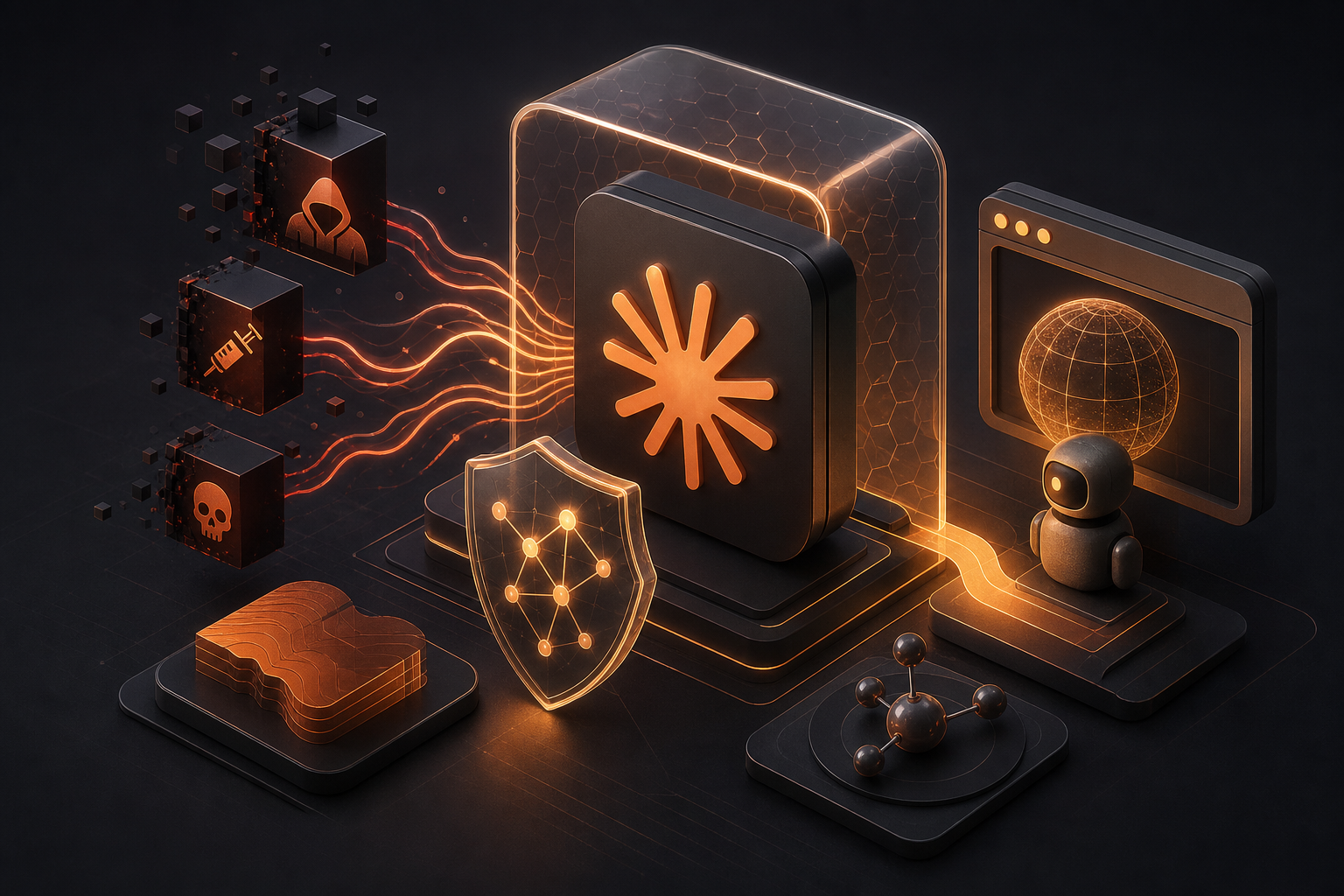
- The solution combines two independent defense layers: data scanning for hidden instructions + blocking dangerous actions before execution
- Anthropic's own Sonnet 5 model achieves 0.93 percent without protection
What Is Prompt Injection?
In a prompt injection attack, an attacker attempts to override a model's instructions – for example through hidden text on a webpage or manipulated inputs. A browser agent operating autonomously on the web could become a tool for fraud, data theft, or sabotage. Until now, this has been a practically unsolvable vulnerability.
Two Defense Layers Instead of One
The zero percent rate only works with Auto Mode enabled in Claude Cowork. The system operates on the principle of defense in depth: one layer scans incoming data for hidden instructions, a second blocks dangerous actions before execution. An attacker must overcome both independently – which failed in the tests.
Without these additional protective layers, a more nuanced picture emerges: Opus 5 sits at 3.7 percent success rate, while Anthropic's own Sonnet 5 model performs significantly better at 0.93 percent. In the Gray Swan IPI benchmark – a standard test by security firm Gray Swan – Opus 5's success rate dropped from 5.5 percent (Opus 4.8) to 2.0 percent after 15 attack attempts. This puts Opus 5 at the top, followed by Mythos 5 (2.6 %) and Fable 5 (2.8 %).
| Model | Success Rate (Gray Swan, 15 Attempts) |
|---|---|
| Opus 5 | 2.0 % |
| Mythos 5 | 2.6 % |
| Fable 5 | 2.8 % |
Real-World Viability Still Uncertain
The numbers look impressive – but here lies the critical question: will they hold up in practice? Anthropic conducted and documented the tests in a System Card. Independent security researchers will likely test the model intensively to verify whether the zero percent rate is robust or whether creative attackers find new ways to bypass the protective layers.
The combination of model and specialized protective software is a key point: it's not just about AI intelligence, but about architecture. Anyone wanting to deploy browser agents must therefore look not only at the model itself, but also at the protective infrastructure surrounding it.
What This Means for German Enterprises
For German companies working on or deploying autonomous AI agents, this could be a turning point. Until now, prompt injection has been a genuine adoption barrier – who could trust a browser agent that could potentially be hacked? Should Anthropic's numbers prove robust in practice, a major security argument against AI automation disappears. This could accelerate investment in agent technology – provided the protective layers become available for other models and applications as well.
Sources
Editorially owned by Ideal Syka. Sources and method: Newsroom & method. Tips and corrections: ai@i6eal.de.