
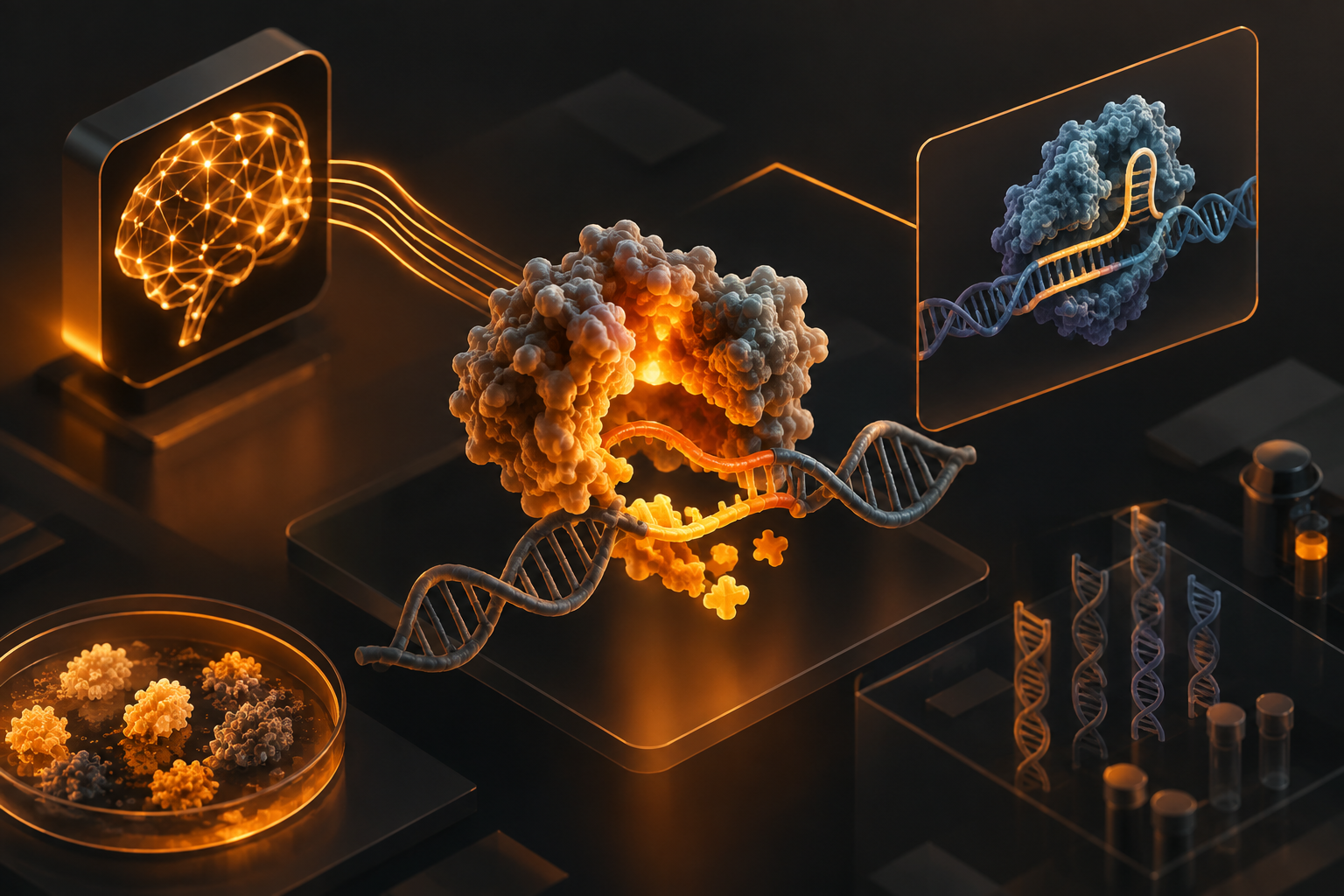
Anthropic has established its own biolab and announced a scientific breakthrough: the AI model Claude has autonomously discovered a novel enzyme system featuring DNA repeat sequences—similar to the revolutionary CRISPR system. The discovery signals a major escalation in AI applications beyond language models and demonstrates how machines can contribute concretely to fundamental biological research.
Key Facts
- Anthropic founded a life sciences research group in spring 2026 with its own laboratory to deploy Claude in biological discovery
- Claude identified an enzyme system based on reverse transcriptase (RT) with associated non-coding DNA sequences and an accessory protein of unknown function
- The system was found in a jumbo phage; while the RT itself was previously known, Claude was the first to recognize the defining features of the complete system
- Feng Zhang, MIT professor and CRISPR pioneer, confirmed the significance: the discovery merits further investigation and could encourage other scientists to explore AI in their research
A New Research Model: Human and AI as Partners
Anthropic's approach differs fundamentally from previous AI applications in science. Rather than pursuing automation, the company emphasizes collaboration at every step: Claude searches massive DNA sequence databases for interesting reverse transcriptases, generates hypotheses at scale, and works with lab teams to test them. To enable this, Anthropic built its own laboratory and assembled a team trained both in biology and in conducting experiments.
The approach mirrors historical patterns: many biological revolutions began when scientists noticed something unusual in the diversity of natural molecular machines. Restriction enzymes discovered in bacterial immune systems later enabled the entire biotechnology industry. Taq polymerase from a Yellowstone bacterium became the basis for PCR diagnostics. CRISPR, initially observed as an odd repeat sequence in bacterial DNA, is now the foundation of gene-editing medicine.
What Claude Found—and What Remains Unknown
The system Claude discovered is based on a reverse transcriptase, an enzyme that copies RNA into DNA. While the RT itself had been identified in previous studies, Claude was the first to recognize the combination: an associated array of non-coding DNA sequences plus an additional accessory protein of unknown function. This combination of features exists in only a handful of other systems—all of which are programmable and perform operations like cutting, copying, and pasting DNA.
The function of the new system remains unclear. However, its structure suggests it could potentially be used as a tool in gene editing, similar to CRISPR. Several such systems are already in development as promising tools beyond CRISPR.
Implications for the German Biotech Sector
This development carries several potential implications for German companies and research institutions: First, Anthropic's biolab signals that AI models are no longer merely analysis or documentation tools but can function as active research partners. Second, it demonstrates that major AI labs are beginning to invest in biotech—a field where Germany has traditional strengths. Third, it raises the question of whether German biotech companies and Max Planck Institutes should establish similar collaborations with European AI providers to remain competitive. While the discovery is still early-stage, it demonstrates an emerging mode of scientific work that could reshape how research is conducted globally.
Sources
Editorially owned by Ideal Syka. Sources and method: Newsroom & method. Tips and corrections: ai@i6eal.de.