
The claim
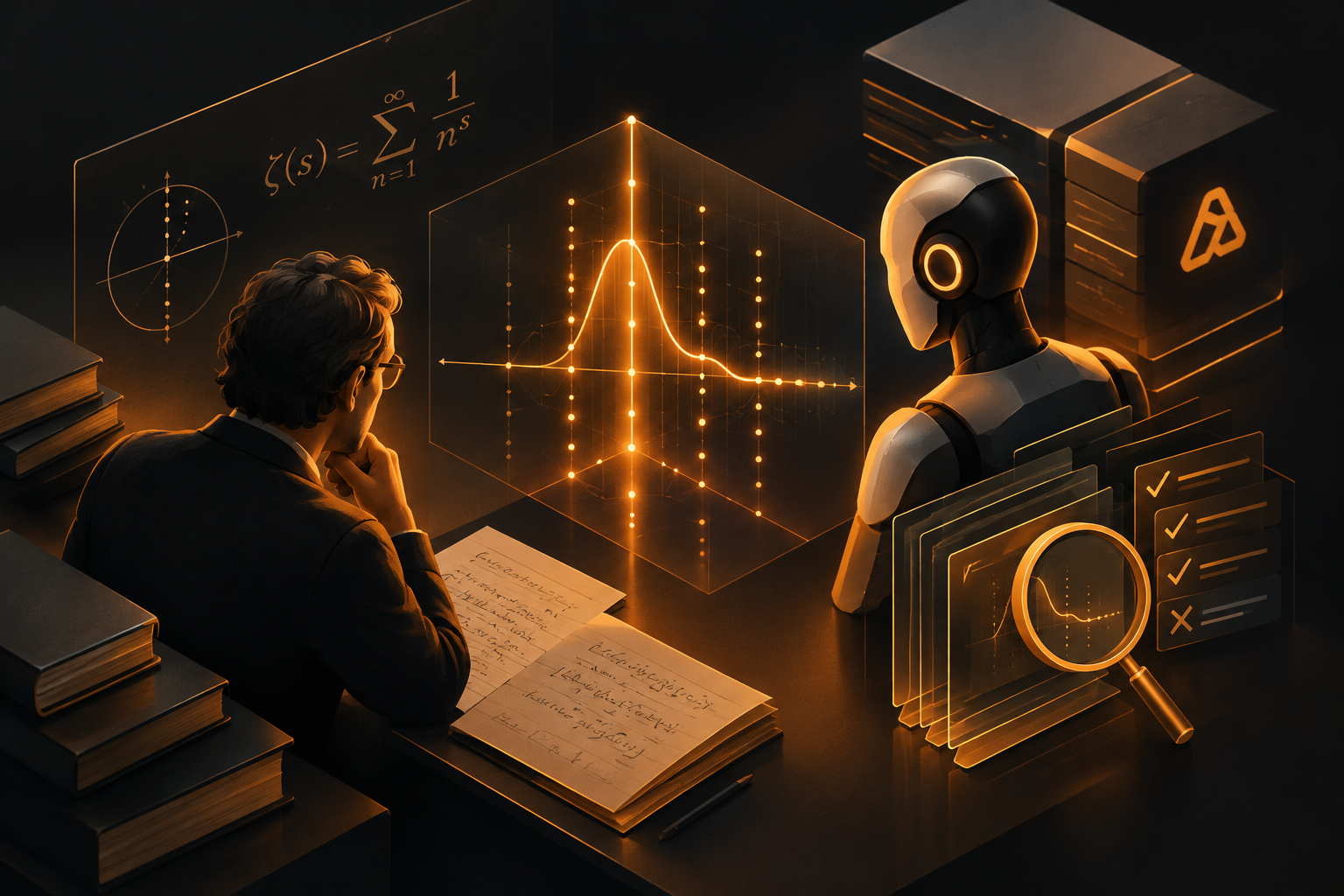
According to TechCrunch, Levent Alpöge, an employee of Anthropic, has presented a proof of the Riemann hypothesis, which sources describe as open since 1859 and as one of the Millennium Prize problems. In an essay he describes having formalized the solution in Lean, a language used to check proofs by machine. Business Insider reports that Alpöge said he found the solution on Sunday, but held back the announcement until he had spoken with CEO Dario Amodei and consulted other mathematicians.
State of verification
Several sources stress that the solution has not yet been independently verified. According to IBM, James Maynard, Professor of Mathematics at Oxford and Fields Medal winner in 2022, said: "If this fully checks out, it is clearly a historic milestone." Steven Strogatz of Cornell University tells Business Insider that a computer-based check has been run, but such systems sometimes make mistakes, so the proof "has not yet been independently verified". According to Business Insider, the written proof runs to more than 250,000 pages. TechCrunch reports that several participants in a Zulip chat confirmed that Alpöge's solution compiles in Lean; understanding the proof is still pending.
The second proof proposal
In parallel, TechCrunch reports that Ravi Vakil, Stanford professor and president of the American Mathematical Association, posted a proof of the general Riemann hypothesis written by Stanford postdoc Alessandro Masullo. Vakil says it is "all human, with no AI". According to TechCrunch, Masullo describes the work as the result of 12 years. This draft too has not yet been checked in Lean.
Assessment
If the solution holds, the cited experts call it a very big breakthrough. Open questions remain: whether mathematicians can understand and explain the proof, not only whether it is formally correct. For companies, the most relevant point is how well AI results can be checked before one relies on them.
Sources
Editorially owned by Ideal Syka. Sources and method: Newsroom & method. Tips and corrections: ai@i6eal.de.