
The most common question in our first conversations isn't "is this possible?" — it's "what does it cost?". The honest answer: considerably less than most people expect after years of agency day rates, but more than a SaaS subscription. Here's the math we run internally, too.
The three cost blocks
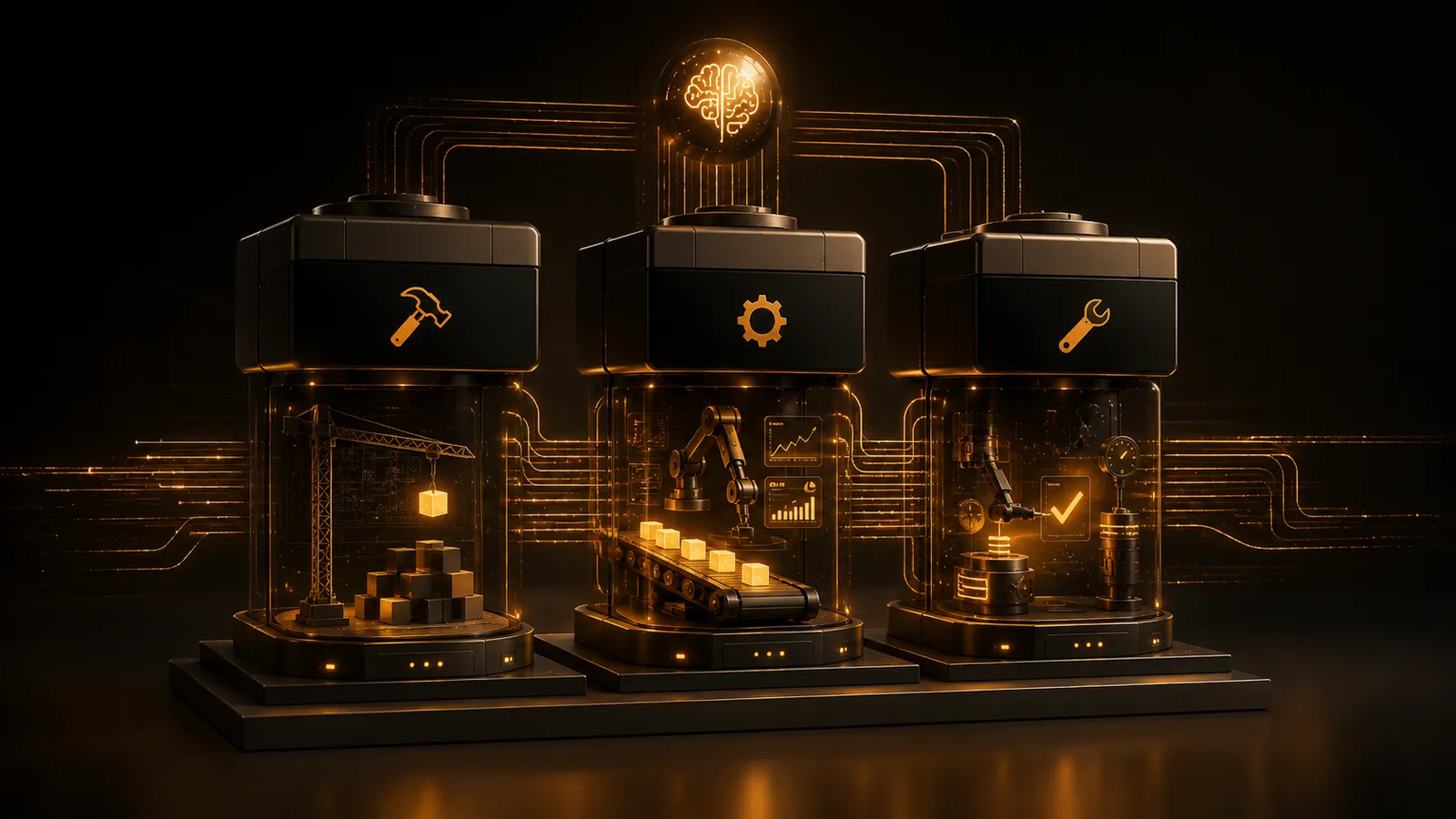
Every AI automation has the same cost structure — whether it sorts e-mails or writes quotes:
1. Setup (one-time). Understanding the workflow, connecting the AI, catching edge cases, testing. This is the project part — and the only block that reaches four figures. A manageable automation (say: reading, classifying and pre-answering incoming requests) sits in the low four-figure range. More complex workflows spanning several systems — ERP, CRM, accounting — accordingly above that.
2. Operation (ongoing). AI models bill per request, not per month. An automation that handles dozens of cases a day typically causes less than €50 in API costs per month — often far less. This surprises most people: ongoing operation is almost never the cost driver.
3. Maintenance (occasional). Workflows change: a new mail format, a different ERP field, a new edge case. Well-built automations speak up when something doesn't fit instead of silently working wrong. Budget a few hours per quarter — no more.
When does it pay off?
The math is unspectacularly simple:
Hours saved per week × hourly rate × 52 — that's your yearly capacity gain.
A real-world example: a team spends 6 hours per week typing incoming invoices and checking them against purchase orders. At €45 internal cost per hour, that's a good €14,000 per year — for work nobody wants to do. An automation that takes over 90% of it usually pays for itself within the first quarter.

Our rule of thumb: if a task repeats for more than 3–4 hours per week, it's worth a look. Below that, it's often smarter to just leave it alone.
What it should NOT cost
Three things that should make you skeptical:
- License lock-ins. If the automation only works as long as you pay for a specific tool subscription, it doesn't belong to you. We build so the workflow is yours and the AI model stays replaceable.
- Open-ended day-rate projects. "Let's see how far we get" is not an offer. A clearly scoped workflow can be estimated at a fixed price.
- AI for AI's sake. Some tasks are solved better and cheaper by a simple script or a rule. An honest partner tells you that up front.
The first step costs nothing
We look at your most time-consuming workflow and tell you concretely: what can be automated, what it costs and what it saves — before you commission anything. How it works technically is on our AI for automation page — or tell us about your workflow directly.