

"AI agents" is the most-searched AI term of the year — and at the same time the fuzziest. Some mean a better chatbot, others software that independently handles entire workdays. Here's the honest classification: what an AI agent really is, what works reliably today, and why most agent projects fail.
What an AI agent is — and what it isn't
A classic chatbot answers. An AI agent acts: it gets a goal, plans the steps, uses tools — e-mail, calendar, ERP, browser — and works until the goal is reached or a human is needed.
An example makes the difference tangible. To the mail "Can you send me a quote for 500 units?", a chatbot replies with friendly text. An agent reads the request, pulls prices from the ERP, creates the quote as a PDF, files the case in the CRM and sends the reply — and only speaks up when something unusual happens.
According to Germany's Federal Statistical Office, every fifth company in Germany now uses AI — and the trend is clearly rising. The step from "AI as a writing tool" to "AI as a worker for routine tasks" is exactly what the agent term describes.
Which tasks are a good fit today
The agent deployments that work reliably share three properties: a clear goal, digital tools and a defined escalation path to a human. In practice that means:
- Inbox triage: reading requests, classifying them, answering or routing them with context to the right team.
- Quote creation: understanding the request, calculating line items, creating the document, sending it.
- Invoice processing: reading incoming invoices, matching them against orders, posting them, flagging discrepancies.
- Scheduling: checking calendars, proposing slots, confirming, sending invitations.
- Data hygiene: syncing information between systems instead of typing it three times.
Why agent projects fail
We see three patterns again and again:
Too much at once. "The agent should run our entire sales operation" fails. "The agent answers delivery-time questions" works — and then gets extended.
No escalation path. A good agent knows what it doesn't know. Without clean "I'll hand this to a human" behavior, automation becomes silent chaos.
No measurement. If nobody defines what "done" means, neither quality nor savings can be proven. Successful projects measure from day one: cases completed, error rate, hours saved.
What getting started looks like
The best first agent takes over one task that repeats for several hours a week and has clear rules. That's exactly what our process is built for: look at the workflow, give an honest feasibility and cost estimate, build small, measure, extend.
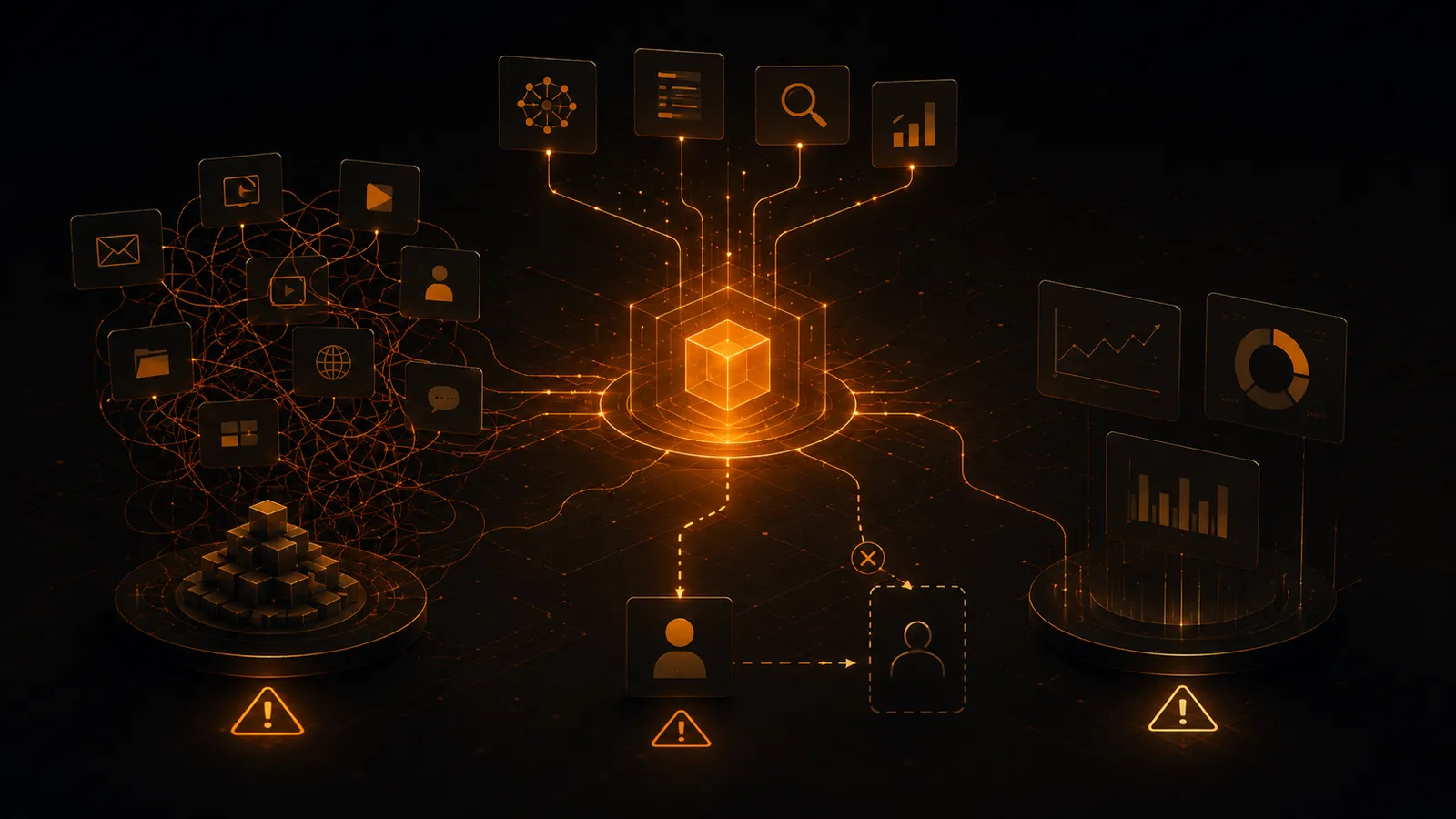
What that looks like concretely — from trigger to finished result — is shown with real examples at AI for automation. And if you want to know whether your task is agent-ready: describe it to us briefly — you'll get an honest answer.